 Back
BackTheories of Victimization: Sociological Perspectives and Frameworks
Study Guide - Smart Notes
 Tailored notes based on your materials, expanded with key definitions, examples, and context.
Theories of Victimization
Early Victim Theories and Typologies
Early victimization theories sought to understand the role of victims in criminal events, often focusing on individual characteristics and interactions between victims and offenders. These frameworks laid the foundation for later sociological approaches to crime and victimization.
Hans von Hentig (1948): Introduced the concept of the "criminal-victim dyad," emphasizing the study of both perpetrator and victim together. He developed victim typologies based on vulnerability factors, such as age, gender, and social status.
Victim Proneness: The idea that certain people or situations are inherently more likely to experience victimization due to physical, psychological, or social vulnerabilities.
Benjamin Mendelsohn (1947): Coined "victimology" and classified victims by their degree of culpability in their victimization, ranging from completely innocent to imaginary victims.
Marvin Wolfgang (1958): Introduced "victim-precipitated" crimes, where the victim initiates violence or provocation, based on empirical studies of homicide.
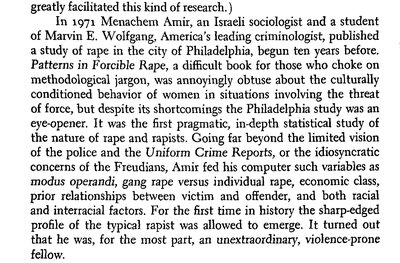
Menachem Amir (1971): Studied rape cases and identified "victim-precipitated" incidents, though his work was criticized for relying on police and offender interpretations of victim behavior.

Category | Vulnerability Factors |
|---|---|
The Young | Physically weaker, less mental capacity, fewer legal rights, economically dependent, limited danger recognition |
The Female | Often physically weaker, culturally conditioned to accept male authority, financially dependent, targeted due to perceived sexual value |
The Old | Physical frailty, slower reflexes, isolation, cognitive impairments, targets for confidence schemes |
The Mentally Defective | Reduced cognitive abilities, impaired judgment, difficulty recognizing danger, easy to manipulate |
The Immigrant | Unfamiliar with local customs/laws, language barriers, lack of support networks, distrust of police |
The Minorities | Subject to discrimination, unequal justice treatment, social marginalization, targeted due to bias |
The Dull Normal | Slower comprehension, poor judgment, easily manipulated, difficulty recognizing threats |
The Depressed | Emotional vulnerability, reduced alertness, social withdrawal, submissive behavior, impaired judgment |
The Acquisitive | Driven by desire for wealth, take unnecessary risks for gain, vulnerable to schemes, associate with criminals |
The Wanton | Ruled by passion, thoughtlessly seek pleasure, frequent dangerous locations, engage in risky behaviors |
The Lonesome and Heartbroken | Desperate for companionship, emotionally vulnerable, trust strangers readily, susceptible to scams |
The Tormentor | Initiate conflicts, verbally/physically aggressive, create enemies, victim-precipitated crimes |
The Blocked, Exempted, and Fighting | Trapped in situations, overconfident in safety, engaged in high-risk activities or mutual combat |
Victim Precipitation and Its Critiques
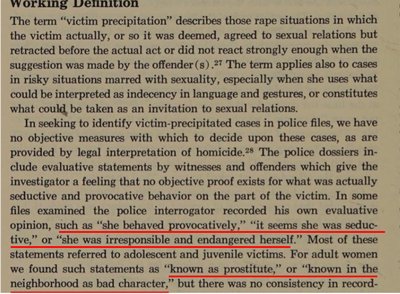
The concept of victim precipitation describes situations where victims are seen as contributing to their own victimization, often through risky behaviors or provocation. This approach has been criticized for victim blaming and relying on subjective interpretations.
Victim Precipitation: Suggests that victims may initiate or provoke criminal events, especially in cases of violence or sexual assault.
Critiques: Victim blaming, circular logic, and lack of attention to social and structural factors.
Example: Police files often include evaluative statements about victim behavior, such as "she behaved provocatively" or "she was irresponsible and endangered herself." These statements are subjective and inconsistent.
Mainstream Positivist Theories
Positivist theories focus on empirical measurement and probabilistic risk factors for victimization, emphasizing individual choices and routine activities.
Lifestyle Theory: Developed by Hindelang, Gottfredson, and Garofalo (1978), this theory posits that differences in victimization rates are caused by differences in personal lifestyles, which affect exposure to dangerous situations.
Risk Equation: Lifestyle Choices → Exposure to Risk → Probability of Victimization
High-Risk Lifestyle Factors: Spending more time in public places, reduced supervision, participation in risky behaviors.
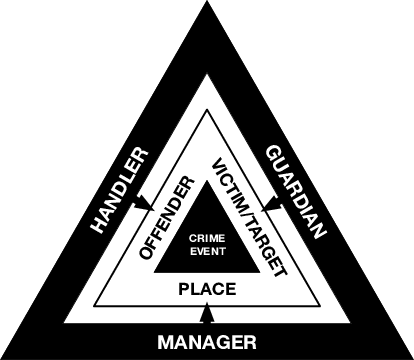
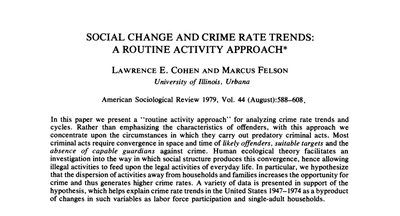
Routine Activities Theory: Developed by Cohen and Felson (1979), this theory states that crime occurs when three elements converge: motivated offenders, suitable targets, and absence of capable guardians.
Routine Activities Theory: Crime Event Structure
Motivated Offender: Individual willing to commit crime.
Suitable Target: Person or property attractive to offenders.
Absence of Capable Guardian: Lack of protection or deterrence.
Place: Location where crime occurs.
Limitations of Positivist Theories
While positivist theories provide useful frameworks for understanding victimization, they have several limitations.
Victim Blaming: These theories can shift responsibility from offenders to victims.
Oversimplification: Mechanistic views of crime ignore structural and social factors.
Limited Scope: Focus on individual behavior rather than broader patterns and root causes.
Feminist Theories of Victimization
Feminist victimology critiques early theories for their focus on individual pathology and victim blaming, and instead emphasizes structural power, gendered violence, and the importance of uncovering hidden victims.
Rejection of Victim Precipitation: Feminists argue that theories blaming women for their own victimization are problematic and reinforce gender stereotypes.
Structural Power: Victimization is shaped by social structures, such as patriarchy and gender inequality.
Hidden Victims: Many gender-based offenses, such as domestic violence, were historically ignored by official crime data.
Praxis: Feminist approaches focus on practical solutions, such as rape crisis centers and shelters for battered women.
Critical and Radical Victimology
Critical victimology challenges mainstream approaches by focusing on structural analysis, power, inequality, and social justice. It expands the definition of victimization beyond traditional crime to include social harm and institutional violence.
Quinney (1972): Argues that victim status is not neutral; those with power define who counts as a victim, often shielding the powerful from accountability.
Mawby & Walklate (1994): Emphasize the interplay between individual choices and social structures, and question who has the power to apply the "victim" label.
Zemiology: The study of social harm, which includes harms that are legal but damaging, such as environmental pollution or institutional neglect.
Green Criminology: Focuses on environmental victims and the disproportionate impact of harm on marginalized communities.
States of Denial (Cohen, 2001): Institutions may deny harm in literal, interpretive, or implicatory ways, obscuring responsibility for victimization.


Applications and Policy Implications
Understanding victimization theories is essential for developing effective crime prevention policies and addressing gaps in victim statistics. Sociological approaches highlight the need for structural analysis and social justice in policy-making.
Measurement: Accurate measurement of victimization is crucial for policy and prevention.
Limitations: Challenges include underreporting, bias, and gaps in official data.
Policy: Victim statistics inform crime prevention strategies and support for victims.
Additional info: These notes expand on the original content by providing definitions, examples, and academic context for each theory and framework, ensuring a comprehensive and self-contained study guide for Introduction to Sociology students.
