 Back
BackConstructing and Interpreting Confidence Intervals for the Population Mean (σ Known)
Study Guide - Smart Notes
 Tailored notes based on your materials, expanded with key definitions, examples, and context.
Q1. Calculate the sample mean () for the given data set.
Background
Topic: Descriptive Statistics – Sample Mean
This question asks you to compute the sample mean, which is the average value of the data collected from a random sample of students. The sample mean is used as a point estimate for the population mean.
Key Terms and Formulas:
Sample mean (): The average of all sample values.
Formula:
Step-by-Step Guidance
Count the number of data points in your sample ().
Add up all the hours of sleep recorded for the 34 students.
Divide the total sum by the sample size () to find the sample mean.
Try solving on your own before revealing the answer!
Q2. Is the sample mean () exactly equal to the actual mean for the entire population? Explain.
Background
Topic: Sampling and Population Parameters
This question tests your understanding of the difference between a sample statistic (like ) and a population parameter (like ).
Key Terms:
Sample mean (): The average from your sample.
Population mean (): The true average for the entire population.
Step-by-Step Guidance
Recall that is calculated from a sample, while is the true mean for all 1,900 students.
Consider whether a sample mean is expected to be exactly the same as the population mean, or if it is just an estimate.
Think about why we use samples and what it means for to be an unbiased estimator of .
Try explaining this concept in your own words before checking the answer!
Q3. Create a confidence interval that you believe captures the true population mean ().
Background
Topic: Confidence Intervals for the Mean (Known )
This question asks you to construct a confidence interval for the population mean using your sample mean as the point estimate. The confidence interval provides a range of plausible values for .
Key Terms and Formulas:
Confidence interval: An interval estimate for a population parameter.
Margin of error (): The maximum expected difference between the sample mean and the true population mean.
General formula for a confidence interval (when is known):
Where is the margin of error.
Step-by-Step Guidance
Use your calculated sample mean () as the point estimate.
Choose a margin of error () that reflects your desired confidence level (for example, 70% or 90%).
Write the confidence interval as (, ).
Try constructing your interval before checking the answer!
Q4. How confident are you that your confidence interval captures the true population mean ()?
Background
Topic: Interpretation of Confidence Intervals
This question asks you to reflect on the meaning of your confidence interval and the confidence level you chose.
Key Terms:
Confidence level: The probability that the interval will capture the true parameter in repeated samples.
Step-by-Step Guidance
State the confidence level you used (e.g., 70%, 90%).
Explain what this confidence level means in the context of your interval and the population mean.
Try interpreting your confidence interval before checking the answer!
Q5. Calculate the margin of error for a 90% confidence interval (assume hours).
Background
Topic: Margin of Error for Confidence Intervals (Known )
This question asks you to use the formula for the margin of error when the population standard deviation is known and the confidence level is 90%.
Key Terms and Formulas:
Critical value (): The z-score corresponding to the desired confidence level.
Population standard deviation (): Given as 1.27 hours.
Sample size (): 34.
Margin of error formula:
Step-by-Step Guidance
Find the critical value () for a 90% confidence level (commonly ).
Plug in and into the formula.
Calculate and then .
Multiply the result by to find the margin of error ().
Try calculating the margin of error before checking the answer!
Q6. Create a 90% confidence interval using your new margin of error ().
Background
Topic: Confidence Interval Construction
This question asks you to use your calculated margin of error to construct a 90% confidence interval for the population mean.
Key Terms and Formulas:
Confidence interval:
Step-by-Step Guidance
Take your sample mean () from earlier.
Subtract the margin of error () from to get the lower bound.
Add the margin of error () to to get the upper bound.
Try constructing the interval before checking the answer!
Q7. Interpret the confidence interval you just constructed.
Background
Topic: Interpretation of Confidence Intervals
This question asks you to explain what your confidence interval means in the context of the problem.
Key Terms:
Confidence interval
Population mean ()
Step-by-Step Guidance
State the confidence level and the interval you calculated.
Explain what it means for the interval to "capture" the true population mean.
Try interpreting your interval before checking the answer!
Q8. Interpret the confidence level.
Background
Topic: Confidence Level Interpretation
This question asks you to explain what the confidence level (e.g., 90%) means in terms of repeated sampling.
Key Terms:
Confidence level
Step-by-Step Guidance
Describe what would happen if you took many samples and constructed a confidence interval from each.
Explain the proportion of intervals that would be expected to contain the true population mean.
Try explaining the confidence level before checking the answer!
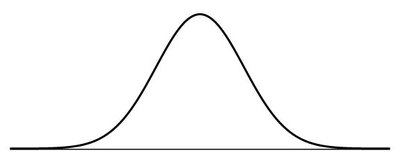
Q9. Why were we able to use z-scores even though the population’s distribution was unknown?
Background
Topic: Central Limit Theorem (CLT)
This question tests your understanding of why the normal distribution (z-scores) can be used for confidence intervals, even if the population distribution is not normal, as long as certain conditions are met.
Key Terms:
Central Limit Theorem (CLT)
Sample size ()
Step-by-Step Guidance
Recall the Central Limit Theorem and its implications for sample means.
Consider the sample size () and whether it is large enough for the CLT to apply.
Explain why the sampling distribution of the mean is approximately normal.
Try explaining this before checking the answer!
Q10. Given a confidence level and margin of error, what is the minimum sample size needed to estimate the population mean?
Background
Topic: Determining Sample Size for Estimation
This question asks you to use the formula for minimum sample size required to achieve a specified margin of error at a given confidence level.
Key Terms and Formulas:
Sample size ()
Critical value ()
Population standard deviation ()
Margin of error ()
Formula:
Step-by-Step Guidance
Identify the desired confidence level (e.g., 95%) and find the corresponding value.
Plug in the values for , , and into the formula.
Calculate the value inside the parentheses, then square the result to find .
If is not a whole number, round up to the next whole number.
Try calculating the minimum sample size before checking the answer!
