 Back
BackCounting Principles in Probability: Permutations, Combinations, and Applications
Study Guide - Smart Notes
 Tailored notes based on your materials, expanded with key definitions, examples, and context.
Additional Topics in Probability and Counting
Introduction
This section explores advanced counting principles in probability, focusing on permutations, combinations, and their applications in calculating probabilities. Mastery of these concepts is essential for solving complex probability problems in statistics.
Permutations
Definition and Basic Concepts
Permutation refers to an ordered arrangement of objects. The order in which objects are arranged is important. The number of different permutations of n distinct objects is given by the factorial of n:
Key Formula: The number of permutations of n objects is
Factorial:
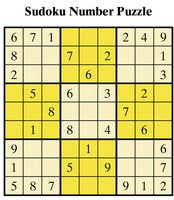
Example: The number of ways to arrange the digits 1 to 9 in the first row of a Sudoku puzzle is .
Permutations of n Objects Taken r at a Time
Sometimes, only a subset of objects is arranged. The number of permutations of n objects taken r at a time is:
Key Formula:
Example 1: Forming four-digit codes from 10 digits (no repeats):
Example 2: Arranging 3 out of 33 race cars for first, second, and third place:
Distinguishable Permutations
When some objects are identical, the number of distinguishable permutations is calculated by dividing by the factorials of identical items:
Key Formula: where are counts of each type.
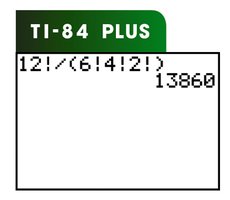
Example: Arranging 6 one-story, 4 two-story, and 2 split-level houses (12 total):
Combinations
Definition and Basic Concepts
A combination is a selection of objects without regard to order. The number of combinations of n objects taken r at a time is:
Key Formula:
Example: Selecting 4 companies from 16 bids:
Summary of Counting Principles
Permutation: Order matters, no repeats unless specified.
Combination: Order does not matter.
Distinguishable Permutations: Used when objects are not all unique.
Applications: Finding Probabilities Using Counting Principles
Assigning Positions (Permutation Example)
Example: A student advisory board has 17 members. Three positions (chair, secretary, webmaster) are to be filled. The probability of randomly selecting a specific group for these positions is:
Total ways to assign positions:
Probability of a specific group:
Dealing Cards (Combination Example)
Example: Probability of being dealt 5 diamonds from a standard deck of 52 cards:
Ways to choose 5 diamonds:
Total 5-card hands:
Probability:
Sampling with Specific Outcomes (Multiplication Rule)
Example: Probability of selecting exactly 1 toxic kernel from 4 chosen out of 400 (3 toxic, 397 nontoxic):
Ways to choose 1 toxic:
Ways to choose 3 nontoxic:
Total ways to choose 4 kernels:
Probability:
Summary Table: Counting Principles
Type | Order Important? | Formula | Example |
|---|---|---|---|
Permutation | Yes | or | Arranging books on a shelf |
Combination | No | Selecting a committee | |
Distinguishable Permutations | Yes | Arranging letters in "BALLOON" |
