 Back
BackElementary Statistics Course Syllabus and Study Guide
Study Guide - Smart Notes
 Tailored notes based on your materials, expanded with key definitions, examples, and context.
Course Overview
Introduction to Elementary Statistics
This course, MATH 2193 - Elementary Statistics, provides a foundational understanding of statistical concepts and methods. It covers essential topics such as data organization, measures of central tendency and dispersion, probability, distributions, hypothesis testing, and inferential statistics. The course is designed for students seeking to develop analytical skills applicable in various fields.
Course Modality: Classroom-based
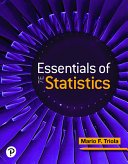
Textbook: Essentials of Statistics, Mario Triola, Pearson, 7th Edition
Calculator: TI-83 or TI-84 recommended
Online Homework: MyStatLab platform
Course Structure and Grading
Teaching Method and Assessment
The course emphasizes active learning through guided lessons, example problems, and regular Q&A sessions. Assessment is based on homework, chapter exams, and a comprehensive final exam. Attendance is mandatory and impacts the final grade.
Daily Schedule: 20 minutes Q&A, 80 minutes guided lesson and examples
Exams: Four chapter exams and one final exam
Homework: Assigned each period, completed online
Attendance: Required; excessive absences result in grade penalties
Grade Breakdown Table
The table below summarizes the grading scale for the course:
Grade | Exam Scores | Total Points |
|---|---|---|
A | 100-85 | 500-425 |
B | 84-70 | 424-350 |
C | 69-60 | 349-300 |
D | 59-50 | 299-250 |
F | 49-0 | 249-0 |
Additional info: The lowest chapter exam score is replaced by the average of the two highest scores (excluding the final exam).
Course Content and Learning Outcomes
Statistics Topics Covered
The syllabus aligns with the following major statistics topics, matching the standard college statistics curriculum:
Statistical Terminology: Types of data, research designs
Data Organization: Tables, graphs, frequency distributions
Descriptive Statistics: Measures of central tendency (mean, median, mode), measures of variability (range, variance, standard deviation)
Probability: Combinations, permutations, elementary probability laws
Discrete and Continuous Distributions: Binomial and normal distributions
Inferential Statistics: Estimation and confidence intervals for means and proportions
Hypothesis Testing: Tests for population means, proportions, and differences between two samples
Example: Calculating the mean and standard deviation for a sample dataset, constructing a frequency table, and performing a hypothesis test for a population mean.
Academic Integrity and Technology Use
Expectations and Policies
Students are expected to uphold academic integrity and use technology responsibly. AI tools may be used for checking work but are not permitted during proctored assessments. Academic dishonesty results in severe penalties.
AI Tools: Allowed for practice, not for proctored exams
Calculator Policy: Only approved models allowed during exams
Academic Integrity: Zero tolerance for cheating or plagiarism
Support and Resources
Tutoring and Technical Assistance
Students have access to tutoring centers, technical support, and wellness services. These resources are designed to help students succeed academically and maintain well-being.
Tutoring: In-person and online sessions available
Technical Support: Assistance with course platforms and software
Wellness Services: Counseling and crisis support
Course Calendar and Withdrawal Policies
Important Dates and Participation Requirements
Students must meet participation requirements within the first two weeks. Withdrawal policies differ for in-person, online, and hybrid courses. Students are encouraged to consult the academic calendar for deadlines.
Pre-Quiz: Required for course participation
Withdrawal: Must be initiated with academic advisor after drop deadline
Attendance: Missing six or more classes results in grade reduction
Institutional Policies and Student Responsibilities
General Education, Non-Discrimination, and FERPA
Tulsa Community College enforces policies on non-discrimination, privacy, and student conduct. Students are responsible for understanding these policies and adhering to college guidelines.
Non-Discrimination: Equal opportunity for all students
FERPA: Protection of student educational records
Student Conduct: Mandatory adherence to academic and behavioral standards
Course Textbook
Essentials of Statistics by Mario Triola
This textbook is the primary resource for the course, covering all major topics in statistics. Students will have digital access to the textbook and MyLab Math platform from the first day of class.
Summary Table: Major Statistics Topics
Chapter | Topic |
|---|---|
1 | Introduction to Statistics |
2 | Exploring Data with Tables and Graphs |
3 | Describing, Exploring, and Comparing Data |
4 | Probability |
5 | Discrete Probability Distributions |
6 | Normal Probability Distributions |
7 | Estimating Parameters and Determining Sample Sizes |
8 | Hypothesis Testing |
9 | Inferences from Two Samples |
10 | Correlation and Regression |
11 | Chi-Square and Analysis of Variance |
Additional info: The course content directly matches the standard statistics curriculum, ensuring comprehensive coverage of all foundational topics.
