 Back
BackElementary Statistics Course Syllabus – Study Guide
Study Guide - Smart Notes
 Tailored notes based on your materials, expanded with key definitions, examples, and context.
Course Overview
Introduction to Elementary Statistics
This course provides a foundational understanding of statistics, focusing on the collection, organization, analysis, and interpretation of data. It is designed for students seeking to develop statistical reasoning and apply statistical methods to real-world problems.
Course Title: Elementary Statistics (MATH 2193)
Modality: Online
Duration: 06/01/26 - 07/26/26
Instructor: Contact information and office hours provided in the syllabus.

Course Structure and Grading
Grade Breakdown
Grades are determined by a combination of homework and exams. The following table summarizes the grade components and letter grade requirements:
Category | Percentage |
|---|---|
Homework | 33.33% |
Exams | 66.67% |
Percentage | Letter Grade |
|---|---|
90 - 100% | A |
80 - 89% | B |
70 - 79% | C |
60 - 69% | D |
0 - 59% | F |
Course Content and Learning Outcomes
Topics Covered
The course covers the following major topics, which align with standard college statistics curricula:
Statistical Terminology: Understanding types of data and research designs.
Data Organization: Using tables, graphs, and frequency distributions to organize and interpret data.
Descriptive Statistics: Calculating and interpreting measures of central tendency (mean, median, mode) and variability (range, variance, standard deviation).
Probability: Applying elementary probability laws, combinations, and permutations.
Probability Distributions: Working with binomial and normal distributions.
Statistical Inference: Estimating population parameters and constructing confidence intervals for means and proportions.
Hypothesis Testing: Conducting hypothesis tests for population means and proportions, and for differences between two populations.
Additional info: These topics correspond to the following textbook chapters: Introduction to Statistics, Exploring Data with Tables and Graphs, Describing and Comparing Data, Probability, Discrete and Normal Probability Distributions, Estimation, Hypothesis Testing, Inferences from Two Samples, Correlation and Regression, and Chi-Square/ANOVA.
Required Materials
Textbook and Technology
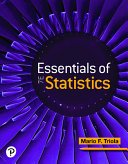
Textbook: Essentials of Statistics by Mario Triola, 7th Edition (Pearson)
Online Platform: MyLab Math (access provided via the First Day program)
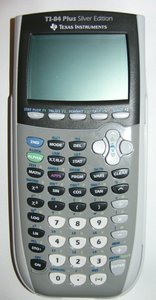
Calculator: TI-84 or any non-CAS calculator is recommended for statistical computations.
Course Policies and Expectations
Attendance and Participation
Students must complete all assignments and monitor their TCC email daily.
Participation is defined as completing an online assignment within the first two weeks.
Non-participation may result in administrative withdrawal (WN).
Assignment and Exam Policies
Homework can be submitted late with a 5% penalty.
Make-up exams require instructor permission.
All exams are proctored in person at TCC Testing Centers or approved alternative sites.
Calculator and Technology Policy
CAS calculators, cell phones, and unauthorized online calculators are not permitted during proctored assessments.
Calculator use is at the instructor's discretion, following department policy.
Use of Artificial Intelligence (AI)
AI tools (e.g., ChatGPT, Wolfram Alpha) may be used for checking work, but not as a substitute for learning.
AI-generated solutions may be incorrect or inconsistent with course expectations.
Proctored assessments do not allow AI tools; mastery of concepts is essential for success.
Academic Integrity and Institutional Policies
Academic Integrity
Cheating, plagiarism, and other forms of academic dishonesty are strictly prohibited.
Penalties may include a zero on the assignment, course failure, or referral to the Office of Student Conduct.
Student Support and Resources
Science and Math Tutoring Centers offer in-person and online tutoring.
Technical support is available for course platforms and technology.
Accessibility Resources are available for students with disabilities.
Summary Table: Key Course Information
Component | Details |
|---|---|
Textbook | Essentials of Statistics, Triola, 7th Edition |
Calculator | TI-84 or non-CAS calculator |
Online Platform | MyLab Math |
Proctored Exams | Required at TCC Testing Centers or approved sites |
Tutoring | Available in-person and online |
AI Policy | Permitted for checking, not for assessments |
Course Learning Outcomes
Identify and use statistical terminology and research designs.
Organize and interpret data using tables, graphs, and frequency distributions.
Calculate and interpret measures of central tendency and variability.
Apply probability laws and principles to compute probabilities.
Work with binomial and normal probability distributions.
Estimate population parameters using confidence intervals.
Conduct hypothesis tests for means and proportions, including comparisons between two samples.
Additional info: For more details on institutional policies, academic integrity, and student resources, refer to the full syllabus and the TCC Student Handbook.
