 Back
BackIntroductory Statistics Course Guide: Structure, Resources, and Success Strategies
Study Guide - Smart Notes
 Tailored notes based on your materials, expanded with key definitions, examples, and context.
Course Overview: MATH 1530 Introductory Statistics
Introduction to Statistics
This course provides a foundational understanding of both descriptive and inferential statistics, equipping students with the skills to interpret data, apply statistical reasoning, and solve real-world problems. The curriculum covers statistical design, graphical data representation, measures of center and variation, probability, distributions, estimation, hypothesis testing, and correlation/regression analysis. The course is non-calculus based and emphasizes critical thinking, communication, and mathematical reasoning.
Descriptive Statistics: Summarizing and visualizing data using tables, graphs, and numerical measures.
Inferential Statistics: Drawing conclusions about populations based on sample data, including estimation and hypothesis testing.
Probability: Understanding chance and randomness, including discrete and continuous probability distributions.
Correlation and Regression: Analyzing relationships between variables and making predictions.
Course Structure and Materials
The course is delivered asynchronously online, requiring students to manage their own schedules and utilize provided resources. Success depends on consistent engagement, organization, and proactive use of course materials.
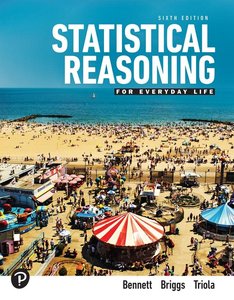
Textbook: Statistical Reasoning for Everyday Life (Bennett, Briggs, Triola, 6e) – available via MyLab Statistics.
Technology: TI-83 or TI-84 Plus calculator (required), reliable internet access, and a computer.
Guided Notes: Printable notes for each chapter, to be completed by hand and organized in a binder.
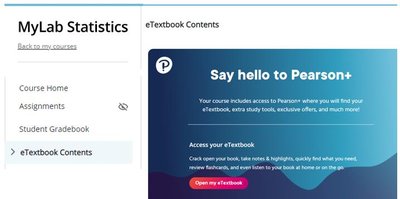
MyLab Statistics: Platform for assignments, quizzes, practice tests, and gradebook access.
Course Calendar and Assessment
Assignments, quizzes, and exams are scheduled throughout the semester. Students must adhere to deadlines and utilize the course calendar for planning. Grades are determined by online homework, quizzes, practice tests, unit exams, and a final exam.
Homework: 20% of grade; two lowest scores dropped.
Quizzes & Practice Tests: 15% of grade; lowest quiz score dropped.
Exams: 65% of grade; final exam may replace one missed unit exam.
Grading Scale: A: 90-100%, B: 80-89.9%, C: 70-79.9%, D: 60-69.9%, F: 0-59.9%.
Learning Outcomes and Competencies
Upon completion, students will be able to:
Classify data types (qualitative, quantitative discrete, quantitative continuous).
Identify and apply sampling methods.
Organize and graphically display data.
Calculate and interpret measures of center (mean, median) and variation (range, standard deviation).
Solve probability problems and analyze discrete/continuous random variables.
Apply the normal distribution to real-world problems.
Construct and interpret confidence intervals for population means and proportions.
Determine sample sizes for estimation.
Conduct hypothesis tests and form valid conclusions.
Analyze linear correlation and regression for prediction.
Success Strategies for Statistics Students
Effective Use of Course Resources
Students are expected to use a variety of resources to master course content. The instructor acts as a facilitator, providing tools and guidance, but students must take responsibility for their own learning.
Syllabus: Primary reference for course policies and grading.
Course Calendar: Essential for tracking assignment and exam dates.
Media Assignments & eText: Videos and readings are the main content delivery; students must watch, read, and take notes.
Guided Notes: Complete notes by hand for each section; these are critical for homework and quizzes.
Homework & Quizzes: Practice and assess understanding; review mistakes and seek help only after using notes and eText.
Practice Tests: Unlimited attempts; review errors before retaking.
Learning Centers: Access tutoring for additional support.

Organizational and Study Skills
Success in statistics requires planning, organization, and consistent effort. Students should:
Print and organize all course materials in a binder.
Set reminders for assignment and exam deadlines.
Check email and course announcements regularly.
Commit to working on the course several days per week.
Review notes and examples before seeking instructor help.
Academic Integrity and Support
Students must adhere to academic integrity policies, avoiding plagiarism and cheating. Reasonable accommodations are provided for students with disabilities. Technical support and campus resources are available for troubleshooting and additional help.
Course Requirements Checklist
Initial Steps for Success
Review Momentum homepage information.
Print and organize Course Information and Exam 1 Notes.
Request TI-84 calculator from library.
Sign up for class announcements on Remind.
Access Pearson MyLab account with Raidernet email.
Complete Assignment 0: Orientation.
Attend or watch Zoom Orientation.
Technology Guide: Using CamScanner
Submitting Handwritten Assignments
Students must scan and submit handwritten assignments as PDFs using CamScanner or a printer/scanner. CamScanner is a free app that allows easy cropping, enhancement, and emailing of documents.
Install CamScanner from your device's app store.
Register an account and use the camera to scan documents.
Crop, enhance, and save as PDF.
Email the PDF to your instructor from your Raidernet account.

Summary Table: Course Components and Their Purpose
Component | Main Purpose |
|---|---|
Syllabus | Reference for policies, grading, and expectations |
Course Calendar | Tracking assignment and exam dates |
Guided Notes | Structured note-taking and study resource |
MyLab Statistics | Platform for assignments, quizzes, tests, and gradebook |
Learning Center | Tutoring and additional academic support |
CamScanner | Scanning and submitting handwritten assignments |
Conclusion
Success in MATH 1530 Introductory Statistics depends on consistent engagement, effective use of resources, and adherence to course policies. Students are encouraged to plan ahead, stay organized, and seek help proactively. The skills developed in this course are essential for academic, professional, and everyday life.
