 Back
BackIntroductory Statistics Course Guide: Structure, Resources, and Success Strategies
Study Guide - Smart Notes
 Tailored notes based on your materials, expanded with key definitions, examples, and context.
Course Overview: MATH 1530 Introductory Statistics
Introduction to Statistics
This course provides a foundational study of both descriptive and inferential statistics, equipping students with the skills to analyze, interpret, and communicate statistical information. The curriculum is designed to foster critical thinking, mathematical reasoning, and practical application of statistical concepts in real-world contexts.
Descriptive Statistics: Focuses on summarizing and organizing data using measures of center (mean, median), variation (range, standard deviation), and graphical displays.
Inferential Statistics: Involves making predictions or inferences about populations based on sample data, including hypothesis testing and estimation.
Probability: Understanding chance and uncertainty, which underpins statistical inference.
Correlation and Regression: Examines relationships between variables and how one variable can be predicted from another.
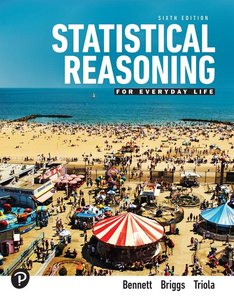
Additional info: The course uses "Statistical Reasoning for Everyday Life" (Bennett, Briggs, Triola, 6e) as its primary text, aligning with the chapter topics listed in the course outline.
Course Structure and Requirements
Course Components
The course is delivered asynchronously online, requiring students to manage their own schedules and utilize provided resources for learning. Key components include:
Momentum: The learning management system for course announcements, technical support, and access to course materials.
MyLab Statistics: Platform for assignments, quizzes, practice tests, and eText access.
Guided Notebook: Structured notes and reference material for each chapter, to be printed and completed by hand.
Instructor Support: Available via email and Remind for questions after other resources have been utilized.
Student Responsibilities: Commitment, organization, and proactive communication are essential for success.
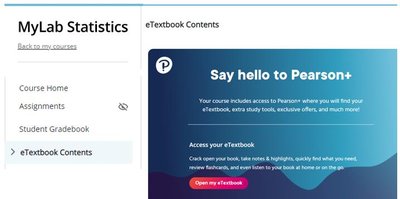
Course Materials and Technology
Textbook: Access to the eText is included with tuition; physical copies (4th or 5th edition) are optional.
Calculator: TI-83 or TI-84 Plus required; available for checkout from the library.
Notebook: 2–2.5 inch three-ring binder for organizing printed notes.
Reliable Internet: Essential for accessing course content and submitting assignments.
Grading and Evaluation
Grading Scale and Procedures
Final grades are determined by a combination of homework, quizzes, practice tests, and exams:
A: 90–100%
B: 80–89.9%
C: 70–79.9%
D: 60–69.9%
F: 0–59.9%
Component | Weight |
|---|---|
Online Homework | 20% |
Online Quizzes & Practice Tests | 15% |
Unit Exams + Final | 65% |
Drop Grades: Two lowest homework scores and one lowest quiz score are dropped; one missed unit exam can be replaced by the final exam score.
Success Strategies for Statistics Students
Effective Study Habits
Success in statistics requires consistent effort, organization, and utilization of all available resources. Recommended strategies include:
Plan study sessions 3–4 times per week, 2–3 hours each.
Print and organize all course notes in a binder.
Use the course calendar to track assignment and exam dates.
Watch all media assignments and take detailed notes.
Review mistakes on quizzes and practice tests before retaking them.
Seek help from the instructor only after using notes, eText, and other resources.

Additional info: The syllabus and course calendar are primary sources for policy and deadline questions.
Assignment Workflow
Complete media assignments and score at least 90% before moving to homework.
Finish homework assignments with at least 80% to unlock chapter quizzes.
Take quizzes (two attempts allowed; highest score counts).
Practice tests can be taken unlimited times; highest score counts as a quiz grade.
Unit exams and final must be taken in the Testing Center; deadlines are strict.
Academic Integrity and Support
Integrity Policies
Academic misconduct (plagiarism, cheating, fabrication, facilitation) is strictly prohibited. Consequences include grade penalties and administrative holds.
Student Support Resources
Technical support via CTAT and Help Desk.
Learning Centers offer tutoring in statistics.
Disability accommodations available through the appropriate office.
Title IX coordinator for issues related to discrimination and harassment.
Course Readiness and Self-Assessment
Is Online Statistics Right for You?
Students should assess their time management, motivation, ability to follow instructions, and willingness to use resources. Those lacking these qualities may benefit from an on-ground class.
Organizational Tools and Technology Guides
Using CamScanner for Assignment Submission
CamScanner is recommended for scanning and submitting handwritten assignments as PDFs. The app is free and available for both iOS and Android devices.

Motivation and Final Notes
Instructor Encouragement
The instructor is committed to student success and encourages proactive communication and use of all course resources. Students are advised to prioritize their well-being and academic progress.

Additional info: Celebrating course completion is encouraged as a reward for hard work and perseverance.
