Back
BackIntroductory Statistics: Course Structure, Success Strategies, and Essential Resources
Study Guide - Smart Notes
 Tailored notes based on your materials, expanded with key definitions, examples, and context.
Course Overview
Introduction to Statistics and Course Purpose
This course, MATH 1530: Introductory Statistics, provides a foundational understanding of both descriptive and inferential statistics. Students will learn to analyze data, interpret statistical research, and apply statistical reasoning in real-world contexts. The course is designed to enhance critical thinking, communication, and problem-solving skills, preparing students for further study and professional application of statistics.
Descriptive Statistics: Summarizing and describing data using measures of center, variation, and graphical displays.
Inferential Statistics: Drawing conclusions about populations based on sample data, including estimation and hypothesis testing.
Probability: Understanding the role of chance and probability distributions in statistical inference.
Statistical Reasoning: Developing the ability to critically evaluate statistical information in news, research, and daily life.
Additional info: The course emphasizes the importance of statistical literacy for all educated citizens, as highlighted by H.G. Wells' assertion that statistical thinking is essential for efficient citizenship.
Course Structure and Requirements
Course Components and Learning Resources
The course is delivered asynchronously online, with no set meeting times. Students are expected to engage with a variety of resources and complete assignments according to a detailed course calendar. Key components include:
Momentum: The primary course management system for announcements, resources, and guided notes.
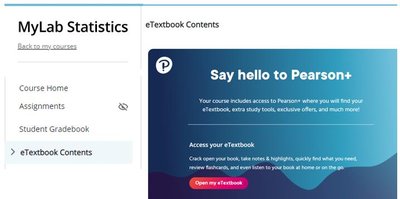
MyLab Statistics: Platform for homework, quizzes, practice tests, and exams. Includes access to the eText and media assignments.
Guided Notebook: Printable notes to accompany lectures and assignments, serving as a primary study resource.
Calculator: A TI-83 or TI-84 Plus calculator is required for all coursework.
Instructor Support: The instructor provides guidance, answers questions, and offers encouragement, but students are expected to use all available resources before seeking help.
Course Policies and Success Strategies
Grading and Evaluation
Grades are determined by a combination of online homework, quizzes, practice tests, and exams. The grading scale is as follows:
A: 90–100%
B: 80–89.9%
C: 70–79.9%
D: 60–69.9%
F: 0–59.9%
Assignments include:
Online Homework (20%): Multiple attempts allowed; two lowest scores dropped.
Quizzes & Practice Tests (15%): Two attempts per quiz; lowest quiz score dropped.
Exams (65%): Three unit exams and a mandatory final exam; final can replace one missed unit exam.
Keys to Success in an Online Statistics Course
Commit to regular study sessions (4–5 days per week, 2–3 hours per day).
Stay organized: Print and organize all course materials in a binder.
Use all provided resources before seeking instructor help.
Follow instructions carefully and manage deadlines using the course calendar.
Take thorough notes during media assignments and lectures.
Review mistakes on quizzes and practice tests to ensure understanding before retaking or advancing.

Essential Course Topics and Learning Outcomes
Core Topics Covered
Introduction to Statistics
Exploring Data with Tables and Graphs
Describing, Exploring, and Comparing Data
Probability and Probability Distributions
Normal Probability Distributions
Estimating Parameters and Determining Sample Sizes
Hypothesis Testing
Inferences from Two Samples
Correlation and Regression
Chi-Square and Analysis of Variance
Students will learn to:
Classify data types and sampling methods
Organize and graphically display data
Calculate and interpret measures of center and variation
Solve probability problems and apply probability distributions
Construct and interpret confidence intervals
Conduct hypothesis tests and draw valid conclusions
Analyze relationships between variables using correlation and regression
Technology and Tools
Required Technology
Calculator: TI-83 or TI-84 Plus (no substitutes allowed)
Internet Access: Reliable high-speed connection required
MyLab Statistics: For all assignments and assessments
CamScanner App: For submitting handwritten assignments as PDFs

Academic Integrity and Student Support
Academic Integrity
Plagiarism, cheating, fabrication, and facilitation are strictly prohibited. Violations may result in a failing grade for the assignment or course, and further disciplinary action. Students are expected to communicate professionally and use only their official college email for correspondence.
Student Support Services
Learning Centers: Offer tutoring and academic support for statistics and other subjects.
Technical Support: Assistance with course platforms and technology issues.
Disability Services: Reasonable accommodations provided for eligible students.
Title IX Coordinator: Support for issues related to discrimination or harassment.
Course Calendar and Deadlines
Managing Assignments and Exams
All assignments, quizzes, and exams have strict deadlines as outlined in the course calendar. Students are responsible for tracking due dates and submitting work on time. Extensions are only granted for documented disabilities with accommodations in place at the start of the semester.
Conclusion and Instructor’s Note
The instructor is committed to student success and encourages proactive communication and use of all available resources. Students are reminded to prioritize their well-being and academic progress, and to seek help early if challenges arise.