 Back
BackIntroductory Statistics: Course Structure, Success Strategies, and Essential Resources
Study Guide - Smart Notes
 Tailored notes based on your materials, expanded with key definitions, examples, and context.
Course Overview
Introduction to Statistics and Course Purpose
This course, MATH 1530 Introductory Statistics, provides a foundational understanding of both descriptive and inferential statistics. It is designed to equip students with the ability to interpret statistical information, apply statistical reasoning, and solve real-world problems using statistical methods. The course emphasizes the importance of statistical literacy for modern citizenship and professional success.
Descriptive Statistics: Focuses on summarizing and organizing data using measures such as mean, median, range, and standard deviation.
Inferential Statistics: Involves making predictions or inferences about a population based on a sample, including estimation and hypothesis testing.
Statistical Reasoning: Understanding probability, sampling, and the interpretation of statistical results in context.
Key topics include probability, data classification, sampling methods, graphical data displays, measures of center and variation, probability distributions, confidence intervals, hypothesis testing, and correlation and regression.
Course Structure and Requirements
Course Components and Learning Environment
The course is delivered asynchronously online, requiring students to manage their time and learning independently. Success in this course depends on consistent engagement with the provided resources and adherence to deadlines.
Learning Management System (Momentum): Central hub for course news, resources, and guided notes.
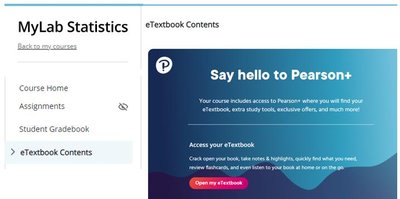
MyLab Statistics: Platform for assignments, quizzes, exams, and access to the eTextbook.
Guided Notebook: Printable notes to accompany lectures and assignments, essential for studying and homework completion.
Calculator: A TI-83 or TI-84 Plus calculator is required for statistical computations.
Grading and Evaluation
Grades are determined by a combination of online homework, quizzes, practice tests, and proctored exams. The grading scale is as follows:
A: 90–100%
B: 80–89.9%
C: 70–79.9%
D: 60–69.9%
F: 0–59.9%
Breakdown:
Online Homework: 20%
Online Quizzes & Practice Tests: 15%
3 Unit Exams + Final Exam: 65%
Lowest homework and quiz scores are dropped; the final exam can replace one missed unit exam.
Essential Study Strategies
Keys to Success in Online Statistics
To succeed in this course, students must be proactive, organized, and resourceful. The following strategies are recommended:
Time Management: Plan to work on the course 4–5 days per week, 2–3 hours per day.
Resource Utilization: Use the syllabus, course calendar, guided notes, eText, and instructor support as primary resources.
Active Note-Taking: Print and complete guided notes by hand; these are essential for homework and quizzes.
Practice and Review: Take advantage of unlimited practice tests and review mistakes before retaking quizzes or tests.
Communication: When seeking help, provide specific details about what you have tried and reference similar examples from your notes.
Example of effective communication with the instructor: "Here is the Ask Instructor link to the problem I'm stuck on. I think it is like Example 5 on p. 133. I used InvNorm on my calculator and entered .95 for the area, μ = 72.9, and σ = 2.4. The answer I got is 76.85. Would you help me understand what I did wrong?"
Course Policies and Academic Integrity
Expectations and Support
Students are expected to adhere to deadlines, maintain academic integrity, and communicate professionally. Plagiarism, cheating, and other forms of academic misconduct are strictly prohibited and may result in course failure.
Disability Accommodations: Available through the college’s disability services office.
Technical Support: Provided by the Center for Teaching Arts and Technology and the Help Desk.
Learning Centers: Offer tutoring and additional support for statistics assignments.
Course Calendar and Workflow
Assignment and Exam Schedule
The course follows a structured calendar with weekly assignments, quizzes, and exams. All deadlines are firm, with accommodations only for documented disabilities. Students should regularly check their email and course announcements for updates.
Required Materials and Technology
Textbook and Calculator
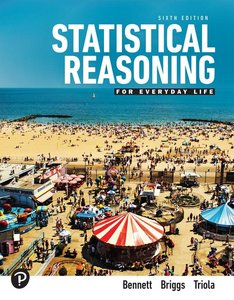
Textbook: Statistical Reasoning for Everyday Life, 6th Edition, Bennett, Briggs, Triola. Access is included with tuition via MyLab Statistics.
Calculator: TI-83 or TI-84 Plus (no substitutes allowed).
Notebook: 2–2.5 inch three-ring binder for organizing printed notes and assignments.
Using Course Resources Effectively
Guided Notes and eText
Guided notes are provided for each chapter and must be printed and completed by hand. These notes, along with the eText and media assignments, are essential for mastering the material and preparing for assessments.
Guided notes direct students to key concepts and examples.
Media assignments and videos supplement the textbook and reinforce understanding.
Homework and quizzes are based on the material covered in the notes and eText.
Technology Tools for Success
CamScanner for Submitting Assignments
Students are required to submit handwritten assignments as PDFs. CamScanner is recommended for creating clear, well-cropped PDF scans using a smartphone.

Install CamScanner from your device’s app store.
Scan and crop pages, save as PDF, and email to the instructor from your official college email account.
Summary Table: Course Success Checklist
Requirement | Description |
|---|---|
Print Course Information & Notes | Organize in a 3-ring binder for reference and study |
Access MyLab Statistics | Complete assignments, quizzes, and exams online |
Request TI-84 Calculator | Essential for statistical calculations |
Sign up for Remind | Receive class announcements and communicate with instructor |
Complete Orientation Assignment | Score 100% before proceeding with coursework |
Attend/Watch Zoom Orientation | Understand course expectations and resources |
Final Notes
Success in statistics requires consistent effort, resourcefulness, and a willingness to seek help when needed. Use all available resources, stay organized, and communicate professionally with your instructor. Remember, statistical reasoning is an essential skill for both academic and professional life.
