Back
BackIntroductory Statistics: Course Structure, Success Strategies, and Study Skills
Study Guide - Smart Notes
 Tailored notes based on your materials, expanded with key definitions, examples, and context.
Course Overview and Introduction
Purpose and Scope of Statistics
Statistics is the science of collecting, analyzing, interpreting, and presenting data. This course, MATH 1530, is designed to introduce students to both descriptive and inferential statistics, equipping them with the skills to interpret statistical information, solve real-world problems, and communicate findings effectively. While mastery of all statistical methods is not expected in an introductory course, students will gain the foundational knowledge necessary for further study and for critical engagement with statistical information in everyday life and professional contexts.
Descriptive Statistics: Focuses on summarizing and organizing data using measures such as mean, median, mode, range, and standard deviation.
Inferential Statistics: Involves making predictions or inferences about a population based on a sample, including estimation and hypothesis testing.
Statistical Reasoning: Enables critical evaluation of statistical reports and the ability to converse with experts.
Applications: Statistics is essential for citizenship, employment, and lifelong learning in a data-driven world.
Additional info: H.G. Wells emphasized the importance of statistical thinking for modern citizenship, highlighting its necessity alongside literacy.
Course Structure and Resources
Course Components
The course is delivered asynchronously online, with no set meeting times. Students are expected to engage with the following components:
Momentum: The main course platform for announcements, technical support, and access to course documents.
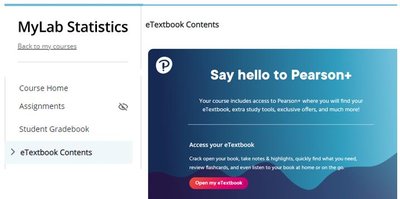
MyLab Statistics: The platform for assignments, quizzes, exams, and access to the eTextbook.
Guided Notebook: Printable notes and guided activities to support learning and exam preparation.
Instructor Support: The instructor provides resources, timely responses to emails, and encouragement, but students are expected to use all available resources before seeking direct help.
Student Responsibilities: Commitment, organization, time management, and proactive communication are essential for success.
Course Materials
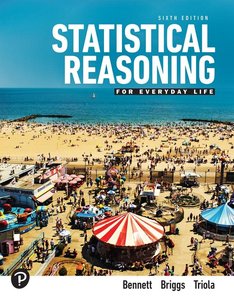
Textbook: Statistical Reasoning for Everyday Life (6th Edition) by Bennett, Briggs, Triola. Access is included with tuition via MyLab Statistics.
Calculator: TI-83 or TI-84 Plus (or equivalent) is required. Available for checkout from the library.
Notebook: A 2–2.5 inch three-ring binder for organizing printed notes and assignments.
Technology: Reliable internet and a computer are necessary for course participation.
Course Policies and Success Strategies
Grading and Evaluation
Grades are determined by a combination of online homework, quizzes, practice tests, and exams. The grading scale is as follows:
A: 90–100%
B: 80–89.9%
C: 70–79.9%
D: 60–69.9%
F: 0–59.9%
Breakdown:
Online Homework: 20%
Quizzes & Practice Tests: 15%
Unit Exams & Final: 65%
Policies include dropping the lowest homework and quiz scores, and allowing the final exam to replace one missed unit exam.
Assignments and Deadlines
All assignments, quizzes, and tests have strict deadlines as shown on the course calendar.
Late submissions incur a 10% penalty and are only accepted up to the test date for that material.
Exams must be taken in a designated testing center; no extensions are granted except for documented disabilities.
Academic Integrity
Plagiarism, cheating, fabrication, and facilitation are strictly prohibited. Violations may result in an "F" for the assignment or course and administrative action.
Student Support and Accessibility
Learning Centers offer tutoring and additional help.
Disability accommodations are available through the college’s disability services office.
Technical support is provided for platform and access issues.
Study Skills and Course Navigation
Using Course Resources Effectively
Success in this course depends on using all available resources before seeking instructor help. Key resources include:
Syllabus: Primary reference for policies and grading.
Course Calendar: Reference for all due dates and exam windows.
eText and Media Assignments: Main source of instructional content, including videos and readings.
Guided Notes: Structured note-taking to reinforce learning and provide examples for assignments.
Homework and Quizzes: Assess understanding and prepare for exams; multiple attempts allowed for mastery.
Practice Tests: Unlimited attempts to prepare for unit exams; review mistakes before retaking.
Ask My Instructor: Tool for targeted help after other resources have been used.

Time Management and Organization
Plan to work on the course 4–5 days per week, 2–3 hours per day.
Stay ahead of deadlines and avoid last-minute work.
Organize notes and assignments in a binder for easy reference.
Set reminders for important dates and deadlines.
Technology and Platform Navigation
Access all course materials through Momentum and MyLab Statistics.
Use the eTextbook for reading, highlighting, and reviewing content.
Borrow a TI-83/84 calculator if needed and ensure you have access to a reliable computer and internet.
Course Learning Outcomes
Key Competencies
Apply statistical reasoning to solve conceptual and applied problems.
Classify data types and sampling methods.
Organize and graphically display data.
Calculate and interpret measures of center and variation.
Solve probability problems and work with discrete and normal distributions.
Construct and interpret confidence intervals and hypothesis tests.
Analyze correlation and regression for two-variable data.
Checklist for Getting Started
Review Momentum homepage and print course documents.
Read the entire Course Information document.
Request a TI-84 calculator if needed.
Sign up for class announcements on Remind.
Access MyLab Statistics with your official email.
Complete the Orientation Assignment with a score of 100%.
Attend or watch the Zoom Orientation session.
Complete the Attendance Verification Assignment as instructed.
Additional Tools and Tips
Using CamScanner for Submitting Assignments
CamScanner is recommended for scanning handwritten assignments and notes as PDFs for submission. The app is free and available for both iOS and Android devices. Follow the provided instructions to ensure your documents are clear and properly formatted for grading.

Final Notes and Encouragement
Your instructor is committed to your success and encourages you to use all resources, stay organized, and communicate proactively. Remember, success in statistics—and in this course—requires consistent effort, critical thinking, and effective use of the tools provided. Good luck, and have a wonderful semester!