 Back
BackMAT 118 Unit 4 Exam Review – Statistics Study Guidance
Study Guide - Smart Notes
 Tailored notes based on your materials, expanded with key definitions, examples, and context.
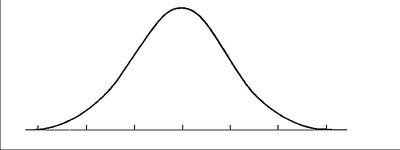
Q1. The cost of unleaded gasoline in Syracuse once followed an unknown distribution with a mean of $3.19 and a standard deviation of $0.15. Twenty-five gas stations from Syracuse are randomly chosen. We are interested in the average cost of gasoline for the 25 gas stations.
Background
Topic: Sampling Distributions and Central Limit Theorem
This question tests your understanding of the sampling distribution of the sample mean, including how to calculate its standard deviation and use it to find probabilities and percentiles.
Key Terms and Formulas:
Sample mean (): The average value from a sample.
Population mean (): The average value from the entire population.
Population standard deviation (): The spread of values in the population.
Standard deviation of the sample mean (standard error):
Central Limit Theorem: For large enough , the sampling distribution of is approximately normal.
Z-score formula:
Step-by-Step Guidance
Identify the known values: , , .
Calculate the standard deviation for the sample mean (standard error): .
For probability questions, use the normal distribution with mean and standard error .
To find probabilities for intervals (e.g., between and ), convert the values to z-scores using .
For percentiles, use the z-score corresponding to the desired percentile and solve for .
Try solving on your own before revealing the answer!
Final Answer:
For part (a):
For probability questions, use the z-score formula and normal distribution tables to find the required probabilities.
For the 90th percentile, use the z-score for 0.90 and solve for .
Each answer uses the correct formulas and reasoning based on the sampling distribution of the mean.
Q2. According to a recent survey of 1,200 people, 43% feel that the president is doing an acceptable job. We are interested in the population proportion of people who feel the president is doing an acceptable job.
Background
Topic: Sampling Distribution of Sample Proportion
This question tests your ability to estimate population proportions, check normality conditions, and calculate probabilities using the sampling distribution of the sample proportion.
Key Terms and Formulas:
Sample proportion ():
Standard deviation of sample proportion:
Normality condition:
Z-score formula:
Step-by-Step Guidance
Calculate the sample proportion: (if is given, otherwise use ).
Calculate .
Check the normality condition: .
Calculate the standard deviation: 53;..
For probability questions, convert the bounds to z-scores and use the normal distribution table.
Try solving on your own before revealing the answer!
Final Answer:
Sample proportion:
Standard deviation:
Probability for approval rating between 42% and 47%: Use z-scores and normal distribution tables.
Each answer uses the correct formulas and reasoning based on the sampling distribution of the proportion.
Q3. A sample of 64 small bags of the same brand of candies was selected. Assume that the population distribution of bag weights is normal. The mean weight was 4 ounces with a standard deviation of 0.2 ounces. Construct a 92% confidence interval for the population mean weight of the candies.
Background
Topic: Confidence Intervals for the Mean (Normal Distribution)
This question tests your ability to construct a confidence interval for the population mean using sample statistics and the normal distribution.
Key Terms and Formulas:
Sample mean (): The average weight from the sample.
Sample standard deviation (): The spread of weights in the sample.
Confidence interval formula:
: Critical value for the desired confidence level.
Step-by-Step Guidance
Identify the sample mean (), sample standard deviation (), and sample size ().
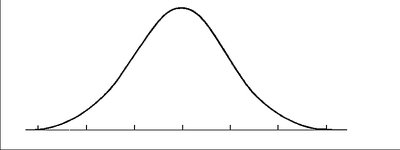
Find the critical z-value () for a 92% confidence interval.
Calculate the standard error: .
Set up the confidence interval: .
Try solving on your own before revealing the answer!
Final Answer:
92% confidence interval: (where is the critical value for 92% confidence).
This interval estimates the true population mean weight of the bags of candy.
Q4. Suppose that 25 children, who were learning to ride two-wheel bikes, were surveyed to determine how long they had to use training wheels. It was revealed that they used them an average of six months with a sample standard deviation of three months. Assume that the underlying population distribution is normal. Construct a 95% confidence interval for the population mean length of time using training wheels.
Background
Topic: Confidence Intervals for the Mean (Small Sample, Normal Distribution)
This question tests your ability to construct a confidence interval for the population mean using the t-distribution, since the sample size is small ().
Key Terms and Formulas:
Sample mean (): The average time from the sample.
Sample standard deviation (): The spread of times in the sample.
Confidence interval formula:
: Critical value from the t-distribution for the desired confidence level and degrees of freedom ().
Step-by-Step Guidance
Identify the sample mean (), sample standard deviation (), and sample size ().
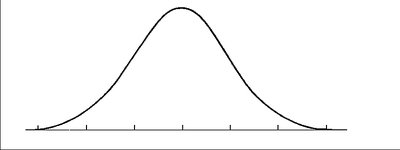
Find the critical t-value () for a 95% confidence interval with .
Calculate the standard error: .
Set up the confidence interval: .
Try solving on your own before revealing the answer!
Final Answer:
95% confidence interval: (where is the critical value for 95% confidence and ).
This interval estimates the true population mean length of time for the 25 children using training wheels.
Q5. Suppose that a market research firm is hired to estimate the percentage of adults living in a large city who have smartphones. One thousand randomly selected adult residents in this city are surveyed to determine whether they have smartphones. Of the 1000 people surveyed, 865 responded yes - they own smartphones. Using a 94% confidence level, compute a confidence interval estimate for the true proportion of adult residents of this city who have smartphones.
Background
Topic: Confidence Interval for Population Proportion
This question tests your ability to construct a confidence interval for a population proportion using sample data.
Key Terms and Formulas:
Sample proportion (): 3ko9
Standard error:
Confidence interval formula:
: Critical value for the desired confidence level.
Step-by-Step Guidance
Calculate the sample proportion: .
Calculate .
Calculate the standard error: .
Find the critical z-value () for a 94% confidence interval.
Set up the confidence interval: .
Try solving on your own before revealing the answer!
Final Answer:
94% confidence interval: (where is the critical value for 94% confidence).
This interval estimates the true proportion of adult residents who have smartphones.
Q6. The following data represent the pH of rain for a random sample of 12 rain dates. A normal probability plot suggests the data could come from a population that is normally distributed. A boxplot indicates there are no outliers. The data was processed through StatCrunch with the t-score table and a 96% confidence level.
Background
Topic: Confidence Interval for Population Mean (Small Sample, Normal Distribution)
This question tests your ability to interpret sample statistics and confidence intervals for the population mean.
Key Terms and Formulas:
Sample mean (): The average pH from the sample.
Standard error: The estimated standard deviation of the sample mean.
Confidence interval:
Step-by-Step Guidance
Identify the sample mean () and standard error ().
Interpret the confidence interval: .
Explain what the confidence interval means in the context of the population mean pH.
Try solving on your own before revealing the answer!
Final Answer:
Point estimate:
Standard error:
Interpretation: With 96% confidence, the true population mean pH of rain is between and .
Q7. A survey was conducted that asked 1018 people how many books they had read in the past year. Results indicated the sample mean equal to 14.5 books and a standard deviation of 16.6 books. The data was processed through StatCrunch with the z-score tables and a 95% confidence level.
Background
Topic: Confidence Interval for Population Mean (Large Sample, Normal Distribution)
This question tests your ability to interpret sample statistics and confidence intervals for the population mean.
Key Terms and Formulas:
Sample mean (): The average number of books read.
Standard error: The estimated standard deviation of the sample mean.
Confidence interval:
Step-by-Step Guidance
Identify the sample mean () and standard error ().
Interpret the confidence interval: .
Explain what the confidence interval means in the context of the population mean number of books read.
Try solving on your own before revealing the answer!
Final Answer:
Standard error:
Interpretation: With 95% confidence, the true population mean number of books read is between and .
