 Back
BackMATH 1530 Introductory Statistics: Course Structure, Success Strategies, and Study Resources
Study Guide - Smart Notes
 Tailored notes based on your materials, expanded with key definitions, examples, and context.
Course Overview: Introductory Statistics (MATH 1530)
Introduction to Statistics
This course provides a foundational understanding of both descriptive and inferential statistics, equipping students with the skills to analyze data, interpret statistical reports, and apply statistical reasoning in real-world contexts. The curriculum covers essential concepts such as probability, data classification, sampling methods, graphical data representation, measures of center and variation, probability distributions, confidence intervals, hypothesis testing, and linear correlation and regression. The course is non-calculus based and emphasizes practical applications.
Descriptive Statistics: Focuses on summarizing and organizing data using tables, graphs, and numerical measures.
Inferential Statistics: Involves making predictions or inferences about a population based on sample data.
Statistical Reasoning: Enables critical interpretation of statistical research and supports informed decision-making.
Key Concepts: Probability, measures of center (mean, median), measures of variation (range, standard deviation), sampling, estimation, hypothesis testing, correlation, and regression.
Example: Understanding that a carefully planned survey of 1700 voters can yield reliable results due to proper sampling techniques.
Course Structure and Requirements
Course Components
The course is delivered asynchronously online, requiring students to manage their own schedules and utilize provided resources. Success in this course depends on consistent engagement, organization, and proactive use of support tools.
Momentum: Course management platform for news, technical support, calculator requests, and content access.
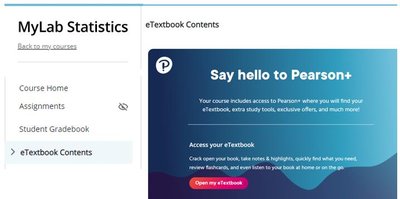
MyLab Statistics: Platform for assignments, quizzes, exams, and eText access.
Guided Notebook: Structured notes for each exam and review, to be printed and completed by hand.
Instructor Support: Timely responses to emails and encouragement throughout the course.
Student Responsibilities: Commitment, organization, calmness, planning, careful reading, and communication.
Example: Students are expected to print all course information, organize it in a binder, and keep the calendar visible for tracking deadlines.
Course Calendar and Deadlines
Assignments, quizzes, and exams have strict deadlines. Homework and quizzes are due at 11:59 pm ET, while exams are due at 1:00 pm ET on Saturdays. Extensions are not granted except for documented disability accommodations.
Weekly Schedule: Includes media assignments, homework, quizzes, practice tests, and exams.
Drop Grades: Two lowest homework scores and one lowest quiz score are dropped; one missed exam can be replaced by the final exam score.
Learning Outcomes and Competencies
General and Specific Competencies
The course aims to develop critical thinking, communication, and problem-solving skills through mathematical and statistical reasoning. Students will learn to:
Apply statistical reasoning to solve conceptual and applied problems.
Classify data as qualitative, quantitative discrete, or quantitative continuous.
Identify and implement sampling methods.
Organize and graphically display data.
Calculate and interpret descriptive statistics (mean, median, range, standard deviation).
Solve probability problems and work with discrete and continuous random variables.
Analyze normal distributions and construct sampling distributions.
Determine and interpret confidence intervals for population means and proportions.
Conduct hypothesis tests and form valid conclusions.
Assess linear correlation and regression, and use regression equations for prediction.
Example: Using technology (TI-84 calculator) to analyze data and model real-world behavior.
Course Materials and Technology
Required Materials
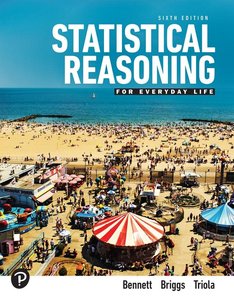
Textbook: Statistical Reasoning for Everyday Life, Bennett, Briggs, Triola, 6th Edition (Pearson MyLab access included).
Calculator: TI-83 or TI-84 Plus (required; available for checkout from RSCC library).
Notebook: 2–2.5 inch three-ring binder for organizing printed notes.
Internet: Reliable high-speed access and a working computer.
Grading and Evaluation
Grading Scale and Procedures
A: 90–100%
B: 80–89.9%
C: 70–79.9%
D: 60–69.9%
F: 0–59.9%
Grade Components:
Online Homework: 20%
Online Quizzes & Practice Tests: 15%
3 Unit Exams + Final: 65%
Assignment Policies: Media assignments must be completed before homework; late submissions incur a 10% penalty; two lowest homework and one lowest quiz scores are dropped; final exam can replace one missed unit exam.
Success Strategies for Online Statistics
Planning and Organization
Success in an online statistics course requires careful planning, consistent engagement, and effective use of resources. Students should:
Work on the course 4–5 days per week, 2–3 hours per day.
Print and organize all course materials in a binder.
Set reminders for assignment and exam deadlines.
Check Raidernet email weekly for announcements.
Use guided notes to reinforce learning and prepare for assignments.
Example: Reviewing notes and examples before attempting homework or quizzes, and using the "Ask My Instructor" tool with specific questions and evidence of prior effort.
Resource Utilization
Students are encouraged to use all available resources, including:
Syllabus and course calendar for policy and deadline questions.
Media assignments and eText for content delivery.
Guided notes for structured learning and reference.
Practice tests for exam preparation.
Learning Centers for tutoring support.
Instructor for clarification after other resources have been used.

Technical Support and Additional Resources
Support Services
CTAT: For Momentum access issues.
Help Desk: For general technical problems.
Learning Center: Tutoring in statistics and other subjects.
Academic Integrity and Accessibility
Academic Misconduct
Plagiarism, cheating, fabrication, and facilitation are strictly prohibited. Consequences include assignment or course failure and administrative holds.
Disability Accommodations
Reasonable accommodations are provided for eligible students. Contact the disability services office for procedures.
Title IX and Emergency Information
Sexual discrimination and harassment are prohibited. Emergency procedures and campus closure information are provided for student safety.
Attendance Verification and Course Start Procedures
Attendance Verification Assignment
Students must complete and submit the attendance verification assignment by printing, completing by hand, and scanning as a PDF. This ensures readiness and ability to follow instructions.
CamScanner Instructions
CamScanner is recommended for scanning and submitting handwritten assignments as PDFs. Follow the app instructions for setup, scanning, and emailing documents.

Final Notes and Encouragement
The instructor is committed to student success and encourages proactive communication and resource utilization. Students are advised to prioritize their well-being and academic progress, and to celebrate their achievements upon course completion.

Summary Table: Course Requirements and Resources
Requirement | Resource | Purpose |
|---|---|---|
Print Course Information & Notes | Guided Notebook | Organize and reference material |
Request Calculator | RSCC Library | Required for assignments and exams |
Sign up for Remind | Momentum Homepage | Receive class announcements |
Access MyLab Statistics | Pearson Homepage | Complete assignments and quizzes |
Complete Orientation Assignment | MyLab Statistics | Verify readiness and understanding |
Attend Zoom Orientation | Momentum/Email | Course overview and Q&A |
Additional info: These notes are based on the course syllabus, orientation, and student success strategies for MATH 1530 Introductory Statistics. They provide a comprehensive overview of course structure, requirements, and resources, suitable for exam preparation and academic planning.
