 Back
BackObservation, Experimentation, and Experimental Design in Statistics
Study Guide - Smart Notes
 Tailored notes based on your materials, expanded with key definitions, examples, and context.
Observation & Experimentation
Statistical Objective and Cause & Effect
Statistics aims to determine, with a measure of confidence, how varying the amount of an explanatory variable (also called the input or x-variable) affects the value of a response variable (output or y-variable). Identifying which variable is explanatory and which is response should be clear from the research question.
Explanatory Variable: The variable manipulated or categorized to observe its effect.
Response Variable: The outcome measured in the study.
Example: In a study on cell phone usage and brain tumors, cell phone usage is the explanatory variable, and whether brain cancer was contracted is the response variable.
Basics of Collecting Data
Observational Studies vs. Designed Experiments
Data in statistics is typically collected through observational studies or designed experiments:
Observational Study: Researchers observe and measure characteristics without influencing or controlling variables.
Designed Experiment: Researchers apply a treatment to influence or control variables and observe the effects.
Examples
Observational Study Example: Tracking cell phone usage and brain tumor development in a random sample of users.
Designed Experiment Example: Exposing rats to cell phone radio frequencies and examining their brains for tumors.
Distinguishing Study Types
Identifying Observational vs. Experimental Studies
Asking people about preferences without intervention is observational.
Assigning treatments or interventions (e.g., taste tests, medication dosages) is experimental.
Confounding
Definition and Impact
Confounding occurs when an external factor is associated with both the explanatory and response variables but is not part of the causal pathway. This can obscure or falsely suggest causation.
Observational studies can only claim association, not causation, due to potential confounding.
Confounding factors may mask true causation or create a false appearance of causation.
Types of Observational Studies
Cross-sectional, Case-control, and Cohort Studies
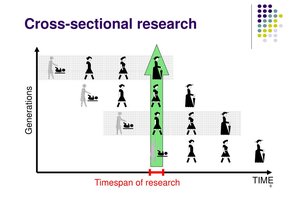
Cross-sectional Studies: Collect data at a specific point or short period in the present.
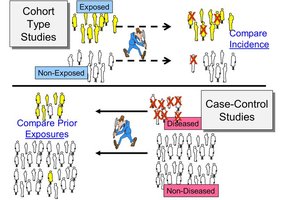
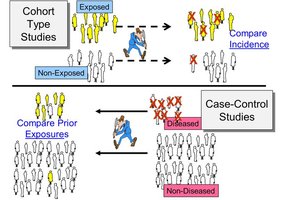
Case-control Studies: Retrospective; compare individuals with a characteristic (cases) to those without (controls) by looking back in time.
Cohort Studies: Prospective; follow a group (cohort) into the future, recording characteristics over time.
Experimental Design
Planning and Conducting Experiments
Designing an experiment involves describing the overall plan for conducting the study, including how subjects are assigned to treatments and how outcomes are measured.

Key Characteristics of Experiments
Controlled Study: Determines the effect of varying explanatory variables on a response variable.
Treatment: Any combination of values of the factors (explanatory variables).
Experimental Unit (Subject): The individual or item receiving the treatment.
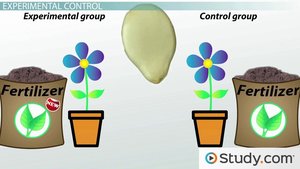
Control Group: Baseline group for comparison.
Placebo: An inactive treatment used to control for psychological effects.
Blinding: Concealing treatment assignment from subjects (single-blind) or both subjects and researchers (double-blind).
Methods of Group Assignment
Completely Randomized Design
Each experimental unit is randomly assigned to a treatment, ensuring independence in group assignment.
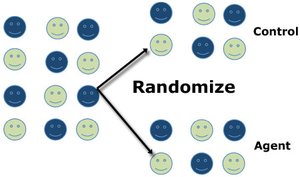
Completely Randomized Design: Random assignment of all subjects to treatments.
Matched-Pairs Design
Experimental units are paired based on similar characteristics, and each pair is split between treatments. This design controls for confounding by matching subjects as closely as possible.
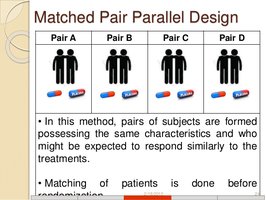
Matched Pairs Parallel: Pairs are formed and each member is randomly assigned to a different group.
Matched Pairs Before and After: Each subject serves as their own control, with measurements taken before and after treatment.
Examples of Experimental Design
Completely Randomized Design Example
Scenario: 300 adult males with colds are randomly divided into two groups: one receives a drug, the other a placebo.
Response Variable: Presence of cold symptoms after treatment.
Factors Controlled: Gender, age, location, health status, medication.
Treatments: Experimental drug and placebo.
Random Assignment: Used for factors not directly controlled.
Design Type: Completely randomized design.
Subjects: 300 adult males aged 25–29 with a cold.
Matched-Pairs Design Example
Scenario: Students take pre- and post-tests in a math course; the difference in scores is analyzed.
Design Type: Matched-pairs (each student is matched with themselves).
Response Variable: Difference in test scores.
Treatment: The mathematics course.
