 Back
BackRVCC Statistics I (MATH 110) Syllabus and Course Overview Study Guide
Study Guide - Smart Notes
 Tailored notes based on your materials, expanded with key definitions, examples, and context.
Course Overview: Statistics I (MATH 110)
Introduction to Statistics I
This course provides a foundational introduction to statistics, focusing on the collection, organization, analysis, and interpretation of data. Students will learn both descriptive and inferential statistical methods, including probability theory and hypothesis testing, as applied to real-world data.
Course Title: Statistics I (MATH 110)
Credits: 3
Prerequisite: Completion of Intermediate Algebra or appropriate placement test score
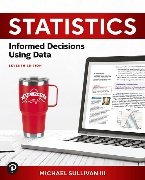
Required Materials: Scientific calculator, textbook "Statistics: Informed Decisions Using Data" (7th edition), access to statistical software (StatCrunch, R, Minitab)
Course Topics and Structure
Descriptive Statistics
Descriptive statistics involve methods for collecting, organizing, and summarizing data. These techniques help students understand the basic features of data sets and present them in meaningful ways.
Data Collection: Methods such as simple random sampling, stratified sampling, and identifying bias in sampling.
Organizing Data: Techniques for displaying qualitative and quantitative data, including frequency tables and graphical representations.
Numerical Summaries: Measures of central tendency (mean, median, mode), dispersion (range, variance, standard deviation), and position (quartiles, percentiles, outliers).
Boxplots and Five-Number Summary: Visual tools for summarizing data distributions.
Probability
Probability theory forms the basis for inferential statistics. Students learn to calculate the likelihood of events and understand the properties of probability distributions.
Probability Rules: Addition rule, complements, independence, and multiplication rule.
Conditional Probability: Calculating probabilities given certain conditions.
Discrete Probability Distributions: Understanding random variables and the binomial distribution.
Normal Probability Distribution: Properties and applications of the normal curve.
Inferential Statistics
Inferential statistics allow students to make conclusions about populations based on sample data. This includes estimation and hypothesis testing.
Sampling Distributions: Distribution of sample means and proportions.
Estimating Parameters: Constructing and interpreting confidence intervals for population means and proportions.
Hypothesis Testing: Conducting tests for population means and proportions using p-values and critical values.
Interpreting p-values: Understanding statistical significance in context.
Key Definitions and Concepts
Measures of Central Tendency
Mean: The arithmetic average of a data set.
Median: The middle value when data are ordered.
Mode: The value that appears most frequently.
Measures of Dispersion
Range: Difference between maximum and minimum values.
Variance: Average squared deviation from the mean.
Standard Deviation: Square root of variance.
Probability Rules
Addition Rule:
Multiplication Rule:
Complement Rule:
Normal Distribution
Standard Normal Distribution:
Properties: Symmetrical, bell-shaped, mean = 0, standard deviation = 1.
Confidence Intervals
Confidence Interval for Mean:
Confidence Interval for Proportion:
Hypothesis Testing
Null Hypothesis (): The statement being tested.
Alternative Hypothesis (): The statement we are trying to find evidence for.
p-value: Probability of observing data as extreme as the sample, assuming is true.
Course Schedule and Assessment
Weekly Topics
Weeks 1-4: Descriptive Statistics (Chapters 1-3)
Weeks 5-8: Probability and Distributions (Chapters 5-7)
Weeks 9-14: Inferential Statistics (Chapters 8-10)
Grading System
Component | Weight |
|---|---|
MSL Homework | 30% |
Three Tests | 40% |
Final Exam | 30% |
Grading Scale:
Grade | Percentage |
|---|---|
A | 90-100% |
B+ | 86-89% |
B | 80-85% |
C+ | 76-79% |
C | 70-75% |
D | 60-69% |
F | 0-59% |
Academic Integrity and Support
Academic Integrity: All work must be your own. Violations will be reported.
Support Services: Office hours, study groups, Academic Support Center, and online resources are available.
AI Tools: Permitted for review and learning, but not for completing assessments.
Class Etiquette and Preparation
Be respectful and attentive during class.
Come prepared with materials and a positive attitude.
Stay organized and legible in assignments.
Summary Table: Course Topics by Week
Week | Main Topics |
|---|---|
1-2 | Introduction, Sampling, Organizing Data |
3 | Graphical Misrepresentations, Central Tendency, Dispersion |
4 | Position, Outliers, Boxplots |
5-6 | Probability Rules, Conditional Probability |
7 | Discrete Random Variables, Binomial Distribution |
8 | Normal Distribution |
10-11 | Sampling Distributions, Estimation |
12-13 | Hypothesis Testing |
14 | Review, Final Exam |

Additional info: This guide summarizes the syllabus and course structure for Statistics I at RVCC, providing a comprehensive overview of topics, grading, and academic expectations. It is suitable for exam preparation and orientation to the course.
