 Back
BackStatistics: Data Collection and Sampling Methods - Study Guide
Study Guide - Smart Notes
 Tailored notes based on your materials, expanded with key definitions, examples, and context.
Introduction to Statistics
Parameters vs. Statistics
Statistics is the science of collecting, organizing, analyzing, and interpreting data to make informed decisions. Understanding the distinction between populations and samples, as well as parameters and statistics, is fundamental in statistical analysis.
Data: Information gathered from counting, measuring, or collecting responses.
Population: The entire set containing all data points of interest ("every", "each").
Sample: A subset of the population, selected for study.
Parameter: A numerical value summarizing a characteristic for the whole population.
Statistic: A numerical value summarizing a characteristic for a sample.
Example: The salary of every employee at a marketing firm is a population; the average salary of all employees is a parameter. The salaries of 12 out of 100 employees is a sample; the average salary of those 12 is a statistic.
Practice Questions
Collecting test scores of every other student in a class: Sample
46.5% of all registered voters are registered democrats: Parameter
Amount spent by each customer in a grocery store: Population
Average workout duration from 40 gym members: Statistic
Types of Data
Qualitative vs. Quantitative Data
Data can be categorized as qualitative or quantitative, each with distinct properties and uses in statistical analysis.
Qualitative Data: Describes qualities or categories (e.g., favorite color, eye color).
Quantitative Data: Describes quantities or numerical values (e.g., number of students, dice roll).
Discrete Quantitative Data: Numbers that cannot be broken down further (e.g., number of goals scored).
Continuous Quantitative Data: Numbers that can be broken down infinitely (e.g., time, temperature).
Example: Surveying nationalities is qualitative; measuring distances walked is quantitative and continuous.
Brands of smartphones owned: Qualitative
Number of goals scored: Discrete Quantitative
Time to complete a lap: Continuous Quantitative


Levels of Measurement
Classification of Data by Measurement Level
Levels of measurement describe the nature of data and what mathematical operations are meaningful.
Level | Description | Qualitative/Quantitative | Example |
|---|---|---|---|
Nominal | Categories, names, or labels; no order; no calculations | Qualitative | Hair color |
Ordinal | Ordered data; differences are not meaningful | Qualitative or Quantitative | Letter grades, jersey numbers |
Interval | Meaningful differences; no true zero; ratios are meaningless | Quantitative | Temperature |
Ratio | True zero exists; ratios are meaningful | Quantitative | Heights, distances |
Example: Birth years (interval), satisfaction ratings (ordinal), working hours (ratio), favorite music genre (nominal).




Practice: Rating symptoms as mild, moderate, or severe is ordinal; birth weights are ratio; favorite menu item is nominal.




Example: Recording water temperature at multiple points is interval; saying water is "twice as hot" does not make sense because interval data lacks a true zero.


Collecting Data
Observational Studies vs. Experiments
Data collection methods are crucial for determining whether causation can be inferred.
Experiment: Apply a treatment and measure its effects; causation can be assumed if properly controlled.
Observational Study: No intervention; only measure characteristics; causation cannot be assumed.
Example: Testing medication with placebo and actual treatment is an experiment; surveying sleep habits is observational.


Sampling Methods
Simple Random Sampling
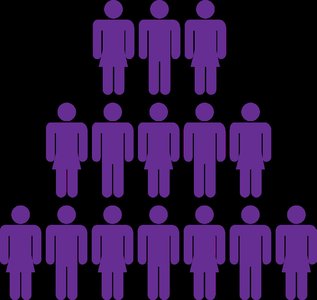
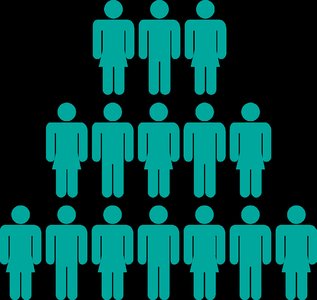
Sampling is the process of selecting a subset of subjects from a population. A representative sample accurately reflects the characteristics of the population.
Simple Random Sampling (SRS): Each subject and each possible group is equally likely to be selected.
Representative Sample: Contains proportions of characteristics similar to the population.
Example: Randomly selecting marbles from a bag or students from a class.

Other Sampling Methods
When SRS is impractical, other methods are used:
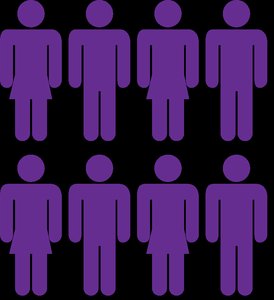
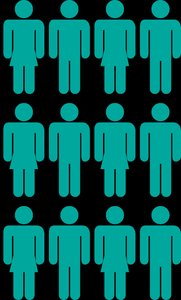
Systematic Sampling: Select every nth subject from the population.
Cluster Sampling: Divide population into groups (clusters), then randomly select entire clusters.
Stratified Sampling: Divide population into strata with similar characteristics, then randomly select subjects from each stratum.
Method | Description | Example |
|---|---|---|
SRS | Randomly select sample from whole population | Random number generator for employee survey |
Systematic | Select every nth subject | Testing every 12th cookie |
Cluster | Divide into clusters, select entire clusters | Randomly select 1 class per grade |
Stratified | Divide into strata, select from each stratum | Surveying undergrads and grad students |



Practice: Selecting every tenth unit is systematic; selecting random units from each machine is stratified; selecting random cases is cluster.
Summary Table: Sampling Methods
Sampling Method | How It Works | When to Use |
|---|---|---|
Simple Random | Random selection from entire population | When all subjects are equally accessible |
Systematic | Select every nth subject | When a list of subjects is available |
Cluster | Divide into clusters, select whole clusters | When population is naturally grouped |
Stratified | Divide into strata, select from each | When subgroups are important |
Additional info: These notes cover Chapter 1: Data Collection, including definitions, examples, and practice questions relevant to introductory statistics. All images included directly reinforce the concepts explained in the adjacent paragraphs.
