 Back
BackUnit 4 Exam Review – Sampling Distributions, Confidence Intervals, and Probability
Study Guide - Smart Notes
 Tailored notes based on your materials, expanded with key definitions, examples, and context.
Q1. The cost of unleaded gasoline in Syracuse once followed an unknown distribution with a mean of $3.19 and a standard deviation of $0.15. Twenty-five gas stations from Syracuse are randomly chosen. We are interested in the average cost of gasoline for the 25 gas stations.
Background
Topic: Sampling Distribution of the Sample Mean
This question explores the properties of the sampling distribution for the sample mean, including its standard deviation (standard error), probability calculations, and percentiles.
Key Terms and Formulas
Population Mean (\mu): The average value in the population.
Population Standard Deviation (\sigma): The spread of values in the population.
Sample Size (n): The number of observations in the sample.
Standard Error (SE): The standard deviation of the sample mean.
Key Formula:
Step-by-Step Guidance
Identify the population standard deviation (\( \sigma = 0.15 \)) and the sample size (\( n = 25 \)).
Recall the formula for the standard error of the sample mean:
Substitute the given values into the formula:
Try solving on your own before revealing the answer!
Final Answer: 0.03
The standard deviation for the sample mean is 0.03, which means the average cost of gasoline for samples of 25 stations will typically vary by about $0.03 from the population mean.
Q1(b). Sketch of the graph.
Background
Topic: Sampling Distribution Shape
This part asks you to visualize the sampling distribution of the sample mean. For large enough samples, the Central Limit Theorem tells us this distribution will be approximately normal, even if the population distribution is not normal.
Key Terms
Central Limit Theorem (CLT): States that the sampling distribution of the sample mean approaches a normal distribution as the sample size increases.
The graph should be a normal (bell-shaped) curve centered at the population mean ($3.19).
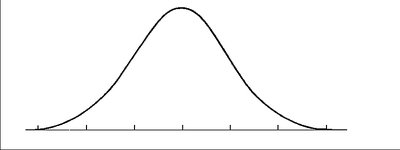
Try sketching the graph yourself before checking the example!
Q1(c). What's the probability that the average price for 25 gas stations is between $3.15 and $3.24?
Background
Topic: Probability Using the Sampling Distribution
This question asks you to find the probability that the sample mean falls within a certain range. This involves standardizing the values (finding z-scores) and using the normal distribution.
Key Terms and Formulas
Z-score:
Step-by-Step Guidance
Identify the endpoints: and .
Recall the population mean () and the standard error ( from part a).
Calculate the z-scores for both endpoints:
Use the standard normal table to find the probability between these two z-scores.
Try solving on your own before revealing the answer!
Final Answer: 0.9522
The probability that the average price is between $3.15 and $3.24 is approximately 0.9522, found by calculating the area under the normal curve between the two z-scores.
Q1(d). Find the probability that the average gas price for 25 gas stations is less than $3.16.
Background
Topic: Probability Below a Value (Left Tail)
This question asks for the probability that the sample mean is less than a specific value, using the normal distribution for the sample mean.
Key Terms and Formulas
Z-score:
Step-by-Step Guidance
Identify the value: .
Recall and .
Calculate the z-score:
Use the standard normal table to find the probability to the left of this z-score.
Try solving on your own before revealing the answer!
Final Answer: 0.1587
The probability that the average price is less than $3.16 is approximately 0.1587, based on the area to the left of the calculated z-score.
Q1(e). Find the probability that the average gas price for 25 gas stations is greater than $3.27.
Background
Topic: Probability Above a Value (Right Tail)
This question asks for the probability that the sample mean is greater than a specific value, using the normal distribution for the sample mean.
Key Terms and Formulas
Z-score:
Step-by-Step Guidance
Identify the value: .
Recall and .
Calculate the z-score:
Use the standard normal table to find the probability to the right of this z-score.
Try solving on your own before revealing the answer!
Final Answer: 0.0099
The probability that the average price is greater than $3.27 is approximately 0.0099, based on the area to the right of the calculated z-score.
Q1(f). Find the 90th percentile for the average gas price for the 25 gas stations. Interpret the results.
Background
Topic: Percentiles of the Sampling Distribution
This question asks you to find the value of the sample mean below which 90% of sample means would fall (the 90th percentile).
Key Terms and Formulas
Percentile: The value below which a given percentage of observations fall.
Z-score for 90th percentile: (look up in z-table, typically about 1.28)
Formula:
Step-by-Step Guidance
Find the z-score corresponding to the 90th percentile (use the z-table).
Recall and .
Plug the values into the formula:
Interpret: This value is the average price below which 90% of sample means would fall.
Try solving on your own before revealing the answer!
Final Answer: $3.2284
The 90th percentile for the average gas price is approximately $3.2284. This means that 90% of samples of 25 gas stations would have an average price below this value.
