Revel

Inspire engagement through active learning

Get started

Already registered? Sign in with your Pearson account.

Sign in to Revel

Need access? Start here!

Student

Educator

Immerse students in learning

People learn best by doing. Revel puts students in the driver's seat on their learning journey.

Revel® integrates interactives and assessments into a compelling digital narrative. By applying concepts as they read, students immerse themselves in learning, deepening their understanding.

It's your class, but their journey. Inspire learners to claim ownership with Revel.

Facilitate active learning to help students succeed

Revel enables students to read, practice and study in one continuous experience, anywhere and anytime.

Foster immersive learning

Active participation is the key to learning. Videos and interactives throughout the narrative empower students to analyze and apply concepts as they read.

Stay on track

Assessing student progress helps you keep the class on track. The educator dashboard yields performance insights that let you adjust your focus as needed.

Enable access anywhere

Both you and your students are always on the go. That’s why the Revel app enables access on all your devices, anywhere and anytime.

Deliver top content

Great content helps students think and reason. Revel combines world-class content, by top thought leaders, with tools supporting concept mastery.

Key features

Animations

Animations step students through the code line-by-line, showing what is happening in the program

Auto-graded coding exercises

Easily assign auto-graded programming exercises that allow students to practice essential coding skills and master key programming concepts.

Shared multimedia assignments

Many students today are savvy creators. Shared multimedia assignments enable you and your students to easily post and respond to videos and other media.

A case study: Revel use at North Georgia Technical College

Explore how Personal Finance students' final course scores improved significantly after implementation of Revel.

Available for these disciplines and more

Choose from these subject areas across the higher ed curriculum

Blogs

  • How to spot and support struggling students online

    Black boxes on a video call. Silence after asking a question. An empty discussion board. Teaching online can make it difficult to see when students need extra help.

    85% of students said the pandemic has negatively affected their grades and academic performance [1]. To prevent failing, how can you spot students falling behind and help them succeed online before it’s too late?

  • Healthy Eating: The COVID Contradiction

    By: Lynn Lafave

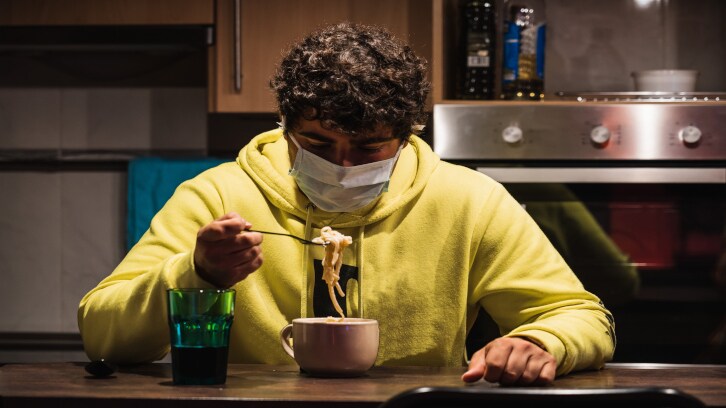
    From education to eating, the pandemic has impacted every aspect of society. We asked Dr. Lynne Lafave, the co-author of Nutrition: A Functional Approach, how COVID-19 has affected our nutrition and how students can learn to build healthier eating habits during these stressful times.

    How has COVID-19 affected nutrition habits?

    A great deal of research world-wide has investigated predictors of healthy and unhealthy eating habits. Food prepared and eaten at home has been generally found to be healthier with higher nutrient density (more nutrients per calorie eaten) and lower energy overall. As a result, preparing and eating food at home is considered an eating habit associated with improved health and nutrient sufficiency.

    In contrast, what we know is that adults, adolescents, and children are more likely to eat nutrient-poor energy-dense foods when the food is eaten away from home, school, or work. Examples of these nutrient-poor energy-dense foods include pastries, chips, soft drinks, and confections (candies and chocolate). The connecting characteristic is the ultra-processed nature of these foods and consuming larger proportions of these foods is a strong predictor of lower dietary quality and weight gain. Therefore, frequent eating food away from home is considered an unhealthy eating habit.

    So, when various physical distancing restrictions were implemented to prevent the spread of COVID-19 and people spent more time at home, it seemed a reasonable hypothesis that this could lead to improved healthy eating. But nothing could have been further from the truth.

    It seemed a reasonable hypothesis that spending more time at home during the pandemic could lead to improved healthy eating

    Researchers quickly began to investigate the effects of COVID on eating habits and found some surprising results.  In Italy, one of the first countries to institute lockdown measures, there was a significant increase in chips, sugary drinks, and red meat consumption among children and adolescents.

    Evidence continues to trickle in demonstrating that poor dietary choices and increased drinking behaviours have increased world-wide as a result of the pandemic. In fact, Canada's Chief Public Health Officer, Dr. Theresa Tam, used her year-end 2020 address to caution Canadians about their higher alcohol consumption and encourage non-alcoholic options.

    Why is the pandemic having a negative effect on eating habits?

    To understand the impact of the pandemic on eating habits, we first have to understand factors that influence them.

    Food choices are driven by a whole host of factors such as physiological aspects (hunger and appetite), cultural and social pressures, dietary components, familial and genetic factors, and cognitive-affective factors. Cognitive-affective factors such as perceived stress, anxiety, and depression may influence food choices which may help us to understand pandemic eating patterns.

    Research has linked anxiety and stress to unhealthy lifestyle choices including the desire to eat and drink to feel better. This type of eating as a coping mechanism represents a stress-avoidance strategy of emotional eating to manage negative emotional experiences.

    Popular culture addresses these ideas in media and comedy. Just think of a cartoon story about someone who has just broken up with their significant other, diving into a container of ice cream to drown their sorrows. Research evidence demonstrates that being in a state of sadness predisposes individuals to increased consumption of unhealthy foods.

  • Educators celebrate their remote teaching wins of 2020

    2020 proved to be a challenging year for educators, to say the least. Many instructors, however, rose to the challenge by bringing creative and collaborative teaching ideas into their online classrooms.

    To celebrate all the good things that happened in a tough year, we asked instructors to share their successes from the fall 2020 semester.

    Here are 4 trends describing what worked well for instructors:

    1. Keeping it short

    For a generation of students growing up on social media, instructors found that bite-sized activities kept them most engaged and attentive.

Webinars & events

Check out live webinars and on-demand recordings to hear from educators as they share teaching strategies and ideas.

No events to display

“Overall, Revel really helps keep students engaged, so their performance improves. When we were in a standard class where I gave paper and pencil quizzes, they ran towards a B- average. With Revel, they are pushing towards an A-. I think it’s because the embedded quizzes help keep them focused and help reinforce comprehension. That improves their confidence and improves their mood.”

– David Kiracofe, full-time professor of History at a two-year school in the southeast

Need help?

Complete the form below to receive more information on affordable, accessible content solutions.