Macroeconomics, Global Edition, 9th edition

Published by Pearson (24 November 2025) © 2026

  • Olivier Blanchard
  • Alessia Amighini Bocconi University Milan, Italy
  • Francesco Giavazzi Bocconi University, Milan Italy
Products list

Access details

  • Instant access once purchased
  • Offline access via app

Features

  • Learn with videos and interactives*
  • Highlight-to-translate in 100+ languages
  • Practice with quizzes and flashcards
  • AI-powered study support*

*Available for some titles

Products list

Access details

  • Instant access once purchased
  • Offline access via app

Features

  • Learn with videos and interactives*
  • Highlight-to-translate in 100+ languages
  • Practice with quizzes and flashcards
  • AI-powered study support*

*Available for some titles

Products list

Access details

  • Instant access once purchased
  • Offline access via app

Features

  • Learn with videos and interactives*
  • Highlight-to-translate in 100+ languages
  • Practice with quizzes and flashcards
  • AI-powered study support*

*Available for some titles

Title overview

Macroeconomics, Global Edition provides a clear framework for understanding how modern economies operate, adapt, and respond to change. Taking a global perspective, it explores the connections between goods, financial, and labour markets while helping learners build the analytical skills needed to interpret real-world economic developments. From economic growth, inflation, and unemployment to exchange rates and government policy, learners examine the forces that influence businesses, governments, and societies worldwide. By combining economic theory with contemporary issues, practical applications, and global examples, the content helps learners connect macroeconomic concepts to current events and policy debates.

Develop the skills to analyse economic conditions, evaluate policy decisions, and understand the factors shaping national and global economies. Learners build confidence in applying macroeconomic models to short-run fluctuations, medium-run adjustments, long-run growth, and international economic relationships. Real-world examples, discussion features, and focused explorations of major economic events support critical thinking and strengthen the ability to interpret economic data and policy outcomes. Updated coverage of post-pandemic inflation, public debt, monetary policy responses, artificial intelligence, and global warming ensures learners can engage with some of the most important economic challenges facing the world today.

Who It's For

Designed for learners studying macroeconomics who want to understand how economies function at national and global levels. The content supports those seeking to develop analytical skills for interpreting economic events, evaluating policy decisions, and understanding the challenges facing today's interconnected world.

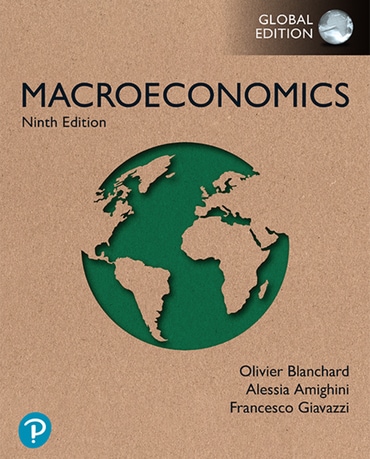
Table of contents

  • PART I: INTRODUCTION
  • 1. A Tour of the World
  • 2. A Tour of the Book
  • PART II: THE SHORT RUN
  • 3. The Goods Market
  • 4. Financial Markets I
  • 5. Goods and Financial Markets; The IS-LM Model
  • 6. Financial Markets II
  • PART III: THE MEDIUM RUN
  • 7. The Labor Market
  • 8. The Phillips Curve, the Natural Rate of Unemployment, and Inflation
  • 9. Putting All Markets Together: From the Short to the Medium Run
  • PART IV: THE LONG RUN
  • 10. The Facts of Growth
  • 11. Saving, Capital Accumulation, and Output
  • 12. Technological Progress and Growth
  • 13. The Challenges of Growth
  • EXTENSIONS
  • PART V: EXPECTATIONS
  • 14. Financial Markets and Expectations
  • 15. Expectations, Consumption, and Investment
  • 16. Expectations, Output, and Policy
  • PART VI: THE OPEN ECONOMY
  • 17. Openness in Goods and Financial Markets
  • 18. The Goods Market in an Open Economy
  • 19. Output, the Interest Rate, and the Exchange Rate
  • 20. Exchange Rate Regimes
  • PART VII: BACK TO POLICY
  • 21. Should Policy Makers Be Restrained?
  • 22. Fiscal Policy: A Summing Up
  • 23. Monetary Policy: A Summing Up
  • 24. Epilogue: The Story of Macroeconomics

Need help?Get in touch