Back

Arrhenius Acids and Bases definitions

Control buttons has been changed to "navigation" mode.
1/14
  • Arrhenius Acid

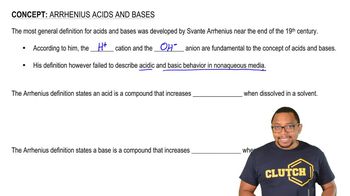
    A substance that, when dissolved in water, increases the concentration of hydrogen or hydronium ions in solution.
  • Arrhenius Base

    A substance that, when dissolved in water, increases the concentration of hydroxide ions in solution.
  • Hydronium Ion

    A cation formed when a hydrogen ion associates with a water molecule, often used interchangeably with hydrogen ion in aqueous solutions.
  • Hydrogen Ion

    A proton released by acids in water, responsible for acidic properties in aqueous solutions.
  • Hydroxide Ion

    An anion produced by bases in water, responsible for basic properties in aqueous solutions.
  • Aqueous Solution

    A medium where water acts as the solvent, essential for the Arrhenius model to classify acids and bases.
  • Dissociation

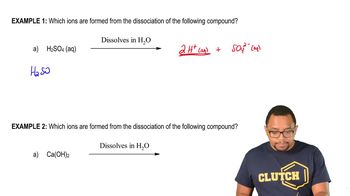
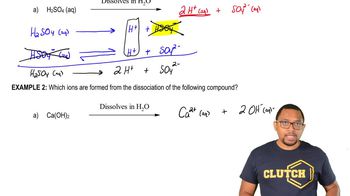
    The process by which compounds split into ions when dissolved in water, crucial for acid-base behavior.
  • Solubility

    The ability of a substance to dissolve in water, determining whether it can act as an acid or base under the Arrhenius model.
  • Chloride Ion

    An anion produced when hydrochloric acid dissociates in water, accompanying the release of hydrogen ions.
  • Sodium Ion

    A cation produced when sodium hydroxide dissociates in water, accompanying the release of hydroxide ions.
  • Non-Aqueous Media

    Environments lacking water as a solvent, where the Arrhenius model does not apply to acid-base behavior.
  • Model Limitation

    A restriction of a scientific framework, such as the inability of the Arrhenius model to explain acids or bases outside aqueous solutions.
  • Metal Hydroxide

    A compound consisting of a metal cation and hydroxide anion, typically acting as a base in the Arrhenius model.
  • General Definition

    A broad explanation, such as Arrhenius’ approach to acids and bases, that simplifies complex chemical behavior.