Back

Detection of Gross Errors quiz

Control buttons has been changed to "navigation" mode.
1/15
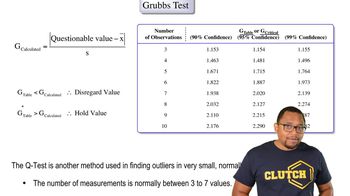
  • What is the main purpose of the Grubbs test in data analysis?

    The Grubbs test is used to detect a single outlier in a normally distributed dataset.
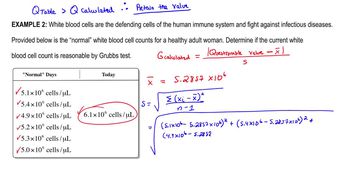
  • How do you calculate the Grubbs test statistic (G calculated)?

    G calculated is the absolute value of the questionable value minus the mean, divided by the standard deviation.
  • What do you compare the Grubbs calculated value to in order to determine if a value is an outlier?

    You compare the Grubbs calculated value to a critical value from the Grubbs table at a chosen confidence level.
  • What should you do if the Grubbs calculated value exceeds the table value?

    If the Grubbs calculated value exceeds the table value, the data point is considered an outlier and should be discarded.
  • What does it mean if the Grubbs table value is greater than the calculated value?

    It means the suspected outlier is within the normal range and should be retained in the dataset.
  • For what size of datasets is the Q test typically used?

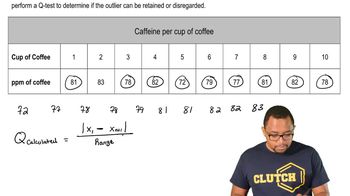
    The Q test is typically used for small datasets, usually containing 3 to 7 measurements.
  • How do you calculate the Q test statistic (Q calculated)?

    Q calculated is the gap (the absolute difference between the suspected outlier and the next closest value) divided by the range (largest value minus smallest value).
  • How should data be organized before performing the Q test?

    Data should be organized from smallest to largest value before performing the Q test.
  • What is the 'gap' in the Q test calculation?

    The gap is the absolute difference between the suspected outlier and the next closest data point.
  • What is the 'range' in the Q test calculation?

    The range is the difference between the largest and smallest values in the dataset.
  • What do you compare the Q calculated value to in the Q test?

    You compare the Q calculated value to a critical value from the Q table at a chosen confidence level.
  • What action is taken if the Q calculated value is higher than the Q table value?

    If the Q calculated value is higher than the Q table value, the data point is considered an outlier and should be excluded.
  • What does it mean if the Q table value is greater than the Q calculated value?

    It means the suspected outlier is not significant and should be included in the dataset.
  • Which test is more commonly used for outlier detection: Grubbs or Q test?

    The Grubbs test is more commonly used for outlier detection.
  • Why is the Q test less commonly used than the Grubbs test?

    The Q test is less commonly used because it is reserved for very small datasets, while the Grubbs test is suitable for larger datasets.