Back

Graphing Common Functions definitions

Control buttons has been changed to "navigation" mode.
1/14
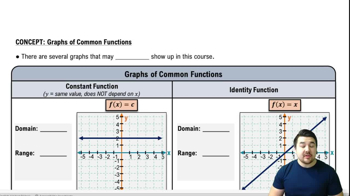
  • Constant Function

    A rule where every input produces the same output, forming a horizontal line on a graph.
  • Identity Function

    A rule where each input equals its output, resulting in a straight diagonal line.
  • Square Function

    A rule where each input is raised to the second power, creating a parabola opening upward.
  • Cube Function

    A rule where each input is raised to the third power, forming a curve that passes through the origin.
  • Square Root Function

    A rule where each output is the positive root of the input, only defined for non-negative values.
  • Cube Root Function

    A rule where each output is the cube root of the input, defined for all real numbers.
  • Domain

    The set of all possible input values for a function, often shown as intervals on the x-axis.
  • Range

    The set of all possible output values for a function, represented as intervals on the y-axis.
  • Parabola

    A symmetric, bowl-shaped curve seen in the graph of a square function.
  • Real Numbers

    All numbers on the number line, including negatives, positives, and zero.
  • Horizontal Line

    A straight line parallel to the x-axis, representing constant output values.
  • Diagonal Line

    A straight line passing through the origin with equal x and y values, seen in identity graphs.
  • Interval Notation

    A method for expressing domains and ranges using brackets and parentheses to show endpoints.
  • Origin

    The point (0,0) where the x-axis and y-axis intersect on a graph.