Back

Introduction to Complex Numbers definitions

Control buttons has been changed to "navigation" mode.
1/15
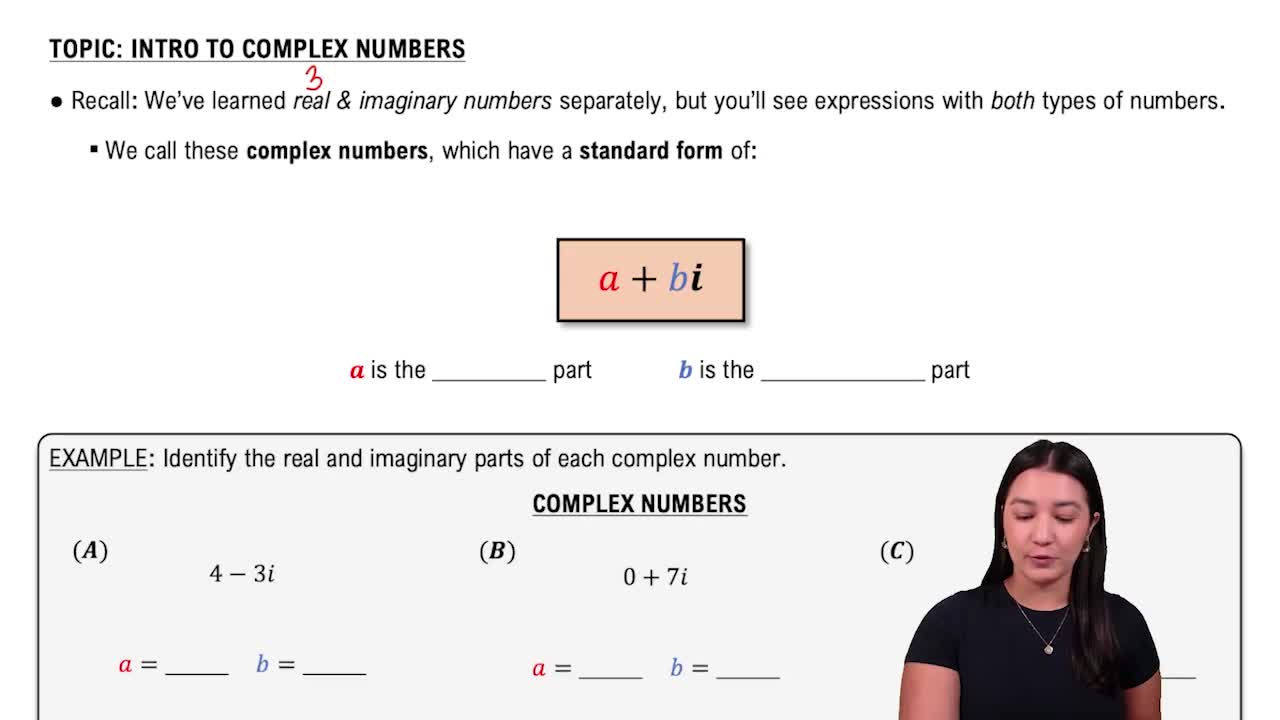
  • Complex Number

    Expression combining a real part and an imaginary part, always written in the form a+bi.
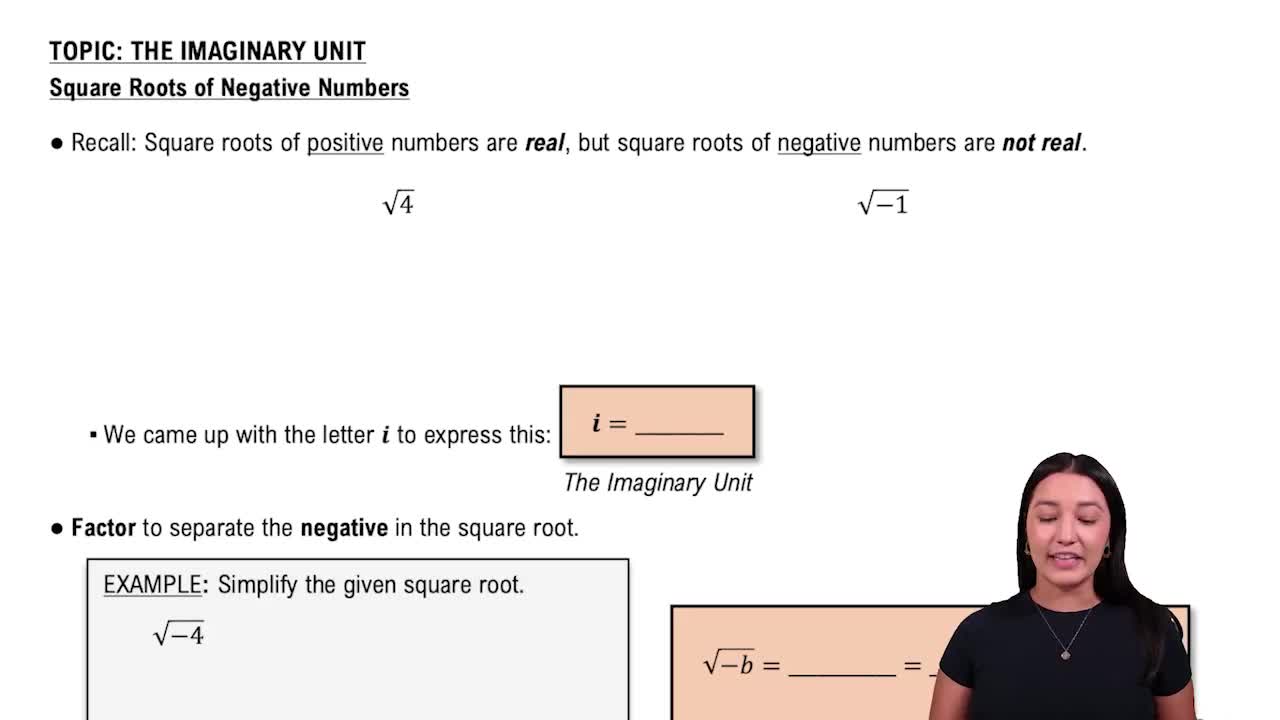
  • Imaginary Unit

    Special symbol equal to the square root of negative one, used to represent roots of negative numbers.
  • Standard Form

    Arrangement of a complex number as a+bi, with the real part first and the imaginary part second.
  • Real Part

    Component of a complex number not multiplied by the imaginary unit, often denoted as a.
  • Imaginary Part

    Component of a complex number that multiplies the imaginary unit, often denoted as b.
  • Radical

    Symbol used to indicate the square root, especially when simplifying negative numbers with the imaginary unit.
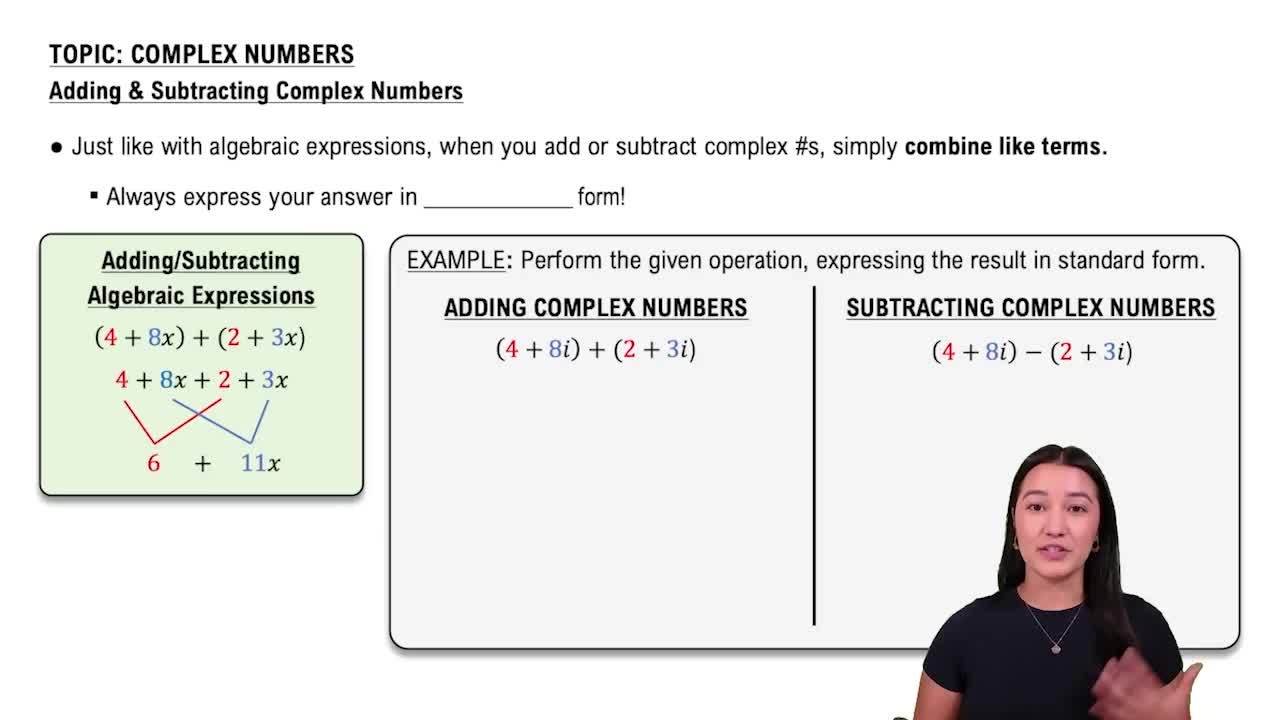
  • Like Terms

    Parts of an expression with matching variables or units, combined during addition or subtraction.
  • Addition

    Operation combining real and imaginary parts separately to form a new complex number.
  • Subtraction

    Operation removing real and imaginary parts separately to form a new complex number.
  • Coefficient

    Number multiplying the imaginary unit in a complex number, representing the imaginary part.
  • Imaginary Number

    Number containing the imaginary unit, often written as bi, where b is a real value.
  • Square Root

    Value that, when multiplied by itself, gives the original number; negative roots use the imaginary unit.
  • Constant

    Fixed value in an expression, representing the real part in a complex number.
  • Expression

    Mathematical phrase combining numbers and units, such as real and imaginary parts.
  • Variable

    Symbol representing an unknown value, treated similarly to the imaginary unit in combining terms.