Back

Motor Proteins definitions

Control buttons has been changed to "navigation" mode.
1/15
  • Motor Protein

    Protein that uses ATP to generate movement along cytoskeletal tracks, enabling transport and cellular motion.
  • Cytoskeleton

    Cellular network composed of microfilaments, intermediate filaments, and microtubules, providing structure and facilitating movement.
  • Microfilament

    Thin cytoskeletal strand, primarily actin, serving as tracks for myosin and supporting cell shape and movement.
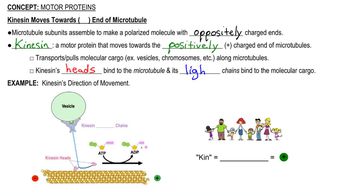
  • Microtubule

    Tubular cytoskeletal structure with polarized ends, guiding kinesin and dynein for intracellular transport.
  • Intermediate Filament

    Cytoskeletal component providing mechanical support, distinct from microfilaments and microtubules.
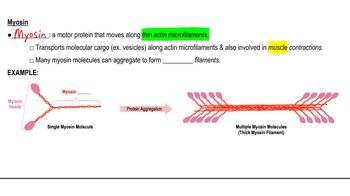
  • Myosin

    Motor protein moving along actin microfilaments, crucial for muscle contraction and vesicle transport.
  • Kinesin

    Motor protein traveling toward the positively charged end of microtubules, transporting cargo like vesicles and chromosomes.
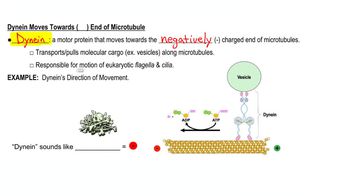
  • Dynein

    Motor protein moving toward the negatively charged end of microtubules, powering cilia and flagella motion.
  • Actin

    Protein forming microfilaments, serving as tracks for myosin-driven transport and muscle contraction.
  • ATP

    Molecule providing energy for motor proteins to drive movement along cytoskeletal tracks.
  • Thick Filament

    Aggregated structure of multiple myosin molecules, essential for muscle contraction.
  • Vesicle

    Membrane-bound cargo transported by motor proteins along cytoskeletal tracks within cells.
  • Chromosome

    Genetic material transported by kinesin along microtubules during cell division.
  • Cilia

    Hair-like cellular projection powered by dynein, enabling movement and fluid flow.
  • Flagella

    Whip-like cellular appendage driven by dynein, facilitating cell motility.