Back

Omega-3 Fatty Acids definitions

Control buttons has been changed to "navigation" mode.
1/13
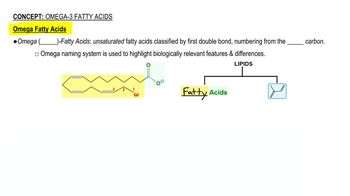
  • Omega Carbon

    The terminal carbon atom in a fatty acid chain, used as the reference point for omega fatty acid classification.
  • Unsaturated Fatty Acid

    A fatty acid containing one or more double bonds within its hydrocarbon chain, affecting its structure and function.
  • Double Bond

    A chemical feature in fatty acids that creates kinks in the chain, influencing biological activity and classification.
  • Omega Naming System

    A method for identifying fatty acids based on the position of the first double bond relative to the omega carbon.
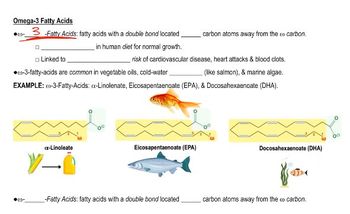
  • Alpha-Linolenate

    A classic omega-3 fatty acid commonly found in vegetable oils, essential for human growth and health.
  • Eicosapentaenoate

    An omega-3 fatty acid abundant in cold water fish, linked to cardiovascular health benefits.
  • Docosahexaenoate

    A long-chain omega-3 fatty acid prevalent in marine algae, crucial for normal human development.
  • Essential Fatty Acid

    A fatty acid required in the human diet because it cannot be synthesized in sufficient amounts by human cells.
  • Cardiovascular Disease

    A health condition associated with the heart and blood vessels, risk reduced by dietary omega-3 fatty acids.
  • Vegetable Oil

    A dietary source rich in omega-3 fatty acids, such as corn oil, supporting essential nutrient intake.
  • Cold Water Fish

    A food source, like salmon, known for high levels of omega-3 fatty acids beneficial to human health.
  • Marine Algae

    An aquatic organism providing omega-3 fatty acids, which can be transferred up the food chain.
  • Omega-6 Fatty Acid

    A fatty acid with a double bond located six carbons from the omega carbon, differing from omega-3 in structure.