Back

Reaction Rate definitions

Control buttons has been changed to "navigation" mode.
1/15
  • Reaction Rate

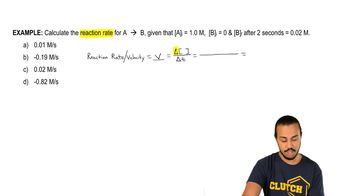
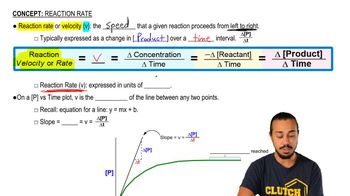
    Speed at which a chemical process advances, quantified by product concentration change per unit time.
  • Reaction Velocity

    Measure of how quickly a reaction progresses, often symbolized by v and calculated as concentration change over time.
  • Product Concentration

    Amount of substance formed during a reaction, tracked over time to determine reaction progress.
  • Molarity

    Standard unit for expressing concentration, representing moles of solute per liter of solution.
  • Slope

    Numerical value indicating the steepness of a line on a graph, representing reaction velocity in concentration vs. time plots.
  • Equilibrium

    State where reactant and product concentrations remain constant, signaled by a zero slope in reaction graphs.
  • Enzyme

    Biological catalyst that accelerates reactions, allowing equilibrium to be reached more rapidly without altering its position.
  • Reactant Concentration

    Amount of starting material in a reaction, typically decreases as the process advances.
  • Time Interval

    Duration over which changes in concentration are measured to calculate reaction rate.
  • Units of Concentration

    Quantitative measures such as molarity used to express the amount of substance present.
  • Units of Time

    Standard measures like seconds used to track reaction progress.
  • Curve

    Graphical representation of product concentration changes over time, used to visualize reaction dynamics.
  • Rise

    Vertical change in product concentration on a graph, used in slope calculation.
  • Run

    Horizontal change in time on a graph, paired with rise to determine slope.
  • y-axis

    Vertical axis on a graph, typically representing product concentration in reaction rate studies.