 Back
BackA Tour of the Cell – Structure and Function of Cellular Components
Study Guide - Smart Notes
 Tailored notes based on your materials, expanded with key definitions, examples, and context.
Introduction to the Cell
Cells are the fundamental units of life, and their discovery and study have revolutionized biology. The development of microscopy has enabled scientists to explore the structure and function of cells in detail.
Microscopy and Cell Theory
Types of Microscopes
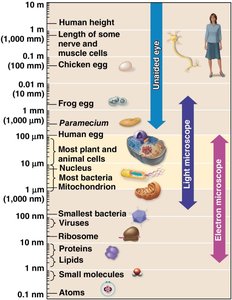
Light Microscope: Allows observation of living cells and tissues with moderate magnification and resolution.
Electron Microscopes: Include scanning (SEM) and transmission (TEM) types, providing much higher magnification and resolution, revealing cell ultrastructure.
Magnification: The increase in an object's image size compared to its actual size.
Resolution: The ability to distinguish two close objects as separate entities.
Cell Theory
All living things are composed of cells.
All cells arise from pre-existing cells.
The Small Size of Cells and the Plasma Membrane
Surface-to-Volume Ratio
The small size of cells ensures a large surface area relative to volume, facilitating efficient exchange of materials across the plasma membrane.
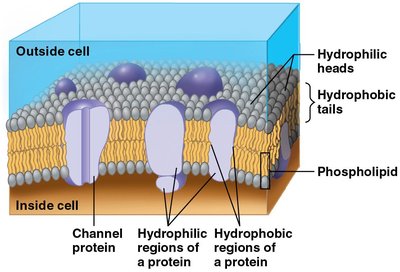
Structure of the Plasma Membrane
Phospholipid Bilayer: Forms the basic structure, with hydrophilic heads facing outward and hydrophobic tails inward.
Membrane Proteins: Include channels for passive transport and pumps for active transport of molecules.
Prokaryotic vs. Eukaryotic Cells
Common Features of All Cells
Plasma membrane
DNA
Ribosomes
Cytosol
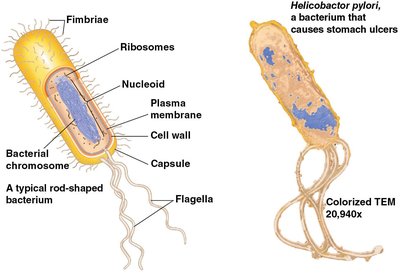
Prokaryotic Cells
Domains: Bacteria and Archaea
Lack a membrane-bound nucleus and organelles
Generally smaller and structurally simpler
Eukaryotic Cells
Domain: Eukarya (includes plants, animals, fungi, and protists)
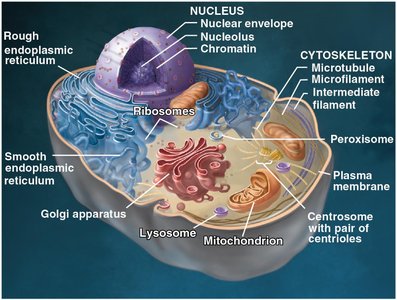
Have a membrane-bound nucleus and various organelles
Compartmentalization in Eukaryotic Cells
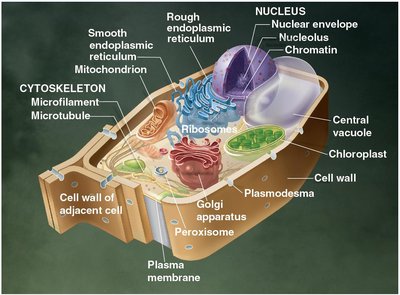
Eukaryotic cells contain membrane-bound organelles that compartmentalize cellular functions into four main groups:
Genetic control: Nucleus and ribosomes
Manufacture, distribution, and breakdown: Endoplasmic reticulum, Golgi apparatus, lysosomes, vacuoles, peroxisomes
Energy processing: Mitochondria (all cells), chloroplasts (plants and algae)
Structural support, movement, communication: Cytoskeleton, plasma membrane, cell wall (plants)
The Nucleus and Ribosomes
The Nucleus
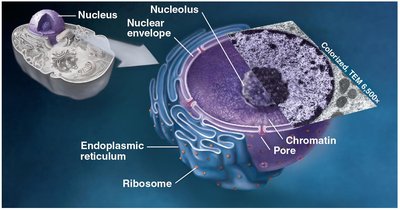
Houses the cell's DNA and directs protein synthesis via messenger RNA (mRNA).
Contains the nucleolus, where ribosomal subunits are assembled.
Ribosomes
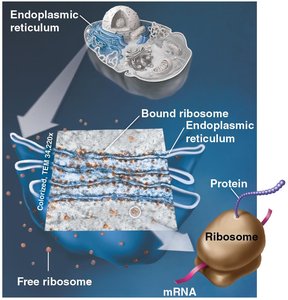
Composed of ribosomal RNA and proteins.
Sites of protein synthesis, following instructions from DNA.
Can be free in the cytosol or bound to the endoplasmic reticulum.
The Endomembrane System
Components and Functions
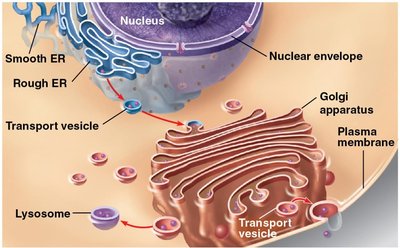
Includes the nuclear envelope, endoplasmic reticulum (ER), Golgi apparatus, lysosomes, vacuoles, and plasma membrane.
Responsible for synthesis, distribution, storage, and export of molecules.
Endoplasmic Reticulum (ER)
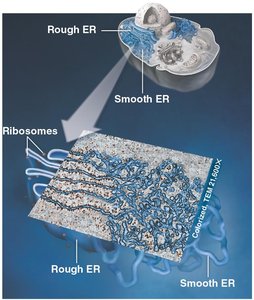
Smooth ER: Synthesizes lipids, processes toxins.
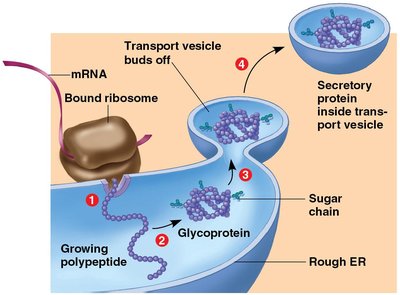
Rough ER: Studded with ribosomes; produces membranes and secretory proteins.
Golgi Apparatus
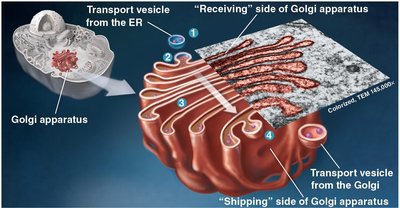
Consists of stacked sacs that modify, sort, and ship products from the ER to other destinations.
Lysosomes
Membranous sacs containing digestive enzymes.
Break down ingested substances and damaged organelles (cellular recycling).
Vacuoles
Large vesicles with diverse functions (e.g., storage, waste disposal, growth in plants).
Contractile vacuoles in protists expel excess water.
Peroxisomes
Metabolic compartments that break down fatty acids and detoxify harmful substances.
Not part of the endomembrane system.
Integration of the Endomembrane System
Transport vesicles shuttle materials between organelles, integrating their functions.
Energy-Converting Organelles
Mitochondria
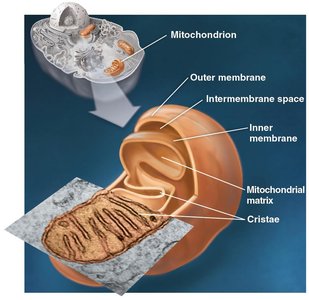
Sites of cellular respiration, converting chemical energy from food into ATP.
Contain an outer membrane, an inner membrane with folds (cristae), and a matrix with DNA and ribosomes.
Chloroplasts
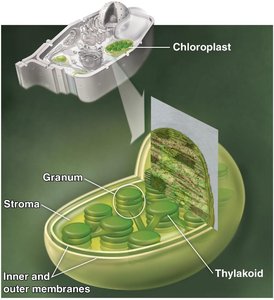
Found in plants and algae; sites of photosynthesis (conversion of solar energy to chemical energy).
Contain inner and outer membranes, thylakoids (site of light reactions), and stroma (site of Calvin cycle).
Endosymbiont Theory
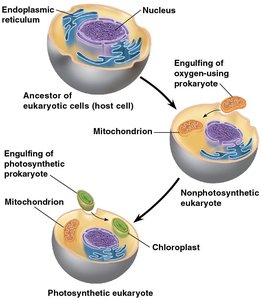
Mitochondria and chloroplasts likely evolved from prokaryotic cells engulfed by ancestral eukaryotes.
The Cytoskeleton and Cell Surfaces
The Cytoskeleton
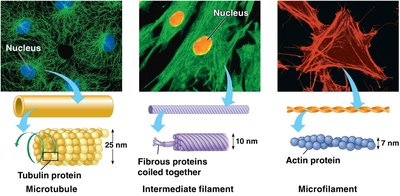
Network of protein fibers: microfilaments (actin), intermediate filaments, and microtubules (tubulin).
Functions: maintain cell shape, anchor/move organelles, cell movement, muscle contraction.
Cilia and Flagella
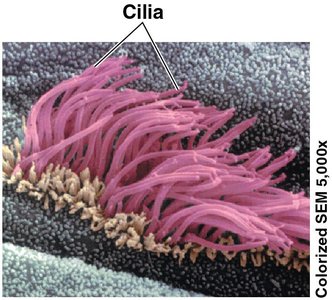
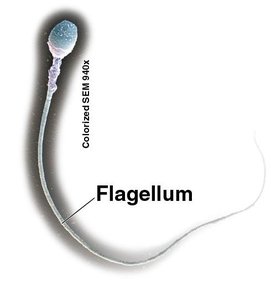
Locomotor appendages made of microtubules in a "9+2" arrangement.
Flagella: longer, undulating motion; Cilia: shorter, coordinated oar-like movement.
Extracellular Matrix (ECM) of Animal Cells
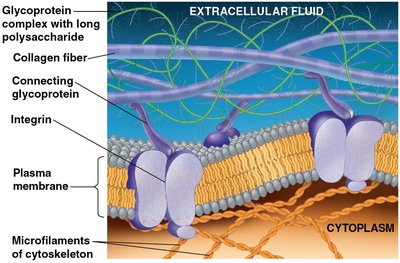
Composed of glycoproteins (e.g., collagen) and other molecules.
Provides structural support, binds cells, and communicates with the cytoskeleton via integrins.
Cell Junctions in Animal Tissues
Tight junctions: Form leakproof sheets.
Anchoring junctions: Rivet cells into strong tissues.
Gap junctions: Allow ions and small molecules to pass between cells.
Plant Cell Walls and Plasmodesmata
Rigid cell wall (mainly cellulose) provides support and protection.
Plasmodesmata: Channels that connect plant cells, allowing exchange of water, nutrients, and signals.
Summary Table: Major Eukaryotic Cell Structures and Functions
Structure | Main Function(s) |
|---|---|
Nucleus | Genetic control, houses DNA |
Ribosomes | Protein synthesis |
Endoplasmic Reticulum | Lipid and protein synthesis, detoxification |
Golgi Apparatus | Modification, sorting, shipping of cell products |
Lysosomes | Digestion and recycling |
Vacuoles | Storage, waste disposal, growth (plants) |
Peroxisomes | Breakdown of fatty acids, detoxification |
Mitochondria | ATP production (cellular respiration) |
Chloroplasts | Photosynthesis (plants, algae) |
Cytoskeleton | Structural support, movement |
Plasma Membrane | Selective barrier, communication |
Cell Wall (plants) | Support, protection |
Extracellular Matrix (animals) | Support, adhesion, signaling |
