 Back
BackAdvanced Patterns of Inheritance: Pleiotropy, Epistasis, Multiple Alleles, Polygenic Inheritance, and Genomic Imprinting
Study Guide - Smart Notes
 Tailored notes based on your materials, expanded with key definitions, examples, and context.
Pleiotropy
Definition and Biological Significance
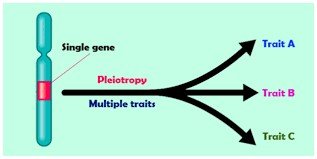
Pleiotropy occurs when a single gene influences multiple phenotypic traits. This phenomenon is common in genetics and helps explain how mutations in one gene can have widespread effects on an organism's physiology and development.
Key Point 1: A single gene may affect multiple aspects of the phenotype, leading to diverse effects from a single genetic change.
Key Point 2: Pleiotropy is observed in many genetic disorders, such as sickle cell anemia, where one gene affects hemoglobin structure, red blood cell shape, and resistance to malaria.
Example: The gene responsible for Marfan syndrome affects connective tissue, impacting the skeleton, eyes, and cardiovascular system.
Epistasis
Gene Interactions and Phenotypic Expression
Epistasis refers to the interaction between genes at different loci, where the expression of one gene is modified or completely masked by one or more other genes. This interaction can alter expected Mendelian ratios in offspring.
Key Point 1: Epistasis occurs when alleles of one gene mask or modify the phenotypic expression of alleles at another locus.
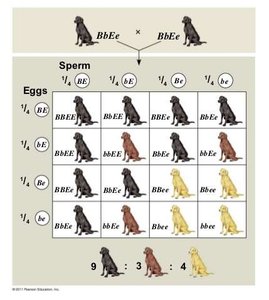
Key Point 2: In Labrador retrievers, coat color is determined by two genes: one controls pigment color (B = black, b = brown), and the other controls pigment deposition (E = pigment deposited, e = no pigment deposited). The presence of 'ee' results in a yellow coat regardless of the B/b genotype.
Example: In a dihybrid cross involving two loci (B and E), the phenotypic ratio for coat color in the progeny is 9:3:4 (black:brown:yellow), demonstrating recessive epistasis.
Epistasis Problem Example
Consider a scenario where a dominant inhibitor allele (I) prevents pigment expression, resulting in a white coat. Only when the inhibitor is homozygous recessive (ii) can the color alleles at a second locus be expressed (iiB- = black, iibb = brown). When dihybrid white dogs (IiBb) are crossed, the expected phenotypic ratio is 13 white : 3 colored (black or brown), and the probability of a white progeny being homozygous at both loci (IIBB or iibb) can be calculated using Punnett squares and probability rules.
Multiple Alleles
Genetic Diversity at a Single Locus
Some genes exist in more than two allelic forms within a population, a phenomenon known as multiple alleles. Each individual, however, can possess only two alleles for a given gene (one from each parent).
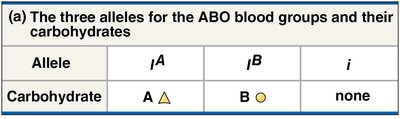
Key Point 1: The ABO blood group system in humans is controlled by a single gene with three alleles: IA, IB, and i.
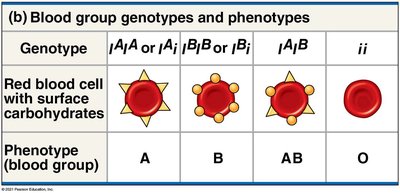
Key Point 2: IA and IB are codominant, while i is recessive. The combination of these alleles determines the blood type (A, B, AB, or O).
Example: A person with genotype IAIB expresses both A and B antigens (blood type AB), while ii results in blood type O.
Multiple Alleles in Rabbits
The coat color in rabbits is determined by a gene with multiple alleles, exhibiting a dominance hierarchy: C > cch > ch > c. Different combinations of these alleles produce a variety of coat colors, such as full color, chinchilla, Himalayan, and albino.
Key Point 1: The genotype Ccch (full color) crossed with cchc (light gray) produces offspring with predictable genotypic and phenotypic ratios based on the dominance hierarchy.
Key Point 2: The presence of multiple alleles increases genetic diversity within a population.
Polygenic Inheritance
Quantitative Traits and Additive Effects
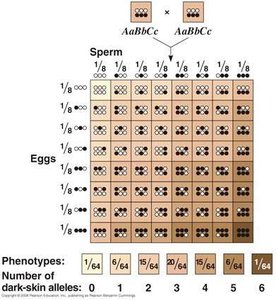
Polygenic inheritance occurs when multiple independent genes (polygenes) contribute additively to a single trait, resulting in continuous variation. Traits such as human skin color, height, and intelligence are classic examples.
Key Point 1: Each dominant allele contributes a small, additive effect to the phenotype, and the overall phenotype is determined by the total number of dominant alleles present.
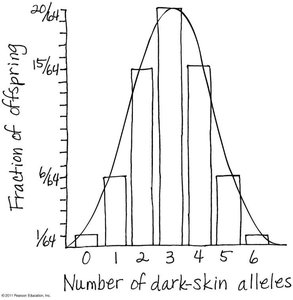
Key Point 2: Polygenic traits typically display a normal (bell-shaped) distribution in populations, as shown by the quantitative inheritance of skin color in humans.
Example: In a cross involving three gene pairs (AaBbCc x AaBbCc), the number of dark-skin alleles in the offspring follows a binomial distribution, with the most common phenotype being intermediate skin color.
Genomic Imprinting
Parent-of-Origin Effects on Gene Expression
Genomic imprinting is an epigenetic phenomenon in which the expression of an allele depends on whether it is inherited from the mother or the father. Imprinting involves the silencing of specific genes during gamete formation, resulting in parent-specific gene expression in the offspring.
Key Point 1: Only a small subset of mammalian genes are imprinted, but these can have significant effects on development and disease.
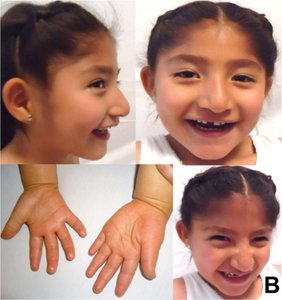
Key Point 2: Disorders such as Prader-Willi syndrome and Angelman syndrome are caused by abnormal imprinting of genes on chromosome 15, with the phenotype depending on the parent of origin.
Example: Angelman syndrome results from the loss of the maternal allele, leading to symptoms such as intellectual disability, lack of speech, and inappropriate laughter. Prader-Willi syndrome results from the loss of the paternal allele, causing hypotonia, obesity, and hypogenitalism in males.

Additional info: Genomic imprinting is mediated by DNA methylation and histone modifications, which are reset during gametogenesis and early embryonic development. The study of imprinting provides insights into epigenetic regulation and its role in human disease.
