 Back
Animal Behavior: Mechanisms, Development, Evolution, and Ecology
Study Guide - Smart Notes
 Tailored notes based on your materials, expanded with key definitions, examples, and context.
Chapter 51: Animal Behavior
Introduction to Animal Behavior
Animal behavior is the study of how animals interact with each other and their environment. Biologists seek to answer questions about the mechanisms, development, evolutionary history, and ecological significance of behaviors.
Behavior: An action carried out by muscles under control of the nervous system (e.g., a bird singing).
Behaviors and their anatomical structures are subject to natural selection.
Four Questions of Behavioral Biology
Niko Tinbergen identified four key questions to understand animal behavior:
What stimulus elicits the behavior, and how do body systems bring it about?
How does the animal’s experience during growth and development influence the response?
How does the behavior aid survival and reproduction?
What is the behavior’s evolutionary history?
The first two are about proximate causation (how behavior occurs).
The last two are about ultimate causation (why behavior occurs in the context of evolution).
Behavioral ecology studies the ecological and evolutionary basis for animal behavior.
Concept 51.1: Sensory Inputs and Behavioral Responses
Fixed Action Patterns
A fixed action pattern is a sequence of unlearned acts directly linked to a specific stimulus (sign stimulus). These behaviors are unchangeable and, once initiated, are usually carried to completion.
Example: Male stickleback fish attack objects with a red underside, regardless of shape.
Migration
Migration is a regular, long-distance change in location, often guided by environmental cues such as the sun, stars, or Earth's magnetic field.
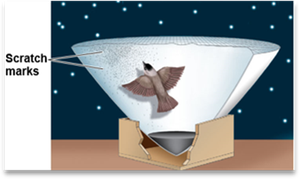
Animals use various cues to orient themselves during migration, as shown by experiments with birds in funnel cages.
Behavioral Rhythms
Many animal behaviors are governed by internal clocks and environmental cycles:
Circadian rhythm: Daily cycle of rest and activity, regulated by an internal clock with ~24-hour periodicity.
Circannual rhythm: Yearly cycles, often linked to migration and reproduction, synchronized with seasonal changes.
Some rhythms are linked to lunar cycles, affecting behaviors such as courtship in fiddler crabs.
Animal Signals and Communication
A signal is a stimulus transmitted from one animal to another, guiding behavior. Communication is the transmission and reception of signals, which can be visual, chemical, tactile, or auditory.
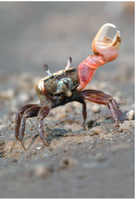
Example: Male fiddler crabs wave their large claw as a signal to attract females.
Forms of Animal Communication
Visual, chemical, tactile, and auditory signals are used in complex stimulus-response chains (e.g., fruit fly courtship).
Honeybees use a symbolic "waggle dance" to communicate the location of food sources.
Pheromones
Pheromones are chemical substances used for communication, often effective at very low concentrations (e.g., alarm substances in minnows).
Concept 51.2: Learning and Behavioral Development
Innate vs. Learned Behavior
Innate behavior: Unlearned, developmentally fixed behaviors (e.g., fixed action patterns, pheromone signaling).
Other behaviors are shaped by experience and can vary among individuals.
Cross-Fostering and Twin Studies
Cross-fostering studies and twin studies help distinguish the influence of genetics and environment on behavior.
Learning
Learning is the modification of behavior based on specific experiences. Both genetic predisposition and environmental factors (nature and nurture) shape learning.
Imprinting
Imprinting is a form of learning that occurs during a sensitive period and results in a long-lasting behavioral response to a particular individual or object.
Example: Young geese imprint on the first moving object they see, which may be their mother or a human.
Spatial Learning and Cognitive Maps
Spatial learning involves establishing memories that reflect the spatial structure of the environment. Some animals form cognitive maps—internal representations of spatial relationships.
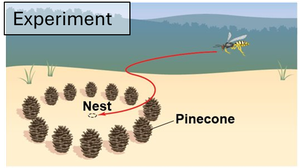
Example: Digger wasps use landmarks to locate their nests.
Associative Learning
In associative learning, animals learn to associate one environmental feature with another.
Classical conditioning: Associating an arbitrary stimulus with a reward or punishment.
Operant conditioning: Learning to associate a behavior with a reward or punishment (trial-and-error learning).
Cognition and Problem Solving
Cognition is the process of knowing, involving awareness, reasoning, recollection, and judgment. Problem solving is the cognitive process of devising a strategy to overcome obstacles.
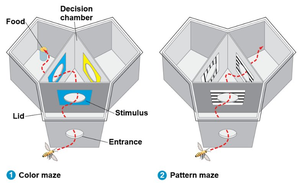
Example: Bees can solve mazes based on color or pattern cues, demonstrating cognitive abilities.
Development of Learned Behaviors
Some behaviors develop gradually or in stages (e.g., song learning in birds).
Social Learning
Social learning is learning by observing others. It is the basis for culture in animal societies.
Concept 51.3: Evolution of Behavior
Foraging Behavior
Foraging includes all activities related to searching for, capturing, and consuming food. Genetic variation can influence foraging strategies.
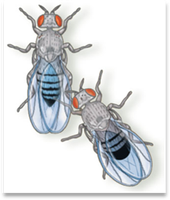
Example: Drosophila larvae with different alleles (forR and fors) show different foraging distances.
Optimal Foraging Model
The optimal foraging model predicts that animals will maximize the benefits of nutrition while minimizing the costs of obtaining food, including energy expenditure and predation risk.
Mating Behavior and Mate Choice
Mating behavior includes seeking, attracting, and choosing mates, as well as competing for mates and caring for offspring. The mating system (monogamy, polygyny, polyandry) influences sexual dimorphism and parental care.
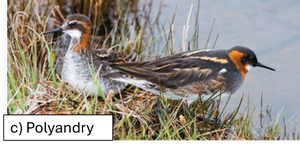
In polyandry, one female mates with multiple males and is often more showy than the males.
Sexual Selection and Mate Choice
Sexual selection is a form of natural selection based on variation in mating success. It can be intersexual (mate choice) or intrasexual (competition among the same sex).
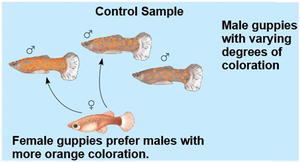
Example: Female guppies prefer males with more orange coloration, influencing male traits through sexual selection.
Game Theory and Alternative Mating Strategies
Game theory is used to evaluate alternative behavioral strategies when the outcome depends on the strategies of others.
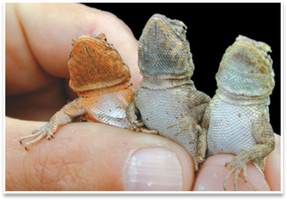
Example: Side-blotched lizards have three male types (orange, blue, yellow), each with a different mating strategy maintained by frequency-dependent selection.
Concept 51.4: Genetic Basis and Evolution of Behavior
Genetic Control of Behavior
Master regulatory genes can control complex behaviors (e.g., fru gene in fruit flies).
Variation in gene expression can lead to differences in social and reproductive behaviors (e.g., prairie voles vs. meadow voles).
Genetic Variation and Natural Selection
Behavioral differences between populations can reflect adaptation to local environments through natural selection.
Altruism and Inclusive Fitness
Altruism is behavior that reduces an individual's fitness but increases the fitness of others. Inclusive fitness includes both direct fitness (offspring) and indirect fitness (helping relatives reproduce).
Hamilton's rule: Altruism is favored when (where r = relatedness, B = benefit to recipient, C = cost to altruist).
Kin Selection and Reciprocal Altruism
Kin selection favors altruism toward close relatives.
Reciprocal altruism occurs among unrelated individuals who help each other, with the expectation of future reciprocation.
Evolution and Human Culture
Human behavior is shaped by both genetic and cultural evolution. Sociobiology studies the evolutionary basis of social behavior, including the unique aspects of human culture.
