 Back
Animal Reproduction and Development: From Gametes to Organogenesis
Study Guide - Smart Notes
 Tailored notes based on your materials, expanded with key definitions, examples, and context.
Animal Reproduction & Development
Overview of Animal Development
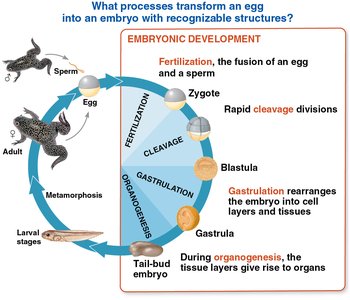
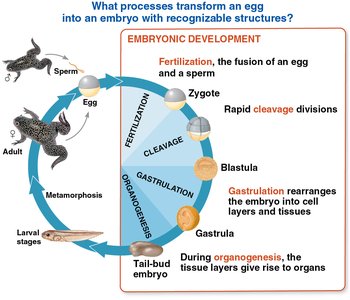
Animal development is the process by which a single-celled zygote becomes a multicellular organism with specialized tissues and organs. This process involves a series of highly regulated stages, including fertilization, cleavage, gastrulation, and organogenesis. Each stage is characterized by specific cellular behaviors and molecular signals that guide the formation of the animal body plan.
Fertilization: The fusion of sperm and egg to form a zygote.
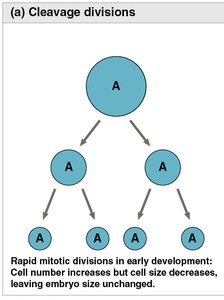
Cleavage: Rapid mitotic divisions that partition the zygote into smaller cells without increasing overall size.
Gastrulation: Rearrangement of cells to form the three primary germ layers.
Organogenesis: Formation of organs from the germ layers.
Animal Reproductive Patterns and Systems
Animals exhibit a wide range of reproductive strategies, from external fertilization in aquatic environments to internal fertilization in terrestrial species. The anatomy of reproductive systems is adapted to facilitate gamete production, exchange, and care of offspring.
Gametogenesis: The process of forming gametes (sperm and eggs) through meiosis.
Fertilization Pathway: In mammals, gametes are produced in the gonads, travel through reproductive ducts, and meet in the female reproductive tract for fertilization.
Stages of Animal Embryonic Development
Fertilization
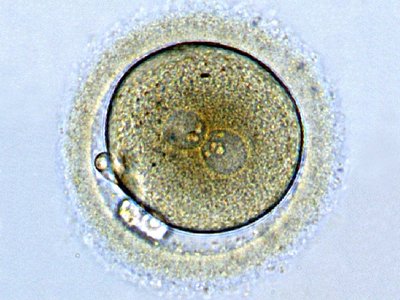
Fertilization is the union of haploid gametes to produce a diploid zygote. This event restores chromosome number and activates the egg to begin development.
Zygote: The single cell formed by fertilization, which will undergo cleavage.
Cleavage
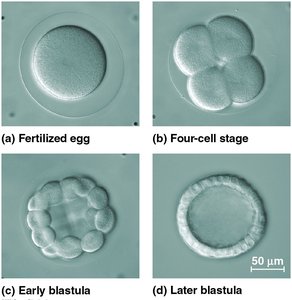
Cleavage is a series of rapid mitotic divisions that follow fertilization. These divisions increase cell number without increasing the embryo's overall size, resulting in a multicellular structure called the blastula.
Blastula: A hollow ball of cells formed at the end of cleavage.
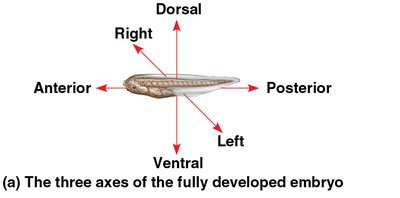
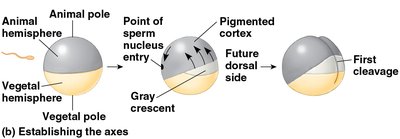
Axis Formation: Cleavage helps establish the body axes (anterior-posterior, dorsal-ventral, left-right).
/
Types of Cleavage
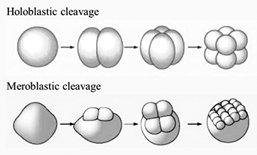
Holoblastic Cleavage: Complete division of the egg, typical in species with little yolk (e.g., mammals, amphibians).
Meroblastic Cleavage: Incomplete division, occurs in eggs with a large amount of yolk (e.g., birds, reptiles).
Gastrulation
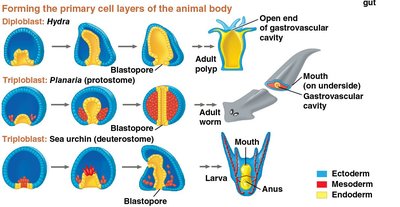
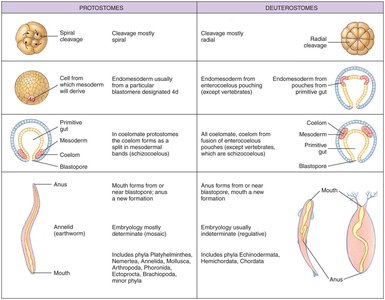
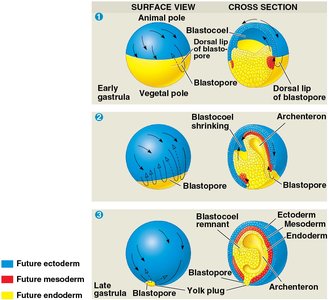
Gastrulation is the process by which the blastula is reorganized into a three-layered structure called the gastrula. This stage establishes the three primary germ layers: ectoderm, mesoderm, and endoderm.
Cell Movement: Extensive migration and rearrangement of cells to form germ layers.
Germ Layers: Each layer gives rise to specific tissues and organs.
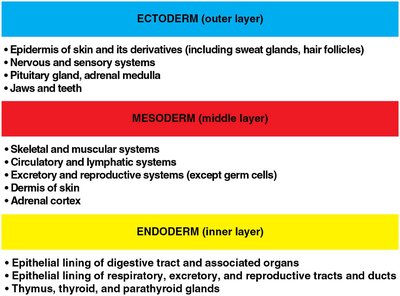
Germ Layer | Main Derivatives |
|---|---|
Ectoderm (outer) | Skin, nervous system, sensory organs |
Mesoderm (middle) | Muscles, skeleton, circulatory system, excretory system |
Endoderm (inner) | Lining of digestive tract, respiratory system |
Organogenesis
Organogenesis is the stage where the three germ layers develop into the organs and tissues of the animal. This process involves cell division, migration, differentiation, and signaling interactions between cells.
Neurulation: Formation of the neural tube, which becomes the central nervous system in vertebrates.
Pattern Formation: Establishment of spatial organization of tissues and organs, guided by signaling centers such as the apical ectodermal ridge (AER) and zone of polarizing activity (ZPA).
Key Processes in Organogenesis
Mitosis: Cell proliferation to increase cell number.
Cell Migration: Movement of cells to new locations.
Cell Shape Changes: Driven by cytoskeletal rearrangements.
Cell-Cell Signaling: Communication between cells to coordinate development.
Summary Table: Major Events in Animal Development
Stage | Main Events |
|---|---|
Fertilization | Fusion of gametes, formation of zygote |
Cleavage | Rapid cell divisions, formation of blastula, axis establishment |
Gastrulation | Formation of germ layers, extensive cell migration |
Organogenesis | Formation of organs and tissues, pattern formation |
Quiz Questions for Review
Development occurs in the order of which of the following sequences? Answer: B. fertilization → cleavage → blastula → gastrula → organogenesis
During which stage of development do cells in a triploblastic embryo move to new positions to establish the three germ tissue layers? Answer: D) gastrulation
The apical ectodermal ridge (AER) secretes fibroblast growth factor (FGF), which functions in which of the following ways? Answer: A. It promotes growth of the limb bud along the proximal-distal axis.
Cell migration occurs extensively as part of which of the following processes? Answer: D) gastrulation and organogenesis
Additional info:
Axis formation is crucial for proper body plan development and is influenced by factors such as yolk distribution, gravity, and molecular gradients.
Cleavage patterns and gastrulation mechanisms can vary significantly among animal groups, but the establishment of germ layers is a unifying feature of animal development.
Organizer regions such as the AER and ZPA secrete signaling molecules that provide positional information for limb and organ development.
