 Back
Animal Reproduction – Study Notes (Campbell Biology, Ch. 46)
Study Guide - Smart Notes
 Tailored notes based on your materials, expanded with key definitions, examples, and context.
Animal Reproduction
Overview of Animal Reproduction
Animal reproduction is essential for the continuation of species and can occur through sexual or asexual means. Each mode of reproduction has distinct biological mechanisms and evolutionary implications.
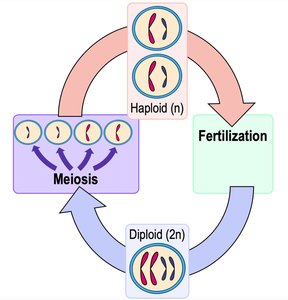
Sexual Reproduction: Involves the combination of genetic material from two parents, typically through the fusion of gametes (sperm and egg) to form a diploid zygote.
Asexual Reproduction: Offspring arise from a single parent without the fusion of gametes, resulting in genetically identical progeny.
Red Queen Hypothesis: Suggests that sexual reproduction is maintained in populations because it enables genetic variation, allowing organisms to adapt and evolve in response to environmental pressures and parasites.
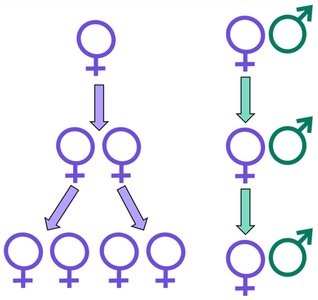
Types of Asexual Reproduction
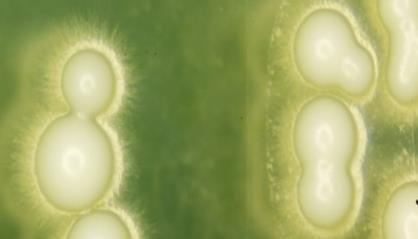
Budding: A new organism develops as an outgrowth of the parent and detaches when mature.
Fission: The parent organism splits into two or more individuals of roughly equal size.
Parthenogenesis: Development of an organism from an unfertilized egg.
Sexual Reproduction: Gametes and Fertilization
Gametes: Specialized sex cells; sperm (male, small and motile) and egg (female, large and nonmotile).
Fertilization: The fusion of sperm and egg to form a diploid zygote, which will develop into a new organism.
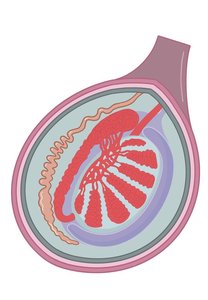
Male Reproductive Anatomy and Function
Male Genitalia and Accessory Structures
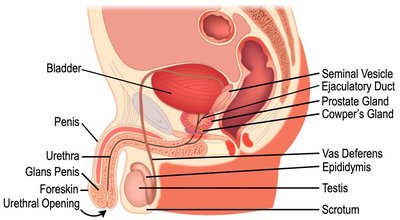
The male reproductive system is specialized for the production, maturation, and delivery of sperm.
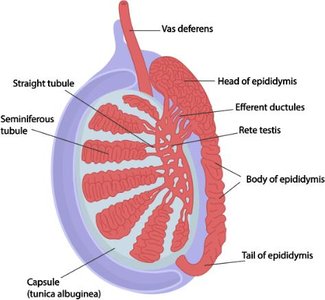
Testes: Male gonads that produce sperm within seminiferous tubules.
Scrotum: External pouch that houses the testes, maintaining optimal temperature for spermatogenesis.
Epididymis: Stores and matures sperm before ejaculation.
Penis: Organ for internal fertilization; contains the urethra for the passage of semen and urine.
Semen: Fluid containing sperm and secretions from seminal vesicles, prostate gland, and bulbourethral gland.
Ejaculation: Sperm travel from the epididymis through the vas deferens, mixing with accessory fluids, and are expelled via the urethra.
Female Reproductive Anatomy and Function
Female Genitalia and Accessory Structures
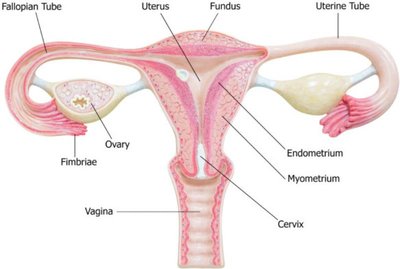
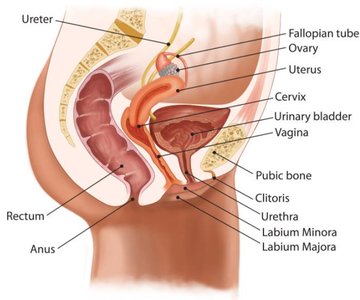
The female reproductive system is adapted for the production of eggs, fertilization, and support of embryonic development.
Ovaries: Female gonads where eggs are produced and stored.
Oviducts (Fallopian Tubes): Passageways for eggs from the ovaries to the uterus; site of fertilization.
Uterus: Muscular organ where the embryo implants and develops; lined by the endometrium.
Cervix: Narrow passage connecting the uterus to the vagina; dilates during childbirth.
Vagina: Muscular canal serving as the birth canal and receptacle for sperm.
Vulva: External female genitalia, including labia majora, labia minora, and clitoris.
Gametogenesis
Spermatogenesis
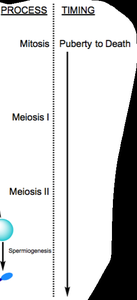
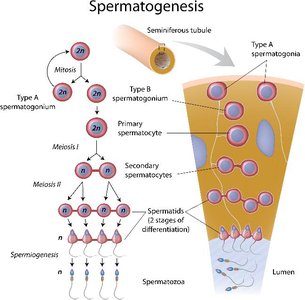
Spermatogenesis is the process of sperm production in the testes, involving mitosis, meiosis, and maturation.
Spermatogonia: Diploid stem cells that divide by mitosis to produce primary spermatocytes.
Primary Spermatocytes: Undergo meiosis I to form secondary spermatocytes (haploid).
Secondary Spermatocytes: Undergo meiosis II to form spermatids.
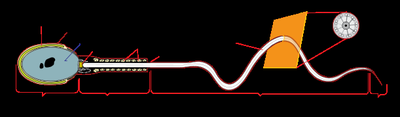
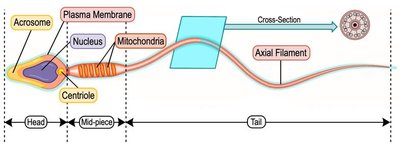
Spermatids: Differentiate into mature spermatozoa (sperm cells).
Hormonal Regulation: GnRH from the hypothalamus stimulates the anterior pituitary to release LH and FSH, which regulate testosterone production and spermatogenesis.
Oogenesis
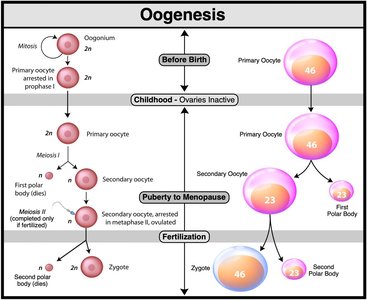
Oogenesis is the process of egg production in the ovaries, beginning before birth and continuing until menopause.
Oogonia: Diploid stem cells that divide by mitosis and begin meiosis before birth.
Primary Oocytes: Arrested in prophase I until puberty; each is surrounded by a follicle.
Secondary Oocytes: Produced after meiosis I, arrested in metaphase II until fertilization.
Polar Bodies: Small cells produced during oogenesis that do not develop into ova.
Corpus Luteum: Endocrine structure formed from the ruptured follicle, secreting progesterone and estradiol.
Female Reproductive Cycles
Menstrual and Ovarian Cycles
The menstrual cycle consists of coordinated ovarian and uterine cycles, regulated by hormones.
Ovarian Cycle: Includes the follicular phase (follicle maturation), ovulation (release of ovum), and luteal phase (corpus luteum activity).
Uterine Cycle: Includes menstruation (shedding of endometrium), proliferation (regrowth), and secretory phase (preparation for implantation).
Hormonal Regulation: FSH and LH from the pituitary, estradiol and progesterone from the ovary.
Estrous Cycle: In some mammals, the endometrium is reabsorbed if pregnancy does not occur.
Fertilization and Early Development
Conception and Fertilization
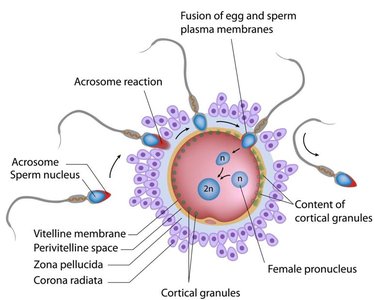
Fertilization occurs when a sperm cell penetrates the egg, completing meiosis II and forming a zygote.
Sperm Migration: Sperm travel through the cervix and oviduct to reach the egg.
Acrosome Reaction: Enzymes from the sperm's acrosome help penetrate the egg's protective layers.
Cleavage and Blastocyst Formation
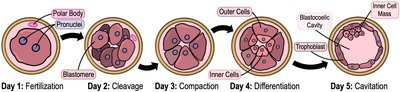
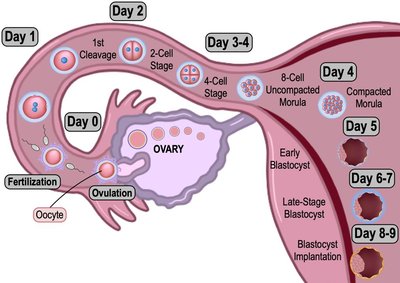
After fertilization, the zygote undergoes rapid mitotic divisions (cleavage) to form a blastocyst, which implants in the uterine wall.
Cleavage: Series of cell divisions without growth, forming a multicellular blastocyst.
Blastocyst: Hollow ball of cells with an inner cell mass that will become the embryo.
Implantation: The blastocyst embeds into the endometrium of the uterus.
Pregnancy and Birth
Gestation and Placenta
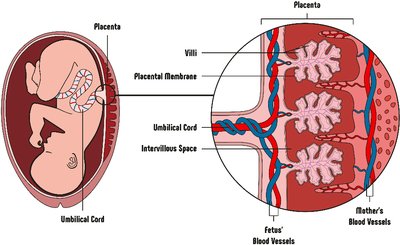
Gestation is the period during which the embryo/fetus develops within the uterus. The placenta forms to facilitate nutrient and waste exchange between mother and fetus.
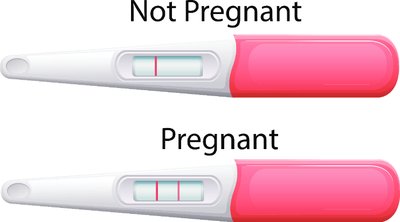
hCG: Hormone secreted after implantation to maintain the corpus luteum and prevent menstruation.
Trophoblast: Outer layer of the blastocyst that contributes to placenta formation.
Placenta: Organ for exchange of gases, nutrients, and wastes; connected to the fetus by the umbilical cord.
Organogenesis: Formation of organs during the first trimester.
Modes of Embryonic Development
Oviparous: Embryo develops in eggs laid outside the mother's body.
Ovoviviparous: Eggs develop inside the mother; young hatch internally or immediately after laying.
Viviparous: Embryo develops inside the mother, nourished directly by her body.
Birth and Lactation
Labor: Uterine contractions expel the fetus; regulated by oxytocin in a positive feedback loop.
Lactation: Production and secretion of milk by mammary glands; stimulated by prolactin and oxytocin.
Mammalian Diversity: Includes monotremes (egg-laying), marsupials (pouch development), and placental mammals (long gestation, live birth).
Term | Definition |
|---|---|
Oviparous | Eggs laid outside the body; embryo nourished by yolk |
Ovoviviparous | Eggs develop inside the parent; hatch internally or immediately after laying |
Viviparous | Embryo develops inside the parent; nourished directly by the parent |
Additional info: These notes provide a comprehensive overview of animal reproduction, including both male and female anatomy, gametogenesis, fertilization, embryonic development, and birth. Diagrams and tables are included to reinforce key concepts and processes.
