 Back
BackAnimal Structure, Function, and Nutrition: Energy and Biomolecules
Study Guide - Smart Notes
 Tailored notes based on your materials, expanded with key definitions, examples, and context.
Animal Structure and Function: Nutrition and Energy
Importance of Animals in Ecosystems and Human Life
Animals play crucial roles in ecosystems and human society. They serve as sources of food and other products, and are essential for maintaining the health and balance of natural ecosystems.
Food Sources: Animals provide meat, dairy, eggs, and other products essential for human nutrition.
Ecosystem Roles: Animals contribute to pollination, seed dispersal, pest control, and nutrient cycling.
Why We Need to Eat: Nutrients and Energy
Functions of Food
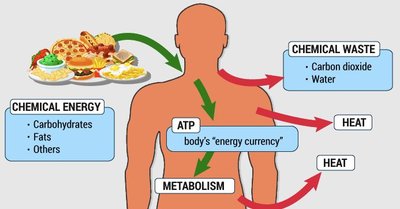
Food is required for both growth and maintenance of the body, as well as for providing the energy necessary for all life processes.
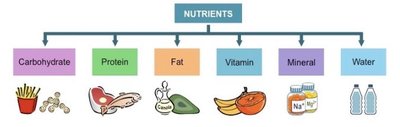
Nutrients: Raw materials and chemicals needed for growth, tissue repair, and energy production. Major classes include carbohydrates, proteins, lipids (fats), water, minerals, and vitamins.
Energy: Chemical energy from food is used to perform basic life functions such as movement, growth, and cellular processes.
Factors Affecting Energy Requirements
Endothermy vs. Ectothermy
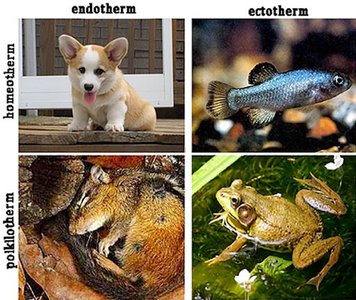
Animals differ in their energy needs based on how they regulate body temperature:
Endothermic (warm-blooded): Maintain constant body temperature internally; require more energy/food (e.g., mammals, birds).
Ectothermic (cold-blooded): Rely on external sources for body heat; require less food (e.g., reptiles, amphibians, fish).
Other Factors Influencing Energy Needs
Body Size: Larger animals generally require more energy.
Physical Activity: More active animals need more energy.
Sex: Males often require more energy due to greater muscle mass.
Age: Metabolic rate decreases with age.
Hereditary Factors: Some individuals have naturally higher or lower metabolic rates.

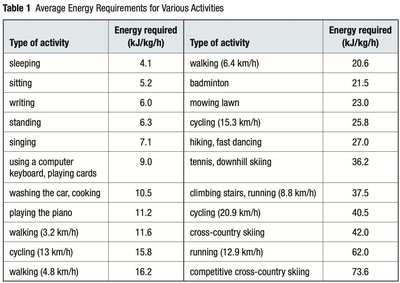
Measuring Energy Requirements
Basal Metabolic Rate (BMR): The minimum energy required to maintain vital body functions at rest.
Daily Energy Requirement: Depends on BMR and activity level; varies from day to day.
Type of Activity | Energy required (kJ/kg/h) |
|---|---|
Sleeping | 4.1 |
Sitting | 5.2 |
Walking (6.4 km/h) | 20.6 |
Climbing stairs, running (8.8 km/h) | 63.0 |
Competitive cross-country skiing | 73.6 |
Essential Nutrients: What and How Much We Need to Eat
Major Nutrient Classes
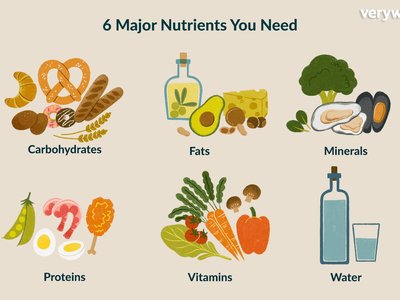
There are six major classes of nutrients required for human health:
Carbohydrates
Proteins
Lipids (Fats)
Water
Vitamins
Minerals
Carbohydrates
Types and Functions
Carbohydrates are the main source of energy for the body. They are classified by the number of sugar units:
Monosaccharides: Single sugar molecules (e.g., glucose, fructose).
Disaccharides: Two monosaccharides joined (e.g., sucrose, lactose).
Polysaccharides: Many monosaccharides joined (e.g., starch, cellulose in plants; glycogen in animals).
Glycogen: Energy-storing carbohydrate in animals, stored in liver and muscle.
Starch and Cellulose: Plant carbohydrates; cellulose provides dietary fiber and structural support in plants.
Proteins
Structure and Dietary Importance
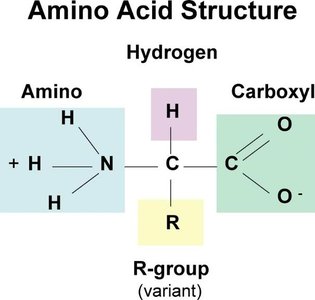
Proteins are complex molecules made up of amino acids. There are 20 different amino acids, 9 of which are essential and must be obtained from food.
Animal Proteins: Contain all essential amino acids.
Plant Proteins: Often lack one or more essential amino acids; must be combined for a complete profile.
Functions of Proteins
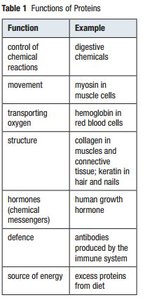
Build and repair cell structures
Enzymes: Catalyze chemical reactions
Hormones: Act as chemical messengers
Transport: Carry molecules (e.g., hemoglobin transports oxygen)
Defense: Antibodies in the immune system
Source of energy (when in excess)
Function | Example |
|---|---|
Control of chemical reactions | Digestive chemicals |
Movement | Myosin in muscle cells |
Transporting oxygen | Hemoglobin in red blood cells |
Structure | Collagen in muscles and connective tissue; keratin in hair and nails |
Hormones (chemical messengers) | Human growth hormone |
Defence | Antibodies produced by the immune system |
Source of energy | Excess proteins from diet |
Lipids (Fats)
Functions and Types
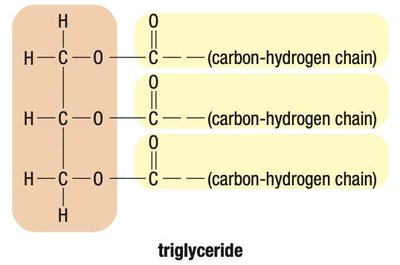
Lipids are essential for long-term energy storage, absorption of fat-soluble vitamins (A, D, E, K), insulation, and as components of cell membranes.
Triglycerides: Composed of three fatty acids bonded to a glycerol molecule.
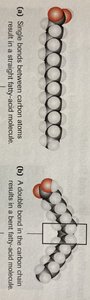
Saturated Fats: Solid at room temperature (e.g., butter).
Unsaturated Fats: Liquid at room temperature (e.g., oils); considered healthier.
Other Lipids
Steroids: Include sex hormones (testosterone, estrogen) and cholesterol.
Essential Fatty Acids: Cannot be synthesized by the body; must be obtained from diet (e.g., omega-3 fatty acids).
Summary Table: Carbohydrates, Lipids, and Proteins
Nutrient | Main Function | Examples |
|---|---|---|
Carbohydrates | Primary energy source | Bread, rice, fruits |
Proteins | Build/repair tissues, enzymes, hormones | Meat, beans, eggs |
Lipids | Long-term energy, cell membranes, hormones | Oils, butter, nuts |
Additional info: For a complete understanding, students should also review the roles of vitamins, minerals, and water in metabolism and health, as well as the consequences of nutrient deficiencies and excesses.
