 Back
BackAP Biology Unit 4: Cell Communication & Cell Cycle – Study Notes
Study Guide - Smart Notes
 Tailored notes based on your materials, expanded with key definitions, examples, and context.
Cell Communication & Signal Transduction
Overview of Cell Communication
Cells communicate by generating, transmitting, receiving, and responding to chemical signals. This communication is essential for coordinating cellular activities and maintaining homeostasis in multicellular organisms.
Types of Communication Signals: Chemical signals (e.g., hormones, neurotransmitters), electrical signals, and mechanical signals.
Sources of Signals: Signals can originate from the environment, other cells, or within the same cell (autocrine signaling).
Local vs. Distant Signaling: Local signaling includes paracrine and synaptic signaling, while distant signaling involves endocrine (hormonal) signaling.
Goal of Signal Transduction Pathways: To convert an external signal into a specific cellular response.
Signal Transduction Pathways
Signal transduction pathways involve a series of molecular events that lead to a cellular response. These pathways are highly specific and regulated.
Basic Steps: Reception (signal binds to receptor), transduction (relay molecules amplify and transmit the signal), and response (cellular activity is altered).
Specificity: Only cells with the appropriate receptor can respond to a particular signal.
Receptor Types: Receptor tyrosine kinases and G protein-coupled receptors are common membrane receptors.
Protein Modifications: Phosphorylation by kinases and dephosphorylation by phosphatases regulate pathway activity.
Second Messengers: Molecules like cyclic AMP (cAMP) relay signals inside the cell and amplify the response.
Ligand-Gated Channels: Ion channels that open or close in response to a chemical signal.
Signal Amplification: One signal molecule can activate many downstream molecules, amplifying the response.
Environmental Influence: External conditions can trigger or modulate signaling pathways.
Cellular Responses: Changes in gene expression, enzyme activity, or cell behavior.
Pathway Disruption: Mutations or chemicals can activate or inhibit signaling, affecting cell function.
Examples: Quorum sensing in bacteria and cytokine signaling in immune responses.
Cell Communication: Endocrine System Example
Feedback Mechanisms and Homeostasis
Organisms use feedback mechanisms to maintain internal stability (homeostasis) and respond to environmental changes.
Negative Feedback: Reduces the effect of a stimulus (e.g., insulin/glucagon regulation of blood sugar).
Positive Feedback: Amplifies a response (e.g., oxytocin release during childbirth).
Cell Communication: Immune System Example
Immune Cell Interactions
The immune response involves complex communication between different cell types to recognize and eliminate pathogens.
Antigen-Presenting Cells (APCs): Display foreign antigens to T cells, initiating the immune response.
Helper T Cells: Activate other immune cells by releasing cytokines.
Cytotoxic T Cells: Destroy infected or abnormal cells.
B Cells: Produce antibodies that bind to specific antigens.
Antibodies: Y-shaped proteins with variable regions that bind specific antigens; each antibody is specific to one antigen.
Immunological Memory: Faster, stronger response upon re-exposure to the same antigen.
Cellular Communication: Interactions among APCs, T cells, and B cells are mediated by signaling molecules (cytokines).
The Cell Cycle
Overview and Regulation
The cell cycle is the series of events that cells go through as they grow and divide. It ensures the accurate transmission of genetic information to daughter cells.
Purpose: Growth, repair, and reproduction of cells.
Major Stages:
Interphase: G1 (cell growth), S (DNA replication), G2 (preparation for mitosis).
Mitosis: Division of the nucleus (prophase, metaphase, anaphase, telophase).
Cytokinesis: Division of the cytoplasm.
G0 Stage: Non-dividing state; cells may enter G0 when they become specialized.
Checkpoints: Control points (G1, G2, M) ensure proper progression; regulated by cyclins and cyclin-dependent kinases (CDKs).
Cancer: Uncontrolled cell division due to loss of checkpoint regulation.
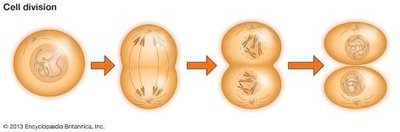
Steps of Mitosis
Prophase: Chromosomes condense, spindle fibers form.
Metaphase: Chromosomes align at the cell equator.
Anaphase: Sister chromatids separate and move to opposite poles.
Telophase: Nuclear envelopes reform, chromosomes decondense.
Cytokinesis: Cytoplasm divides, forming two daughter cells.
DNA Replication
Mechanisms and Enzymes
DNA replication is the process by which genetic information is copied for transmission to the next generation. It is semiconservative, meaning each new DNA molecule consists of one old and one new strand.
Historical Experiments: Griffith, Avery, Hershey-Chase, and Meselson-Stahl experiments established DNA as the genetic material and its semiconservative replication.
Key Enzymes:
Helicase: Unwinds the DNA double helix.
Topoisomerase: Relieves tension ahead of the replication fork.
RNA Primase: Synthesizes RNA primers.
DNA Polymerase: Adds nucleotides to the growing DNA strand.
Ligase: Joins Okazaki fragments on the lagging strand.
Replication Direction: New DNA is synthesized in the 5' to 3' direction.
Leading vs. Lagging Strand: Leading strand is synthesized continuously; lagging strand is synthesized in fragments (Okazaki fragments).
Base-Pairing Rules: Adenine pairs with thymine, guanine pairs with cytosine.
Purines vs. Pyrimidines: Purines (adenine, guanine) are double-ringed; pyrimidines (cytosine, thymine) are single-ringed.
Viral Replication
Structure and Life Cycles
Viruses are non-cellular infectious agents composed of genetic material (DNA or RNA) surrounded by a protein coat. They replicate by hijacking host cell machinery.
Biochemical Structure: Nucleic acid core (DNA or RNA), protein capsid, sometimes a lipid envelope.
Lytic Cycle: Virus replicates rapidly, lyses host cell to release new viruses.
Lysogenic Cycle: Viral DNA integrates into host genome, replicates with host cell until triggered to enter lytic cycle.
Genetic Variation: Errors in replication and recombination introduce variation in viral populations and can transfer genes to host organisms.
