Back
BackBacteria and Archaea: Diversity, Structure, and Function
Study Guide - Smart Notes
 Tailored notes based on your materials, expanded with key definitions, examples, and context.
Bacteria and Archaea
Introduction to the Three Domains of Life
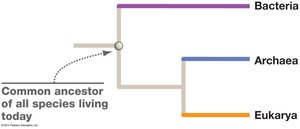
The three domains of life—Bacteria, Archaea, and Eukarya—represent the broadest divisions in the tree of life. Bacteria and Archaea are both prokaryotic, lacking a nucleus and membrane-bound organelles, but differ significantly in their molecular and cellular characteristics. Eukarya includes all eukaryotic organisms, such as plants, animals, fungi, and protists.
Bacteria and Archaea are mostly unicellular and prokaryotic.
They are distinguished by differences in membrane and cell wall composition, as well as cellular processes.
Archaea are more closely related to Eukarya than to Bacteria.
Prokaryotic Cell Structure and Diversity
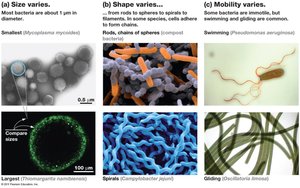
Prokaryotes exhibit extensive morphological diversity, including variations in size, shape, and motility. Their cell structure is simpler than that of eukaryotes, but they possess unique adaptations for survival in diverse environments.
DNA Organization: Prokaryotes have a single circular chromosome located in the nucleoid region, with additional small rings of DNA called plasmids.
Cell Wall: Most prokaryotes have a cell wall; in Bacteria, it contains peptidoglycan, while Archaea have distinct cell wall molecules.
Capsule: Some bacteria have a polysaccharide or protein capsule for protection and adherence.
Endospores: Dormant, tough structures that allow survival in harsh conditions.
Fimbriae and Pili: Surface appendages for attachment and, in the case of sex pili, for DNA transfer.
Motility: Many prokaryotes move using flagella, which are structurally different from those in eukaryotes.
Gram-Positive vs. Gram-Negative Bacteria
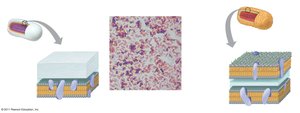
Bacteria are classified based on their cell wall structure using the Gram stain technique:
Gram-Positive Bacteria: Thick peptidoglycan layer, stain purple, more susceptible to antibiotics targeting peptidoglycan.
Gram-Negative Bacteria: Thin peptidoglycan layer, outer membrane present, stain pink, more resistant to antibiotics due to the outer membrane.
Genetic Diversity in Prokaryotes
Prokaryotes exhibit remarkable genetic diversity due to rapid reproduction, mutation, and genetic recombination. This diversity enables them to adapt quickly to changing environments.
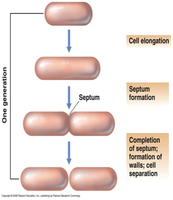
Rapid Reproduction: Binary fission allows for quick population growth and accumulation of mutations.
Mutation: Although mutation rates are low, the high frequency of cell division leads to significant genetic variation.
Genetic Recombination: Includes transformation (uptake of DNA from the environment), transduction (gene transfer by bacteriophages), and conjugation (direct transfer of DNA between cells via sex pili).
Metabolic Diversity
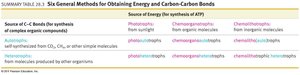
Prokaryotes display a wide range of metabolic strategies, allowing them to inhabit diverse environments. They can be classified by their energy and carbon sources:
Phototrophs: Obtain energy from light.
Chemotrophs: Obtain energy from chemicals (organic or inorganic).
Autotrophs: Use CO2 or related compounds as a carbon source.
Heterotrophs: Require organic compounds for carbon.
Oxygen Metabolism
Prokaryotes vary in their use of oxygen for metabolism:
Obligate Aerobes: Require oxygen for cellular respiration.
Obligate Anaerobes: Poisoned by oxygen; use fermentation or anaerobic respiration.
Facultative Anaerobes: Can survive with or without oxygen.
Nitrogen Metabolism
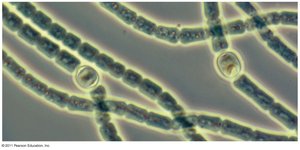
Nitrogen is essential for the synthesis of proteins and nucleic acids. Many prokaryotes can fix atmospheric nitrogen (N2) into ammonia (NH3), making it available to other organisms. Cyanobacteria, such as Anabaena, can both photosynthesize and fix nitrogen, often using specialized cells called heterocysts.
Diversity and Classification of Prokaryotes
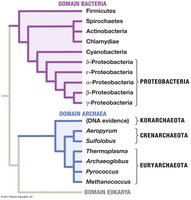
Bacteria and Archaea are highly diverse and occupy nearly every habitat on Earth. Bacteria are a monophyletic group, including important lineages such as cyanobacteria and proteobacteria. Archaea are more closely related to Eukarya and include many extremophiles.
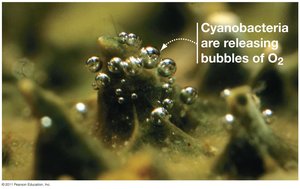
Cyanobacteria: Photosynthetic bacteria, important for oxygen production.
α-Proteobacteria: May have given rise to mitochondria in eukaryotes.
Archaea: Include extremophiles (e.g., halophiles, thermophiles, methanogens).
Prokaryotes in the Environment
Prokaryotes play crucial roles in ecosystems as decomposers, nitrogen fixers, and in symbiotic relationships. They are also used in bioremediation to degrade pollutants, such as oil spills.
Decomposers: Break down dead organic matter, recycling nutrients.
Symbiosis: Form mutualistic, commensal, or parasitic relationships with other organisms.
Bioremediation: Use of prokaryotes to clean up environmental contaminants.
Pathogenic Prokaryotes and Disease
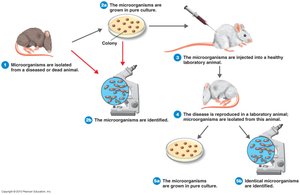
While most prokaryotes are harmless or beneficial, some cause disease in humans. Pathogenic bacteria can cause a variety of illnesses, including strep throat, tuberculosis, and Lyme disease. Koch's postulates are used to establish a causative link between a microbe and a disease.
Koch's Postulates: Criteria for demonstrating that a specific microbe causes a specific disease.
Examples of Pathogens: Streptococcus pyogenes, Staphylococcus aureus, Borrelia burgdorferi (Lyme disease).
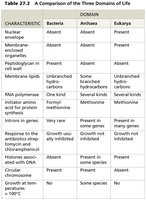
Comparison of the Three Domains of Life
The three domains—Bacteria, Archaea, and Eukarya—differ in several fundamental characteristics, including cell structure, membrane composition, and genetic machinery.
Characteristic | Bacteria | Archaea | Eukarya |
|---|---|---|---|
Nuclear envelope | Absent | Absent | Present |
Membrane-enclosed organelles | Absent | Absent | Present |
Peptidoglycan in cell wall | Present | Absent | Absent |
Membrane lipids | Unbranched hydrocarbons | Branched hydrocarbons | Unbranched hydrocarbons |
RNA polymerase | One kind | Several kinds | Several kinds |
Initiator amino acid for protein synthesis | Formyl-methionine | Methionine | Methionine |
Introns in genes | Very rare | Present in some genes | Present in many genes |
Growth at >100°C | No | Some species | No |