 Back
BackBIO 100: Basic Biological Science – Course Structure, Learning Goals, and Laboratory Overview
Study Guide - Smart Notes
 Tailored notes based on your materials, expanded with key definitions, examples, and context.
Course Overview
Introduction to Basic Biological Science (BIO 100)
This course provides a broad-based introduction to modern biological science for non-majors, covering fundamental principles and processes of life. The curriculum is structured to build understanding from basic chemical systems to complex biological systems, culminating in topics such as evolution and ecology.
Lecture Meetings: Mondays & Wednesdays, 9:00am-9:50am
Laboratory Meetings: Variable times, Monday-Wednesday
Instructor: Sarah Stamis, MS
Location: Main Hall 168 (Lecture), Science Center North 174 (Lab)
Course Description: Basic principles of biology including evolution, cell theory, metabolism, genetics, development, diversity of life forms, and ecology. Not open to biology majors. Fulfills Science Distributive Requirement.
Required Materials
Textbook and Learning Platforms
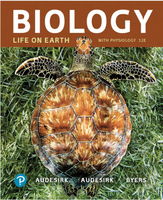
Textbook: Life on Earth, 12th Edition by Audesirk, Audesirk, Byers (Pearson Publishers)
Mastering MyLab: Electronic access for homework and lab exercises
Clicker Platform: TopHat® for lecture participation and attendance
Access instructions for these platforms are provided via the course D2L page. Use your WCU email and Chrome browser for best compatibility.
Lecture Schedule and Topics
Weekly Lecture Topics and Corresponding Chapters
The course follows a logical progression through foundational and advanced topics in biology, closely aligned with the textbook chapters:
Week 1: Introduction to Life (Ch. 1)
Week 2: Beginnings of Life & Evolution (Ch. 1, 18)
Week 3: Chemistry of Life (Ch. 2)
Week 4: Organic Molecules & Biological Compounds (Ch. 2, 3)
Week 5: Cell Structure & Function (Ch. 4)
Week 6: Cell Types, Organelles, Membrane Structure (Ch. 4, 5)
Week 7: Diffusion, Osmosis, Dialysis (Ch. 5)
Week 8: Energy Flow, Glycolysis, Respiration (Ch. 6, 8)
Week 9: Photosynthesis (Ch. 7)
Week 10: Cellular Reproduction, Genome Structure, Mitosis, Meiosis (Ch. 9, 10)
Week 11: Mendelian Genetics, DNA Structure & Regulation (Ch. 11, 12)
Week 12: Gene Expression, Transcription, Translation (Ch. 13)
Week 13: Viral & Bacterial Infections (Ch. 20)
Week 14-16: Evolution, Evolutionary Processes (Ch. 16, 17)
Exams and homework are scheduled throughout the semester, with a final exam at the end.
Laboratory Structure
Laboratory Activities and Schedule
Laboratories are computer-based and reinforce lecture concepts through hands-on activities. Attendance and completion are required for full credit.
Lab Topics:
Scientific Method
Macromolecules
Cells
Diffusion & Osmosis
Enzymes
Photosynthesis
Mitosis
Meiosis
Genetics
Natural Selection
Lab Attendance: Required for full credit; late submissions incur penalties.
Laboratory Instructors
Graduate assistants facilitate laboratory sessions. Contact information is provided for each lab section.
Jess Wolfgang
Justin Helm
Andres Lopez
Cara Brennan



Grading and Assessment
Course Grading Breakdown
Lecture Attendance & Participation: 10%
Homework: 12%
Exams: 35%
Laboratory Attendance: 5%
Laboratory Activities: 30%
Final Exam: 8%
Grades are assigned according to the university grading scheme, with percentage equivalents for each letter grade.
Grade | Quality Points | Percentage |
|---|---|---|
A | 4.00 | 93-100 |
A- | 3.67 | 90-92 |
B+ | 3.33 | 87-89 |
B | 3.00 | 83-86 |
B- | 2.67 | 80-82 |
C+ | 2.33 | 77-79 |
C | 2.00 | 73-76 |
C- | 1.67 | 70-72 |
D+ | 1.33 | 67-69 |
D | 1.00 | 63-66 |
D- | 0.67 | 60-62 |
F | 0 | <60 |
General Education Learning Objectives
Key Goals and Student Learning Outcomes
Communicate Effectively: Master fundamental terminology, concepts, and processes at molecular, cellular, organismal, and ecosystem levels.
Think Critically and Analytically: Analyze scientific concepts, reach logical conclusions based on evidence, and interpret data.
Employ Quantitative Concepts: Apply mathematical/statistical reasoning to biological phenomena, such as genetics and bioenergetics.
Apply Scientific Method: Understand and use the scientific method in both academic and daily life contexts.
Assessment is conducted through lecture exams, laboratory exercises, and participation in interactive activities.
Policies and Resources
Attendance, Academic Integrity, and Accommodations
Attendance: Mandatory for both lecture and lab; points awarded for participation.
Academic Integrity: Adherence to university standards is required; violations result in penalties.
Accommodations: Students with disabilities should contact the Office of Educational Accessibility for support.
Inclusive Environment: The course and university are committed to diversity, equity, and inclusion.
Emergency Preparedness: Students are encouraged to sign up for WCU ALERT for campus safety notifications.
Official communications are sent via university email; students are responsible for checking their accounts regularly.
Summary
BIO 100 is designed to provide non-majors with a comprehensive foundation in biological science, emphasizing critical thinking, quantitative reasoning, and scientific literacy. The course integrates lecture and laboratory experiences to foster understanding of life’s complexity, from molecules to ecosystems.
