 Back
BackBIO201 Exam 4 Review: Cell Division, Mendelian Genetics, and Molecular Biology
Study Guide - Smart Notes
 Tailored notes based on your materials, expanded with key definitions, examples, and context.
Mitosis and Meiosis
Comparison of Mitosis and Meiosis
Mitosis and meiosis are two fundamental processes of cell division in eukaryotes. Mitosis results in the production of two genetically identical diploid cells, while meiosis produces four genetically diverse haploid gametes.
Mitosis: Diploid (2N) → diploid (2N), one round of division, produces identical daughter cells for growth and repair.
Meiosis: Diploid (2N) → haploid (1N), two rounds of division, increases genetic variation, produces gametes (eggs and sperm).
Both: Start with a diploid cell, DNA duplication occurs in interphase, follow similar basic steps, make new cells.
Example: Mitosis is used for tissue repair, while meiosis is essential for sexual reproduction.
Chromosome Structure and Terminology
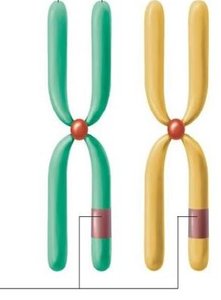
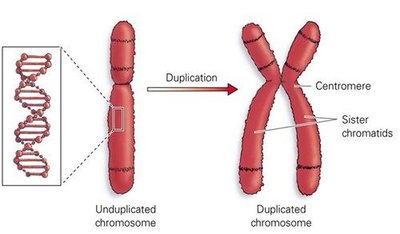
Understanding chromosome structure is crucial for grasping cell division. Key terms include chromatid, sister chromatids, and homologous chromosomes.
Chromatid: One half of a duplicated chromosome.
Sister chromatids: Two identical copies of a chromosome connected by a centromere.
Homologous chromosomes: Chromosome pairs (one maternal, one paternal) with the same genes but possibly different alleles.
Interphase and Cell Cycle
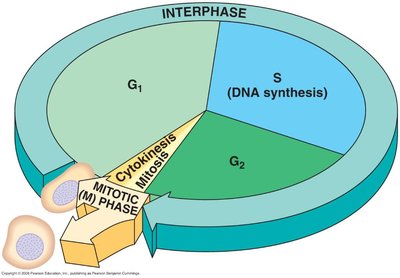
Interphase is the period of the cell cycle during which the cell grows, duplicates its DNA, and prepares for division. It consists of G1, S (DNA synthesis), and G2 phases.
G1 phase: Cell growth and preparation for DNA replication.
S phase: DNA replication occurs.
G2 phase: Final preparations for mitosis.
Steps of Mitosis
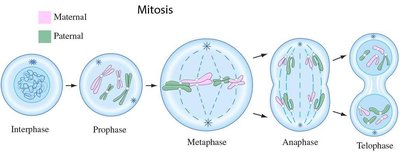
Mitosis is divided into distinct phases: prophase, metaphase, anaphase, telophase, and cytokinesis. The mnemonic "Pass Me A TaCo" helps remember the order.
Prophase: Chromosomes condense, spindle forms.
Metaphase: Chromosomes align at the cell equator.
Anaphase: Sister chromatids separate.
Telophase: Nuclear membranes reform, chromosomes decondense.
Cytokinesis: Division of cytoplasm, forming two cells.
Mitotic Checkpoint
The mitotic checkpoint ensures that all chromosomes are properly attached to the spindle before proceeding to anaphase, preventing errors in chromosome segregation.
Steps of Meiosis
Meiosis consists of two sequential divisions: Meiosis I and Meiosis II. Meiosis I separates homologous chromosomes, while Meiosis II separates sister chromatids.
Meiosis I: Homologous chromosomes separate.
Meiosis II: Sister chromatids separate.
Genetic Variation in Meiosis
Meiosis increases genetic variation through crossing over and independent assortment.
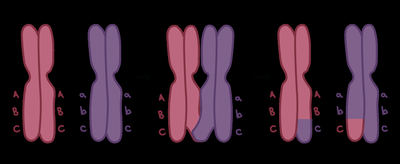
Crossing over: Exchange of genetic material between homologous chromosomes during prophase I.
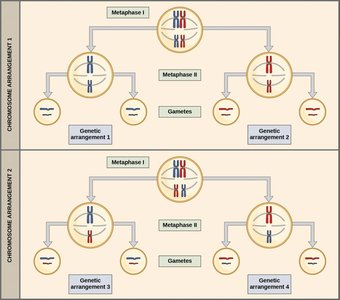
Independent assortment: Random distribution of homologous chromosomes during metaphase I.
Random fertilization: Further increases genetic diversity.
Mendelian Genetics
Mendel’s Laws
Mendel’s laws describe the principles of inheritance:
Law of Dominance: Dominant alleles mask recessive alleles.
Law of Segregation: Alleles separate during gamete formation (Anaphase I).
Law of Independent Assortment: Alleles of different genes assort independently (Metaphase I).
Inheritance Patterns
Inheritance can be more complex than simple dominant-recessive relationships.
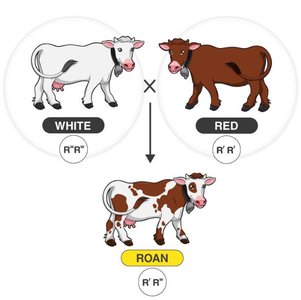
Co-dominance: Both alleles are expressed (e.g., blood type, spotted cows).
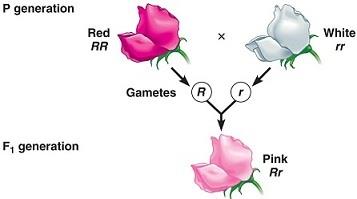
Incomplete dominance: Heterozygotes show intermediate phenotype (e.g., pink flowers).
Sex-linked traits: Traits associated with genes on sex chromosomes.
Multiple alleles: More than two alleles control a trait.
Punnett Squares and Genetic Crosses
Punnett squares are used to predict the outcome of genetic crosses. Autosomal genes use uppercase/lowercase letters, while sex-linked genes use X and Y notation.
Example: Black fur (B) is dominant to brown fur (b).
Sex-linked example: Red eye wild-type (w+) vs. purple eye mutant (p) on X chromosome.
Molecular Biology: DNA Replication and Gene Expression
DNA Replication
DNA replication is the process by which a cell duplicates its DNA before division. It involves several enzymes and proteins:
Helicase: Unwinds DNA.
SSB proteins: Stabilize single-stranded DNA.
Topoisomerase: Relieves supercoiling.
Primase: Synthesizes RNA primer.
DNA polymerase III: Synthesizes new DNA strand.
DNA polymerase I: Removes RNA primer and replaces with DNA.
Ligase: Joins DNA fragments.
Telomerase: Extends telomeres in eukaryotes.
Telomeres and Chromosomal Erosion
Telomeres are protective regions at chromosome ends. Telomerase prevents loss of genetic material during replication.
Meselson-Stahl Experiment
The Meselson-Stahl experiment used heavy and light nitrogen isotopes to demonstrate the semiconservative nature of DNA replication.
Gene Expression: Transcription and Translation
Gene expression involves transcription (DNA to mRNA) and translation (mRNA to protein).
Transcription: Synthesis of mRNA from DNA template; requires RNA polymerase and transcription factors.
Post-transcriptional processing: Includes 5'-capping, polyadenylation, and splicing.
Translation: Synthesis of polypeptide from mRNA; involves ribosomes, tRNA, and aminoacyl-tRNA synthetase.
The Genetic Code
The genetic code is triplet-based, redundant, unambiguous, and universal.
Codon: Three nucleotides code for one amino acid.
Redundancy: Multiple codons can code for the same amino acid.
Universality: Same code used by all organisms.
Enzymes and Proteins in DNA Replication, Transcription, and Translation
DNA Replication: Helicase, SSB, Topoisomerase, Primase, DNA polymerase III, DNA polymerase I, Ligase, Telomerase.
Transcription: RNA polymerase, transcription factors, spliceosome.
Translation: Aminoacyl-tRNA synthetase, release factors.
Practice Problems and Applications
Practice questions reinforce understanding of inheritance, gene expression, and cell division.
Summary and Study Tips
Review key concepts and definitions.
Practice with diagrams and genetic crosses.
Understand the roles of enzymes in molecular biology.
Apply Mendelian laws to genetic problems.
Additional info: Some diagrams and practice questions were inferred for completeness and clarity.
