Back
BackBIOL 120 Lab Final Study Guide: Key Concepts and Procedures
Study Guide - Smart Notes
 Tailored notes based on your materials, expanded with key definitions, examples, and context.
The Scientific Method
Overview of the Scientific Method
The scientific method is a systematic approach used in scientific investigation to answer questions and test hypotheses. It ensures that experiments are conducted in a logical, repeatable, and unbiased manner.
Basic Steps: Observation, Question, Hypothesis, Prediction, Experiment, Analysis, Conclusion.
Elements of Experimental Design (SMART rules): Experiments should be Specific, Measurable, Achievable, Relevant, and Time-bound.
Key Terms:
Control group: The group that does not receive the experimental treatment and is used as a baseline.
Dependent variable: The variable being measured or tested in an experiment.
Independent variable: The variable that is changed or controlled to test its effects on the dependent variable.
Constants (controlled variables): Factors kept the same across all groups to ensure a fair test.
Level of treatment: The value set for the independent variable.
Replication: Repeating the experiment to ensure reliability of results.
Hypothesis: A testable explanation for an observation.
Prediction: A statement about what will happen if the hypothesis is correct.
Hypothesis vs. Prediction: A hypothesis is a possible explanation; a prediction is a specific outcome expected if the hypothesis is true.
Well-defined, Testable, Measurable, Controllable: Good experiments have clear variables, can be tested, measured, and controlled.
Data Presentation: Data should be organized in tables and graphs for clarity and analysis.
Lab 8 – Investigating the Cell Cycle and Asexual Reproduction
Cell Cycle and Mitosis
The cell cycle is the series of events that cells go through as they grow and divide. Mitosis is the process by which a cell divides to produce two genetically identical daughter cells.
Stages of Interphase: G1 (cell growth), S (DNA synthesis), G2 (preparation for mitosis).
Stages of Mitosis: Prophase, Metaphase, Anaphase, Telophase.
Plant vs. Animal Mitosis: Plant cells form a cell plate during cytokinesis; animal cells form a cleavage furrow.
Cytokinesis: Division of the cytoplasm, resulting in two separate cells.
Lab 9 – Investigating Meiosis and Sexual Reproduction
Meiosis and Genetic Variation
Meiosis is the process by which gametes (sex cells) are produced, reducing the chromosome number by half and increasing genetic diversity.
Stages of Interphase: Same as mitosis (G1, S, G2).
Stages of Meiosis: Meiosis I (separates homologous chromosomes), Meiosis II (separates sister chromatids).
Autosomes vs. Sex Chromosomes: Autosomes are non-sex chromosomes; sex chromosomes determine biological sex (e.g., X and Y in humans).
Roles of Mitosis and Meiosis: Mitosis produces identical cells for growth/repair; meiosis produces gametes for sexual reproduction.
Somatic Cells vs. Gametes: Somatic cells are diploid (2n); gametes are haploid (n).
Diploid/Haploid Status: Cells are diploid at the start of meiosis, haploid after Meiosis I and II.
Significance of Crossing Over: Increases genetic variation by exchanging DNA between homologous chromosomes.
BPA and Cell Division: Bisphenol A (BPA) can disrupt normal cell division, potentially causing errors in chromosome separation.
Lab 10 – Performing Bacterial Transformation
Genetic Engineering in Bacteria
Bacterial transformation is the process of introducing foreign DNA into bacteria, allowing them to express new genes.
Discovery: Frederick Griffith discovered transformation in 1928 using Streptococcus pneumoniae.
Marker Genes: Genes used to identify transformed cells (e.g., antibiotic resistance, GFP).
Key Components: Plasmids (circular DNA), reagents (e.g., CaCl2), marker genes.
Transformation Plates: Used to select for bacteria that have taken up the plasmid.
Operon Theory: Arabinose induces expression of genes on the plasmid in the LB/amp/ara plate.
Lab 11 – Conducting DNA Profiling
PCR and Gel Electrophoresis
DNA profiling uses molecular techniques to identify individuals based on their DNA. PCR (Polymerase Chain Reaction) amplifies specific DNA sequences.
PCR Steps: Denaturation, Annealing, Extension.
Master Mix: Contains DNA polymerase, nucleotides, primers, buffer.
Taq Polymerase: Heat-stable enzyme used in PCR.
STRs: Short Tandem Repeats, used in forensic DNA analysis.
Gel Electrophoresis: Separates DNA fragments by size using an electric field.
Allele Ladder: Standard reference for identifying DNA fragment sizes.
Visualization: DNA is stained and viewed under UV light.
Lab 2 – Mendelian Genetics: Fast Plant Inheritance
Genetics and Inheritance Patterns
Mendelian genetics explores how traits are inherited through generations using model organisms like Fast Plants (Brassica rapa).
Genetic Crosses: Monohybrid (one trait), dihybrid (two traits), blood type, sex-linked crosses.
Purpose of Activity 2: To observe inheritance patterns in F1 and F2 generations.
Species Used: Brassica rapa (Fast Plants) for rapid life cycle and observable traits.
Wild Type vs. Mutant Phenotypes: Wild type shows normal traits; mutants display altered traits.
Chi-square Test: Statistical test to compare observed and expected genetic ratios. Equation:
Predicting Offspring: Use Punnett squares for monohybrid and dihybrid crosses.
Using the Microscope
Microscope Structure and Function
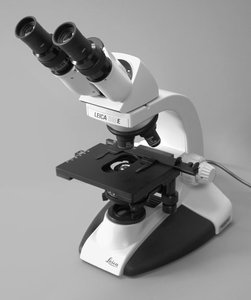
The light microscope is an essential tool for observing cells and tissues. Understanding its parts and proper use is crucial for laboratory work.
Parts and Functions: Eyepiece/ocular, nosepiece, objective lens, stage clips, coarse and fine focus knobs, mechanical stage knob, stage, light source, condenser, diaphragm, arm.
Focusing and Care: Start with the lowest objective, use coarse then fine focus, clean lenses with lens paper only.
Total Magnification: Calculated by multiplying the eyepiece magnification by the objective lens magnification. Equation:
Key Terms: Parfocal (remains in focus when switching objectives), magnification (enlargement of image), resolution (ability to distinguish two points as separate).