 Back
Biological Molecules: Structure, Function, and Properties
Study Guide - Smart Notes
 Tailored notes based on your materials, expanded with key definitions, examples, and context.
Emergent Properties and Water
Emergent Properties of Water
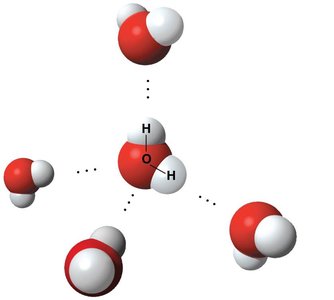
Emergent properties are characteristics that arise from the arrangement and interaction of parts within a system. In biology, water exhibits several emergent properties due to its molecular structure and hydrogen bonding, which are critical for life.
Cohesion and Adhesion: Water molecules stick to each other (cohesion) and to other surfaces (adhesion) due to hydrogen bonds.
High Specific Heat: Water can absorb or release large amounts of heat with little temperature change, stabilizing environments.
Solvent Properties: Water's polarity allows it to dissolve many substances, facilitating biochemical reactions.
Ice Floats: Hydrogen bonds make ice less dense than liquid water, allowing it to float and insulate aquatic life.
Example: Water's ability to form hydrogen bonds leads to its high surface tension and its role as a universal solvent.
Subatomic Particles and Chemical Bonds
Subatomic Particles
Atoms are composed of three main subatomic particles:
Protons: Positively charged, found in the nucleus.
Neutrons: Neutral, found in the nucleus.
Electrons: Negatively charged, orbit the nucleus.
Chemical Bonds
Atoms interact through chemical bonds to form molecules:
Covalent Bonds: Atoms share electrons; can be polar (unequal sharing) or nonpolar (equal sharing).
Hydrogen Bonds: Weak attractions between a hydrogen atom and an electronegative atom (e.g., oxygen or nitrogen).
Ionic Bonds: Electrons are transferred, creating charged ions that attract each other.
Carbon: The Basis of Molecular Diversity
Properties of Carbon
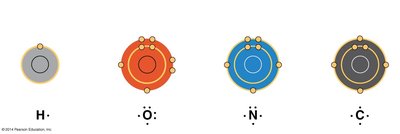
Carbon is unique in its ability to form four covalent bonds, allowing for a vast diversity of organic molecules. Its valency enables it to bond with hydrogen, oxygen, nitrogen, and other elements, forming the backbone of biological macromolecules.
Valency: Carbon can form single, double, or triple bonds.
Versatility: Enables the formation of chains, rings, and branched structures.
Functional Groups in Organic Molecules
Significance of Functional Groups
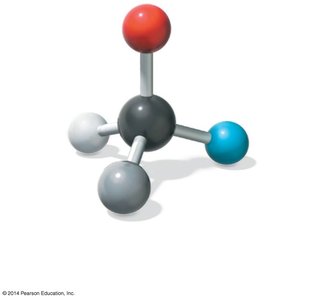
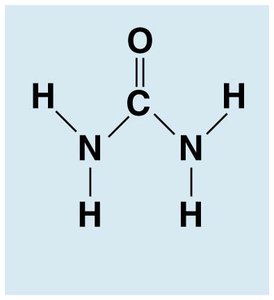
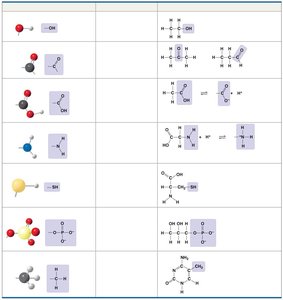
Functional groups are specific groups of atoms within molecules that are responsible for the characteristic chemical reactions of those molecules. They determine the properties and reactivity of organic compounds.
Hydroxyl (–OH): Alcohols, increases solubility in water.
Carboxyl (–COOH): Organic acids, acidic properties.
Amino (–NH2): Amines, acts as a base.
Sulfhydryl (–SH): Thiols, forms disulfide bonds in proteins.
Phosphate (–OPO32–): Organic phosphates, energy transfer (e.g., ATP).
Methyl (–CH3): Methylated compounds, affects gene expression.
Carbonyl (C=O): Ketones and aldehydes, reactivity in sugars.
Isomers and Molecular Diversity
Types of Isomers
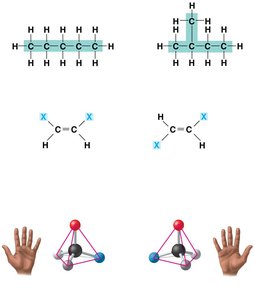
Isomers are compounds with the same molecular formula but different structures and properties. They contribute to the diversity of biological molecules.
Structural Isomers: Differ in the arrangement of atoms.
Cis-Trans Isomers: Differ in spatial arrangement around a double bond.
Enantiomers: Mirror images, important in pharmaceuticals.
Biological Significance of Isomers
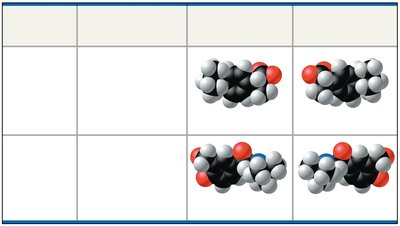
Isomers can have drastically different biological effects. For example, only one enantiomer of a drug may be effective, while the other may be inactive or harmful.
Macromolecules: Structure and Function
Building and Breaking Down Macromolecules
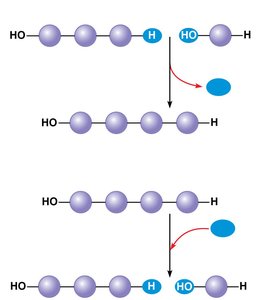
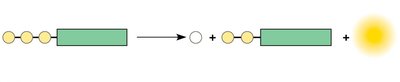
Macromolecules are large biological molecules formed by joining smaller units (monomers) through dehydration reactions and broken down by hydrolysis.
Dehydration Reaction: Removes water to form a bond.
Hydrolysis: Adds water to break a bond.
Carbohydrates
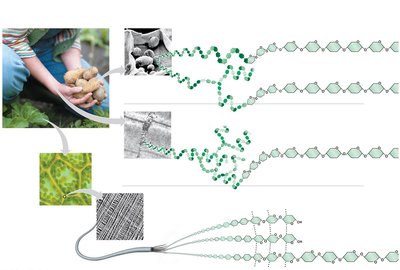
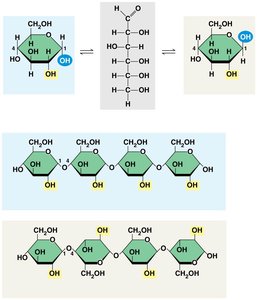
Carbohydrates are composed of monosaccharides and serve as energy sources and structural materials.
Starch: Storage in plants, composed of amylose and amylopectin.
Glycogen: Storage in animals, highly branched.
Cellulose: Structural component in plant cell walls.
Lipids
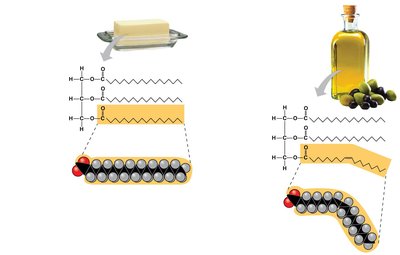
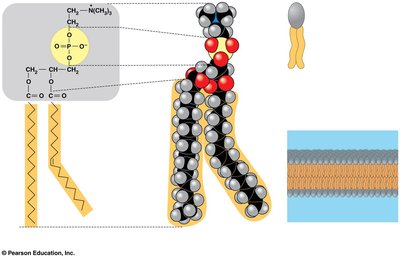
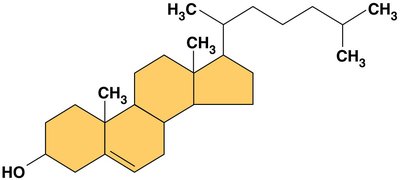
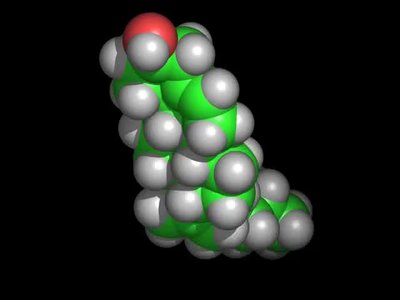
Lipids are hydrophobic molecules, including fats, phospholipids, and steroids. They function in energy storage, membrane structure, and signaling.
Fats: Composed of glycerol and fatty acids; saturated fats are solid at room temperature, unsaturated fats are liquid.
Phospholipids: Major component of cell membranes, amphipathic (hydrophilic head, hydrophobic tails).
Steroids: Four fused rings, includes hormones like estradiol and testosterone.
Proteins
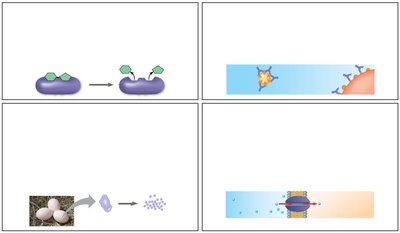
Proteins are polymers of amino acids and perform a wide range of functions, including catalysis, transport, defense, and structure.
Enzymatic: Catalyze biochemical reactions.
Storage: Store amino acids.
Defensive: Protect against disease.
Transport: Move substances across membranes.
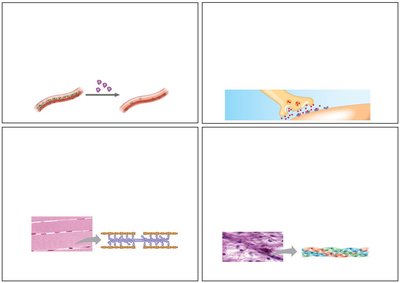
Hormonal: Coordinate activities.
Receptor: Respond to signals.
Contractile: Movement.
Structural: Support.
Protein Structure
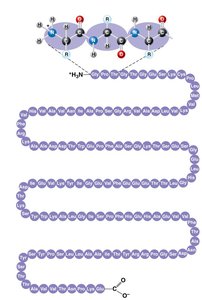
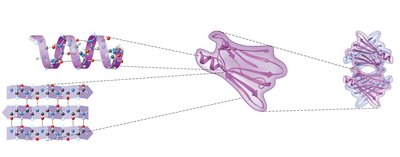
Proteins have four levels of structure:
Primary: Sequence of amino acids.
Secondary: Alpha helix and beta sheet, stabilized by hydrogen bonds.
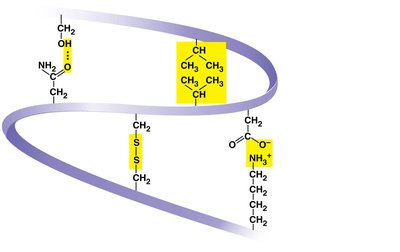
Tertiary: 3D folding due to R group interactions.
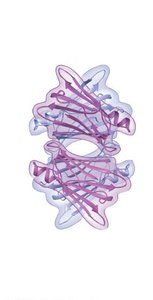
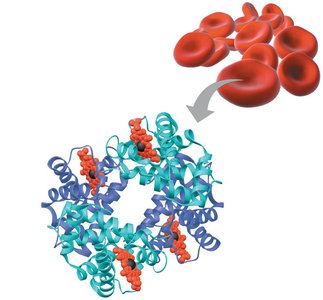
Quaternary: Association of multiple polypeptides.


Nucleic Acids
Structure and Function of Nucleic Acids
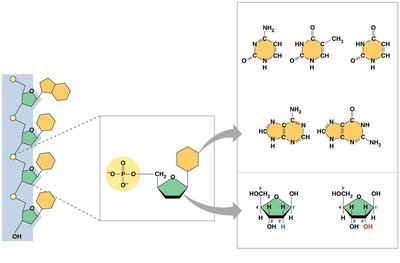
Nucleic acids (DNA and RNA) are polymers of nucleotides, which consist of a phosphate group, a sugar (ribose or deoxyribose), and a nitrogenous base. They store and transmit genetic information.
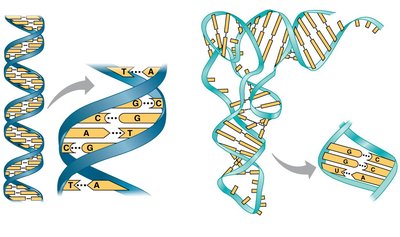
DNA: Double-stranded, stores genetic information.
RNA: Single-stranded, involved in protein synthesis.
ATP: Cellular Energy
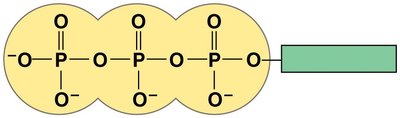
ATP (adenosine triphosphate) is a nucleotide that serves as the primary energy carrier in cells. Hydrolysis of ATP releases energy for cellular processes.
Summary Table: Functional Groups
Group | Structure | Compound Name | Example |
|---|---|---|---|
Hydroxyl | –OH | Alcohol | Ethanol |
Carbonyl | C=O | Ketone/Aldehyde | Acetone/Propanal |
Carboxyl | –COOH | Carboxylic acid | Acetic acid |
Amino | –NH2 | Amine | Glycine |
Sulfhydryl | –SH | Thiol | Cysteine |
Phosphate | –OPO32– | Organic phosphate | Glycerol phosphate |
Methyl | –CH3 | Methylated compound | 5-Methyl cytosine |
Additional info:
Isomers are critical in drug design, as only one enantiomer may be biologically active.
Protein folding is assisted by chaperone proteins and influenced by environmental factors such as temperature, pH, and salt concentration.
