 Back
BackBiology Exam 3 Study Guide: Macromolecules, Meiosis, Mendelian Genetics, and Chromosomal Inheritance
Study Guide - Smart Notes
 Tailored notes based on your materials, expanded with key definitions, examples, and context.
Chapter 3: The Structure and Function of Large Biological Molecules
Macromolecules: Overview and Key Concepts
Macromolecules are large, complex molecules essential for life, including carbohydrates, lipids, proteins, and nucleic acids. They are typically polymers, built from smaller subunits called monomers, and assembled through specific chemical reactions.
Polymer: A long molecule consisting of many similar or identical building blocks (monomers) linked by covalent bonds.
Monomer: The subunit that serves as the building block of a polymer.
Dehydration synthesis: A reaction in which two monomers are covalently bonded to each other with the removal of a water molecule.
Hydrolysis: A reaction that breaks bonds between monomers by adding water, reversing dehydration synthesis.
Enzyme: A macromolecule (usually a protein) that acts as a catalyst to speed up chemical reactions.
Carbohydrates
Carbohydrates are sugars and polymers of sugars, serving as fuel and building material for cells.
Monosaccharide: The simplest carbohydrate, or single sugar (e.g., glucose).
Disaccharide: Two monosaccharides joined by a glycosidic linkage (e.g., maltose, sucrose).
Polysaccharide: Polymers of many monosaccharides (e.g., starch, glycogen, cellulose).
Glycosidic linkage: A covalent bond formed between two monosaccharides by a dehydration reaction.
Starch: Storage polysaccharide in plants.
Glycogen: Storage polysaccharide in animals.
Cellulose: Structural polysaccharide in plant cell walls.
Lipids
Lipids are hydrophobic molecules, including fats, phospholipids, and steroids, important for energy storage, membrane structure, and signaling.
Fat: Constructed from glycerol and fatty acids.
Fatty acid: Hydrocarbon chain with a carboxyl group; can be saturated (no double bonds) or unsaturated (one or more double bonds).
Saturated fatty acid: No double bonds; solid at room temperature.
Unsaturated fatty acid: One or more double bonds; liquid at room temperature.
Phospholipid: Major component of cell membranes, with hydrophilic head and hydrophobic tails.
Steroid: Lipid with four fused rings; includes cholesterol.
Cholesterol: Important steroid in animal cell membranes.
Proteins
Proteins are polymers of amino acids, performing a vast array of functions including catalysis, structure, transport, and signaling.
Amino acid: Organic molecule with amino and carboxyl groups; monomer of proteins.
Polypeptide: Polymer of amino acids linked by peptide bonds.
Protein: One or more polypeptides folded into a specific 3D structure.
Peptide bond: Covalent bond between amino acids.
Catalyst: Substance that speeds up a chemical reaction without being consumed.
Protein structure: Four levels—primary (sequence), secondary (alpha helix, beta sheet), tertiary (3D folding), quaternary (multiple polypeptides).
Denaturation: Loss of protein structure and function due to environmental changes (e.g., heat, pH).
Nucleic Acids
Nucleic acids store and transmit hereditary information. DNA and RNA are polymers of nucleotides.
Nucleic acid: Polymer of nucleotides (DNA or RNA).
Polynucleotide: Long chain of nucleotides.
Ribose: Sugar in RNA.
Deoxyribose: Sugar in DNA.
Double helix: Structure of DNA, two strands coiled around each other.
Chapter 10: Meiosis and Sexual Life Cycles
Genetic Concepts and Cell Types
Sexual reproduction involves the inheritance of genes from two parents, leading to genetic diversity. Meiosis is the process that produces gametes (sperm and eggs).
Gene: Unit of hereditary information on a chromosome.
Gamete: Reproductive cell (sperm or egg) with half the chromosome number.
Somatic cell: Any cell other than a gamete; diploid.
Locus: Specific location of a gene on a chromosome.
Asexual reproduction: Offspring arise from a single parent; genetically identical (clone).
Sexual reproduction: Offspring inherit genes from two parents; genetic variation.
Chromosomes and Meiosis
Karyotype: Ordered display of chromosomes.
Homologous chromosomes: Chromosome pairs with the same genes, one from each parent.
Sex chromosome: Chromosomes that determine sex (X and Y in humans).
Autosome: Non-sex chromosomes.
Diploid (2n): Two sets of chromosomes.
Haploid (n): One set of chromosomes.
Fertilization: Fusion of gametes to form a zygote.
Meiosis: Cell division reducing chromosome number by half, producing four haploid cells.
Phases of Meiosis
Meiosis I: Homologous chromosomes separate, reducing chromosome number.
Meiosis II: Sister chromatids separate.
Crossing over: Exchange of genetic material between homologous chromosomes, increasing genetic diversity.
Genetic Variation
Independent assortment: Random orientation of homologous pairs during meiosis I.
Recombinant chromosome: Chromosome with genetic material from both parents due to crossing over.
Random fertilization: Any sperm can fertilize any egg, increasing variation.
Chapter 11: Mendel and the Gene Idea
Basic Principles of Inheritance
Mendel's experiments with pea plants established the laws of inheritance, including segregation and independent assortment.
Character: Heritable feature (e.g., flower color).
Trait: Variant of a character (e.g., purple or white flowers).
True-breeding: Organisms that produce offspring of the same variety when self-pollinated.
P generation: Parental generation.
F1 generation: First filial generation, offspring of P generation.
F2 generation: Offspring of F1 generation.
Law of segregation: Two alleles for a gene separate during gamete formation.
Allele: Alternative versions of a gene.
Dominant allele: Expressed in the phenotype if present.
Recessive allele: Masked in the presence of a dominant allele.
Punnett Square: Diagram to predict genetic crosses.
Homozygous: Two identical alleles for a gene.
Heterozygous: Two different alleles for a gene.
Phenotype: Observable traits.
Genotype: Genetic makeup.
Test cross: Cross with a homozygous recessive to determine genotype.
Monohybrid cross: Cross involving one character.
Dihybrid cross: Cross involving two characters.
Law of Independent Assortment: Genes on different chromosomes assort independently during gamete formation.
Extensions of Mendelian Genetics
Complete dominance: Phenotype of heterozygote is identical to dominant homozygote.
Incomplete dominance: Heterozygote phenotype is intermediate between homozygotes.
Codominance: Both alleles are fully expressed in heterozygotes.
Epistasis: One gene affects the expression of another gene.
Polygenic inheritance: Multiple genes affect a single trait.
Pedigrees and Human Genetics
Pedigree: Family tree showing inheritance of traits.
Carrier: Heterozygote for a recessive disorder.
Multifactorial disorder: Influenced by genetic and environmental factors.
Chapter 12: The Chromosomal Basis of Inheritance
Chromosome Theory and Sex Linkage
Genes are located on chromosomes, and their behavior during meiosis explains inheritance patterns. Some genes are located on sex chromosomes, leading to sex-linked inheritance.
Chromosome theory of inheritance: Genes are carried on chromosomes.
Homologous chromosome: Chromosome pairs with the same genes.
Sister chromatid: Identical copies of a chromosome joined at the centromere.
Gamete: Reproductive cell.
Sex-linked gene: Gene located on a sex chromosome.
X-linked gene: Gene located on the X chromosome.
Chromosomal Alterations
Nondisjunction: Failure of chromosomes to separate properly during meiosis.
Aneuploidy: Abnormal number of chromosomes.
Monosomic: Missing one chromosome (2n-1).
Trisomic: Extra chromosome (2n+1).
Polyploidy: More than two complete sets of chromosomes.
Deletion: Loss of a chromosome segment.
Duplication: Repetition of a chromosome segment.
Inversion: Reversal of a chromosome segment.
Translocation: Movement of a segment from one chromosome to another.
Short Answer Practice and Example Problems
1. Dehydration Reaction and Maltose Formation
When two glucose molecules (C6H12O6) join via dehydration synthesis to form maltose, a water molecule (H2O) is lost. Thus, the formula for maltose is:
Glucose + Glucose → Maltose + Water
Formula: C6H12O6 + C6H12O6 → C12H22O11 + H2O
The formula is not simply double glucose because one H2O is removed during bond formation.
2. Gene Expression and Inheritance of Traits
Traits such as hair color are inherited because offspring receive genes from their parents. Genes encode proteins that determine traits. During fertilization, alleles from each parent combine, and gene expression leads to the production of proteins responsible for observable characteristics.
3. Genetic Cross: AA x Aa
For a gene with dominant allele A and recessive allele a, a cross between AA and Aa yields:
50% AA (homozygous dominant)
0% aa (homozygous recessive)
50% Aa (heterozygous)
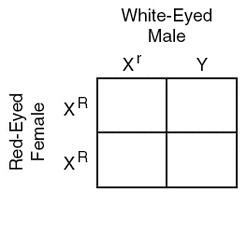
4. X-Linked Inheritance in Drosophila (Fruit Flies)
When a red-eyed (wild-type) female (XRXR) is crossed with a white-eyed (mutant) male (XrY):
All female offspring: XRXr (red-eyed, carriers)
All male offspring: XRY (red-eyed)
It is more probable for males to be white-eyed because they have only one X chromosome; if they inherit Xr, they express the trait.
Additional info:
For codominance, both alleles are expressed (e.g., AB blood type).
For incomplete dominance, heterozygotes show an intermediate phenotype (e.g., pink flowers from red and white parents).
Pedigrees are used to track inheritance patterns in families, especially for X-linked and autosomal traits.
