 Back
BackBiology: The Study of Life – Foundations of Biological Science
Study Guide - Smart Notes
 Tailored notes based on your materials, expanded with key definitions, examples, and context.
Biology: The Study of Life
Introduction to Biology
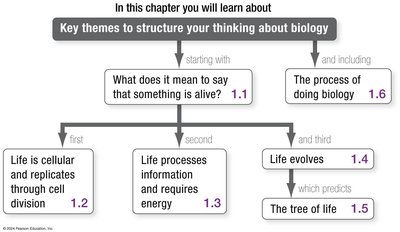
Biology is the scientific study of life and living organisms. It seeks to answer fundamental questions about what it means to be alive, how life is organized, and how living systems interact and evolve. This chapter introduces the foundational concepts that structure modern biological science.
What Does It Mean to Say That Something is Alive?
Five Fundamental Characteristics of Life
Cells: All living organisms are composed of one or more membrane-bound cells, which are the basic units of life.
Replication: All organisms have the capacity to reproduce, ensuring the continuation of their species.
Information: Organisms process hereditary information encoded in genes and respond to environmental information.
Energy: All organisms acquire and utilize energy to maintain internal order and sustain life processes.
Evolution: Populations of organisms change over time through evolutionary processes.
Major Theories in Biology
Theory in Science
A theory is a broad explanation for a wide range of phenomena, supported by substantial evidence. In biology, three central theories provide the framework for understanding life:
Cell Theory: All organisms are made of cells, and all cells come from preexisting cells.
Theory of Evolution by Natural Selection: Explains the relationships among organisms and how species change over time.
Chromosome Theory of Inheritance: Describes how hereditary information is transmitted from one generation to the next.
Life is Cellular and Replicates through Cell Division
Discovery of Cells
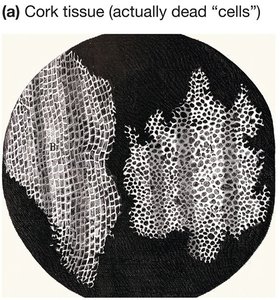
The cell is the fundamental unit of life. Early observations by Robert Hooke and Anton van Leeuwenhoek using microscopes revealed the existence of cells and single-celled organisms.
Robert Hooke (1665): Observed cork tissue and coined the term "cells."
Anton van Leeuwenhoek: Observed single-celled "animalcules" (now known as microorganisms).
Principles of Cell Theory
All organisms are composed of cells.
All cells arise from preexisting cells through cell division.
Cell Theory vs. Spontaneous Generation
Cell theory challenged the idea of spontaneous generation, which posited that life could arise from non-living matter. Louis Pasteur's experiments demonstrated that cells only arise from other cells, not spontaneously.
Life Processes Information and Requires Energy
Chromosome Theory of Inheritance
Genes, the units of heredity, are located on chromosomes.
Chromosomes are composed of DNA (deoxyribonucleic acid), which encodes genetic information.
Structure and Function of DNA
DNA is a double helix composed of four types of nucleotides: Adenine (A), Thymine (T), Cytosine (C), and Guanine (G).
Base pairing: A pairs with T, and C pairs with G, allowing DNA to be accurately copied.
The Central Dogma of Molecular Biology
The central dogma describes the flow of genetic information within a cell:
DNA is transcribed into RNA (ribonucleic acid).
RNA is translated into proteins, which perform essential cellular functions.
Genetic Variation and Evolution
DNA replication is highly accurate, but mutations (changes in DNA sequence) can occur.
Mutations can alter protein function and contribute to heritable variation, which is the raw material for evolution.
Energy and Metabolism
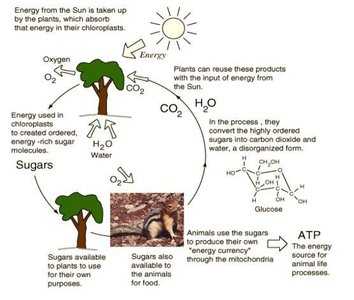
Cells require energy to drive chemical reactions essential for life.
Organisms obtain energy in the form of ATP (adenosine triphosphate) and require molecules for building cellular components.
Plants and some bacteria can produce sugars using sunlight (photosynthesis), while others obtain energy by consuming organic molecules.
Life Evolves
Evolution by Natural Selection
Evolution is the change in the characteristics of populations over time. Charles Darwin and Alfred Russel Wallace proposed that species are related by common ancestry and change through the process of natural selection.
Natural Selection: Occurs when individuals with heritable traits that confer a reproductive advantage become more common in a population.
Fitness: The ability of an individual to produce surviving offspring.
Adaptation: A trait that increases an individual's fitness in a particular environment.
Example: Darwin’s Finches
On the Galápagos Islands, finches with beak shapes suited to available food sources had higher fitness, demonstrating natural selection in action.
The Tree of Life and Biological Classification
Phylogeny and the Tree of Life
The tree of life is a family tree depicting evolutionary relationships among species, with a single ancestral species at its base.
Phylogenetic trees are constructed using genetic data to infer relationships.
Three major domains of life: Bacteria, Archaea, and Eukarya.
Taxonomy and Scientific Nomenclature
Taxonomy: The science of naming and classifying organisms.
Each species is given a unique two-part scientific name (genus and species), e.g., Homo sapiens.
Genus names are capitalized, and species names are not; both are italicized.
The Process of Doing Biology
The Scientific Method
Science involves formulating hypotheses and testing them through experiments or observations.
A hypothesis is a testable statement; a prediction is an expected outcome if the hypothesis is correct.
Experiments must include control groups, constant conditions, and a sufficient sample size for reliable results.
Experimental Design Example: Plant Nutrition
Independent variable: Presence or absence of nitrogen in water.
Dependent variables: Leaf length, leaf number, and leaf yellowing.
Control group: Plants watered with distilled water only.
Treatment group: Plants watered with nitrogen-containing fertilizer.
Constants: Light source, soil type, water volume, etc.
Including a control group allows scientists to attribute observed effects to the variable being tested.
Summary Table: Key Characteristics of Life
Characteristic | Description |
|---|---|
Cellular Organization | All living things are composed of cells |
Replication | Ability to reproduce |
Information | Genetic code and response to environment |
Energy Use | Acquisition and utilization of energy |
Evolution | Populations change over time |
