 Back
BackBiotechnology: Tools and Applications in Modern Biology
Study Guide - Smart Notes
 Tailored notes based on your materials, expanded with key definitions, examples, and context.
Biotechnology: Introduction and Overview
Definition and Scope
Biotechnology is the use of living organisms, cells, and biological systems to develop products and technologies for human benefit. It encompasses a wide range of techniques, including the manipulation of DNA, gene editing, and the production of pharmaceuticals and genetically modified organisms (GMOs).
Proteins are essential for cellular function; new cellular functions often require the introduction of new proteins, which is achieved by introducing new DNA sequences.
Modern biotechnology allows for the sequencing, modification, and transfer of DNA between organisms, enabling the creation of organisms with novel traits.
Applications of Biotechnology
Key Applications
Biotechnology has revolutionized medicine, agriculture, and environmental science through the following applications:
Sequencing DNA: Determining the order of nucleotides in DNA to understand genetic information.
Personalized Medicine: Tailoring medical treatments based on individual genetic profiles.
Predicting Health Risks: Using genetic information to assess susceptibility to diseases.
Environmental Remediation: Engineering bacteria to degrade pollutants.
Genetically Modified Crops: Creating plants resistant to drought, pests, or herbicides.
Gene Therapy: Correcting genetic disorders by altering DNA sequences in patients.
Production of Pharmaceuticals: Using organisms to produce drugs such as insulin.
Historical Example: Green Fluorescent Protein (GFP)
Gene Transfer and Visualization
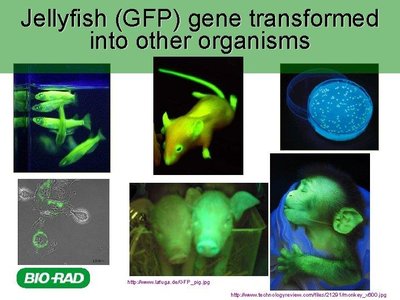
The gene encoding GFP from jellyfish has been transferred into various organisms, allowing researchers to visualize gene expression and protein localization.
GFP acts as a marker, making cells or organisms fluoresce under UV light.
This technique demonstrates the ability to copy and express foreign genes in new hosts.
Biotechnology and Human Health: Golden Rice
Addressing Vitamin A Deficiency
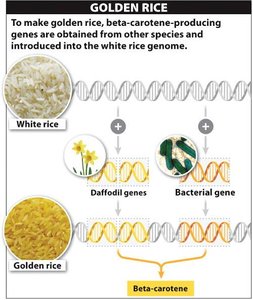
Vitamin A deficiency is a major global health issue, leading to blindness and increased mortality in children. Golden Rice is a genetically modified crop designed to combat this deficiency.
Golden Rice contains genes from daffodils and bacteria, enabling the production of beta-carotene, a precursor to vitamin A.
This biofortified rice helps prevent blindness and death in populations with limited access to vitamin A-rich foods.
Tools of Biotechnology
Restriction Enzymes
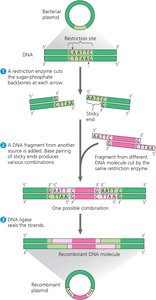
Restriction enzymes are proteins that cut DNA at specific palindromic sequences. They are essential for genetic engineering and molecular cloning.
Bacteria use restriction enzymes as a defense against viruses, cutting foreign DNA while protecting their own DNA via methylation.
Researchers use these enzymes to cut and paste genes into vectors for expression in other organisms.
Polymerase Chain Reaction (PCR)
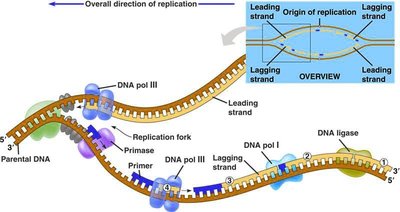
PCR is a technique used to amplify specific DNA sequences, making millions of copies from a small initial sample.
Relies on heat-stable DNA polymerase, primers, and nucleotides.
Cycles of heating and cooling denature DNA, anneal primers, and extend new DNA strands.
Enables rapid and sensitive detection of genetic material.
DNA Sequencing
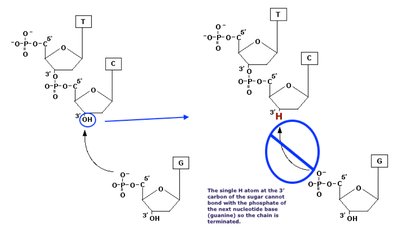
DNA sequencing determines the precise order of nucleotides in a DNA molecule. Early methods used chain-terminating nucleotides to generate fragments of varying lengths, separated by gel electrophoresis.
Modern sequencing uses fluorescent tags and automated analysis.
Sequencing is foundational for genomics, evolutionary biology, and personalized medicine.
DNA Extraction
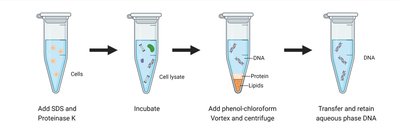
DNA extraction isolates DNA from cells or tissues, separating it from proteins, lipids, and other cellular components.
DNA is hydrophilic and negatively charged, allowing it to be separated using solvents and charged membranes.
Spin-column and organic extraction methods are commonly used in laboratories.
CRISPR-Cas9 Gene Editing
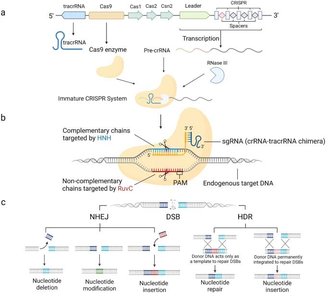
CRISPR-Cas9 is a revolutionary tool for precise genome editing. It uses a guide RNA to target specific DNA sequences, where the Cas9 enzyme introduces double-strand breaks. The cell's repair mechanisms can then be harnessed to introduce or correct genetic changes.
Allows for targeted gene knockout, insertion, or correction.
Widely used in research, agriculture, and potential gene therapies.
Putting New DNA into Organisms
Genetic Transformation and Recombinant DNA
Introducing new DNA into organisms enables the production of valuable proteins, improved crops, and model organisms for research.
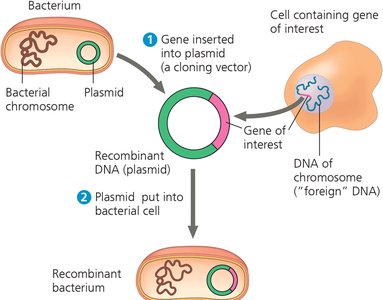
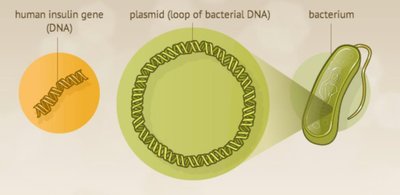
Genes of interest are inserted into plasmids (cloning vectors) and introduced into host cells (e.g., bacteria, yeast, plants, or animals).
Transformed organisms can express new traits, such as pharmaceutical production or enhanced nutrition.
Example: Production of Human Insulin
Before recombinant DNA technology, insulin for diabetes treatment was extracted from pig pancreases. Today, bacteria are engineered to produce human insulin, providing a safer and more reliable source.
Human insulin gene is inserted into a bacterial plasmid.
Bacteria express the gene and produce insulin, which is purified for medical use.
Other Applications and Considerations
Gene Inactivation and Expression Monitoring
Biotechnology also enables gene inactivation (knockout) and monitoring of gene expression over time. These techniques are crucial for understanding gene function and regulation.
Hybridization of nucleic acids (e.g., mRNA with complementary probes) is used to detect gene expression.
Enzymes that degrade double-stranded RNA are important for cellular defense and gene regulation.
Summary Table: Major Tools and Applications of Biotechnology
Tool/Technique | Main Purpose | Example/Application |
|---|---|---|
Restriction Enzymes | Cut DNA at specific sequences | Gene cloning, recombinant DNA |
PCR | Amplify DNA | Forensics, diagnostics |
DNA Sequencing | Determine DNA sequence | Genomics, ancestry |
CRISPR-Cas9 | Genome editing | Gene therapy, crop improvement |
DNA Extraction | Isolate DNA | Genetic testing, research |
Conclusion
Biotechnology integrates molecular biology, genetics, and biochemistry to manipulate living systems for research, medicine, and industry. Its tools and applications continue to expand, offering solutions to global challenges in health, agriculture, and the environment.
