 Back
Cancer and Protein Synthesis: Cell Cycle, Genetic Regulation, and Molecular Mechanisms
Study Guide - Smart Notes
 Tailored notes based on your materials, expanded with key definitions, examples, and context.
Cancer: Cell Cycle and Genetic Regulation
Cell Cycle Control and Cancer
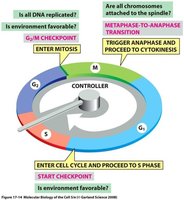
The cell cycle is a tightly regulated process that ensures proper growth, maintenance, and division of cells in multicellular organisms. Disruption of this control can lead to diseases such as cancer, characterized by uncontrolled cell division.
Cell cycle control system: A set of proteins that triggers and coordinates events in the eukaryotic cell cycle.
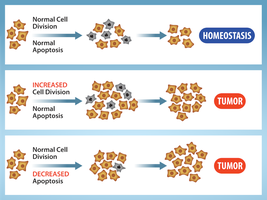
Normal cell division: Maintains tissue homeostasis by balancing cell proliferation and apoptosis.
Cancer cells: Fail to respond to cell cycle controls, divide excessively, and may invade other tissues.
What is Cancer?
Cancer is a disease of the cell cycle, arising from genetic mutations that disrupt normal cell cycle regulation. These mutations can lead to the formation of tumors, which may be benign or malignant.
Tumor: A solid mass of cells with no apparent function.
Cyst: A fluid-filled lump, not cancerous.
Benign tumor: Stays localized and does not invade surrounding tissues.
Malignant tumor: Invades surrounding tissues and can spread (metastasis).
Metastasis: The process by which malignant tumor cells break away and form new cancers elsewhere.

Cancer Treatment
There are several approaches to treating cancer, depending on the type and stage of the disease.
Surgery: Removal of tumors.
Radiation therapy: Uses high-energy radiation to disrupt cell division in cancer cells, but may also affect normal cells.
Chemotherapy: Administration of drugs to disrupt cell division.
Immunotherapy: Harnesses the body's immune system to target and destroy cancer cells.
The Genetic Basis of Cancer
Cancer is fundamentally a genetic disease, resulting from changes in gene expression that allow cells to escape normal growth controls. Viruses can also contribute to cancer by inserting oncogenes into host DNA.
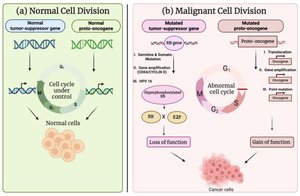
Oncogene: A gene that causes cancer, often derived from a mutated proto-oncogene.
Proto-oncogene: A normal gene with the potential to become an oncogene through mutation.
Tumor-suppressor gene: Encodes proteins that inhibit cell division; mutations can lead to loss of growth control.
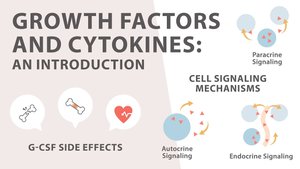
Growth factors: Proteins that stimulate cell division; abnormal activity can result in uncontrolled growth.
How Proto-oncogenes Become Oncogenes
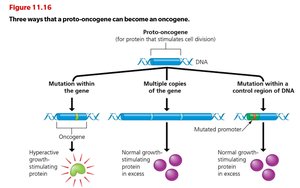
Mutations in proto-oncogenes can activate them as oncogenes, leading to excessive cell division.
Three main mechanisms:
Mutation within the gene (hyperactive protein)
Multiple copies of the gene (excess protein)
Mutation within a control region (excess protein)
Tumor-Suppressor Genes
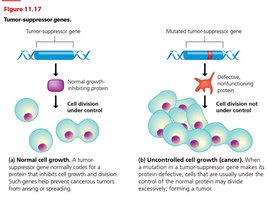
Tumor-suppressor genes normally prevent uncontrolled cell growth. Mutations that inactivate these genes can contribute to cancer development.
Normal function: Inhibit cell division and prevent tumor formation.
Mutated function: Loss of growth inhibition, leading to uncontrolled cell division.
The Progression of Cancer
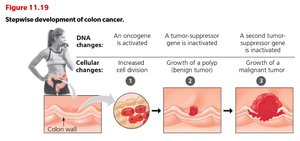
Cancer develops through a series of genetic changes, often involving both activation of oncogenes and inactivation of tumor-suppressor genes.
Stepwise progression: Increased cell division, growth of benign tumor (polyp), growth of malignant tumor.
Accumulation of mutations: Multiple mutations in a cell lineage lead to malignancy.

Protein Synthesis: From DNA to Protein
Genotype and Phenotype
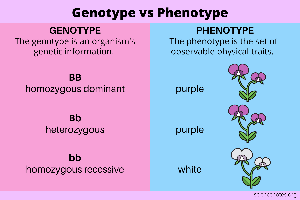
The genotype is the genetic makeup of an organism, while the phenotype is the set of observable physical traits. The flow of genetic information from DNA to protein determines phenotype.
Genotype: Sequence of nucleotide bases in DNA (e.g., AA, Aa, aa).
Phenotype: Physical traits resulting from protein activity (e.g., red hair, blue eyes).
Overview of Protein Synthesis
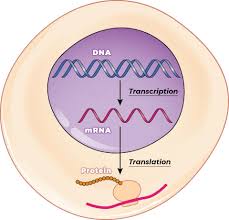
Protein synthesis is the process by which cells translate genetic information into functional proteins. It involves two main stages: transcription and translation.
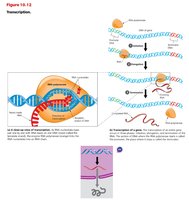
Transcription: Transfer of genetic information from DNA to mRNA in the nucleus.
Translation: Transfer of information from mRNA to a polypeptide in the ribosome (cytoplasm).
Central dogma: DNA → mRNA → Protein

Transcription: From DNA to mRNA
Transcription is the process by which a segment of DNA is copied into mRNA by the enzyme RNA polymerase.
DNA strands separate at the transcription start site.
Only one DNA strand serves as the template.
mRNA nucleotides pair with DNA bases (U with A, C with G).
RNA polymerase links nucleotides to form mRNA.
Translation: mRNA to Protein
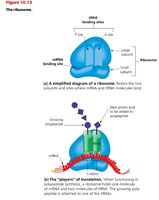
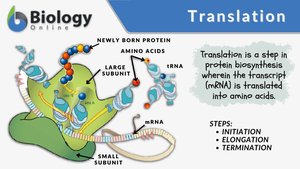
Translation is the process by which mRNA is decoded to produce a polypeptide chain, which folds into a functional protein. This occurs in the ribosome and involves tRNA and rRNA.
mRNA: Carries genetic code from nucleus to cytoplasm.
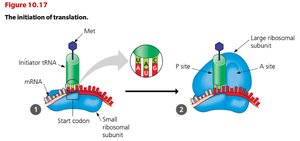
tRNA: Interprets mRNA codons, carries specific amino acids, and matches them to codons via anticodons.
Ribosome: Coordinates mRNA and tRNA to synthesize polypeptides; consists of small and large subunits.
Phases of Translation
Translation is divided into three phases: initiation, elongation, and termination.
Initiation: mRNA binds to small ribosomal subunit; initiator tRNA binds to start codon (AUG, methionine); large subunit joins.
Elongation: Amino acids are added one by one; tRNA brings amino acids to ribosome; peptide bonds form.
Termination: Stop codon (UAA, UAG, UGA) signals end; polypeptide is released; ribosome dissociates.


Summary Table: Cancer-Related Genes
The following table summarizes the roles of proto-oncogenes and tumor-suppressor genes in normal and cancerous cell division.
Gene Type | Normal Function | Mutation Effect |
|---|---|---|
Proto-oncogene | Stimulates cell division | Becomes oncogene, causes excessive division |
Tumor-suppressor gene | Inhibits cell division | Loss of inhibition, uncontrolled growth |
Key Equations
Central Dogma:
Base-pairing rules for transcription:
Start codon:
Stop codons:
Additional info:
Immunotherapy is a rapidly advancing field, often used in combination with other treatments.
Mutations can be inherited or acquired during a person's lifetime.
Protein synthesis is essential for all cellular functions and is highly conserved across species.
