 Back
BackCarbon and the Molecular Diversity of Life: Structure, Function, and Nomenclature of Organic Molecules
Study Guide - Smart Notes
 Tailored notes based on your materials, expanded with key definitions, examples, and context.
Carbon and Molecular Diversity in Biological Systems
Introduction to Organic Molecules
Organic molecules are the foundation of biological systems, composed primarily of carbon atoms bonded to hydrogen, oxygen, nitrogen, and other elements. The diversity of organic molecules underlies the complexity of life, enabling the formation of carbohydrates, lipids, proteins, and nucleic acids.
Carbohydrates: Serve as energy sources and structural components.
Lipids: Function in energy storage, membrane structure, and signaling.
Proteins: Perform a vast array of cellular functions, including catalysis and structure.
Nucleic acids: Store and transmit genetic information.
Nomenclature and Structure of Organic Molecules
Hydrocarbons and Bonding
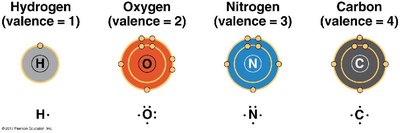
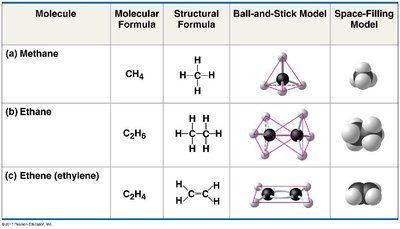
Hydrocarbons are organic molecules consisting entirely of carbon and hydrogen. The properties and reactivity of hydrocarbons depend on the number of carbon atoms and the types of bonds between them (single, double, or triple bonds).
Single bonds allow for free rotation and flexibility.
Double and triple bonds introduce rigidity and affect molecular geometry.
Nomenclature of Hydrocarbons
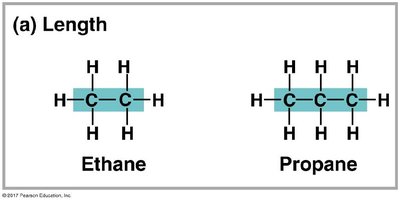
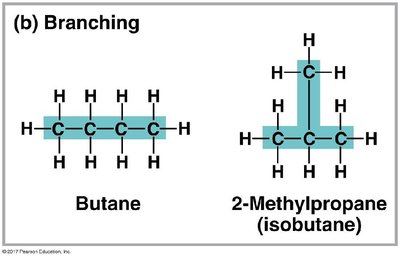
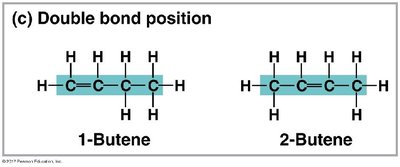
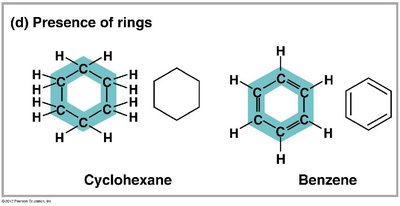
The naming of hydrocarbons is based on the number of carbon atoms and the presence of functional groups or multiple bonds. The structure can vary in several ways, including length, branching, bond position, and ring formation.
Length: Number of carbon atoms in the chain (e.g., ethane vs. propane).
Branching: Presence of side chains or branches (e.g., butane vs. isobutane).
Double bond position: Location of double bonds (e.g., 1-butene vs. 2-butene).
Rings: Formation of cyclic structures (e.g., cyclohexane, benzene).
Isomerism in Organic Molecules
Types of Isomers
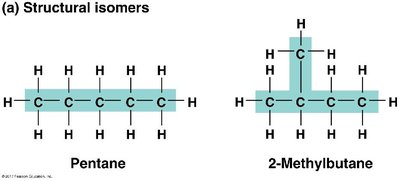
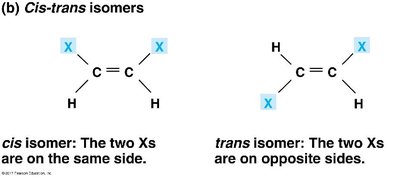
Isomers are molecules with the same molecular formula but different structures, leading to distinct properties and biological functions.
Structural isomers: Differ in the covalent arrangement of atoms.
Cis-trans (geometric) isomers: Differ in spatial arrangement around a double bond.
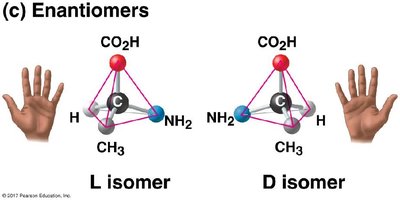
Enantiomers: Mirror images of each other, not superimposable, often with different biological activities.
Biological Importance of Isomers
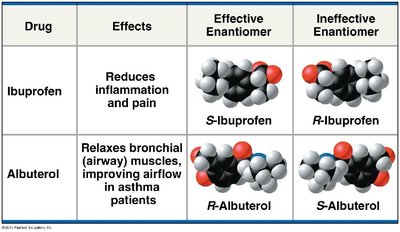
The biological activity of molecules can depend on their isomeric form. For example, only one enantiomer of a drug may be effective or safe.
Functional Groups in Organic Molecules
Definition and Importance
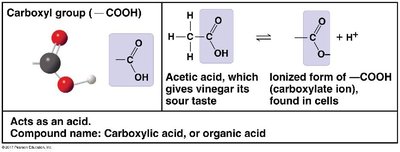
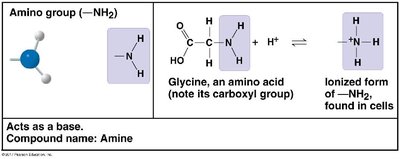
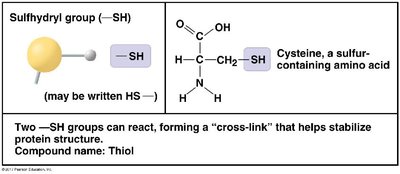
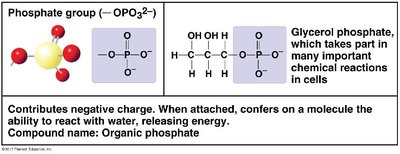
Functional groups are specific groups of atoms within molecules that confer characteristic chemical properties and reactivity. They play a crucial role in the structure and function of biomolecules.
Participate in chemical reactions
Determine the physical and chemical properties of molecules
Major Functional Groups
Functional Group | Structure | Properties | Example |
|---|---|---|---|
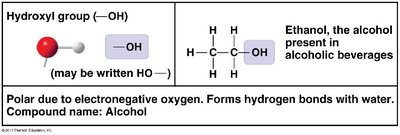
Hydroxyl (–OH) | –OH | Polar, forms hydrogen bonds | Ethanol |
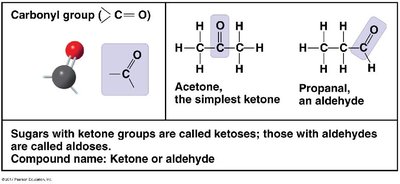
Carbonyl (C=O) | –C=O | Polar, found in sugars | Acetone, Propanal |
Carboxyl (–COOH) | –COOH | Acts as an acid | Acetic acid |
Amino (–NH2) | –NH2 | Acts as a base | Glycine |
Sulfhydryl (–SH) | –SH | Forms disulfide bonds | Cysteine |
Phosphate (–OPO32–) | –OPO32– | Contributes negative charge, energy transfer | Glycerol phosphate |
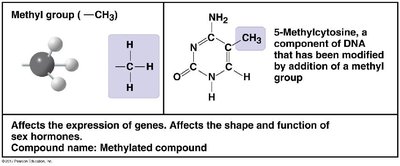
Methyl (–CH3) | –CH3 | Affects gene expression | 5-Methylcytosine |
Functional Groups and Biological Activity
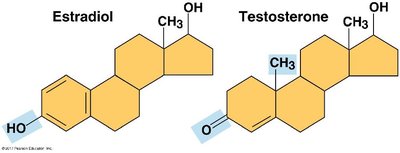
Small differences in functional groups can lead to significant changes in biological activity. For example, the difference between estradiol and testosterone is due to the presence of different functional groups, which results in distinct physiological effects.
Acids, Bases, and pH in Biological Systems
Acids and Bases
Acids are substances that donate protons (H+), while bases accept protons. The pH scale measures the concentration of hydrogen ions in a solution, with lower pH values indicating higher acidity.
Acid: Proton donor, increases [H+]
Base: Proton acceptor, decreases [H+]
pH scale: Each unit change represents a tenfold change in [H+]
Example: If the pH decreases from 7 to 6, [H+] increases tenfold.
Water and Hydrogen Bonding
Hydrogen Bonds in Water
Water molecules are held together by hydrogen bonds, which are weak interactions between the partially positive hydrogen atom of one water molecule and the partially negative oxygen atom of another. These bonds are critical for the unique properties of water, such as cohesion, adhesion, and high specific heat.
Shape Determines Function
Biological Implications of Molecular Shape
The three-dimensional shape of a molecule determines its function in biological systems. For example, the specific arrangement of atoms in a hormone or drug can determine its ability to bind to a receptor and elicit a biological response.
Selective Pressure in Evolution
Definition and Role
Selective pressure refers to environmental factors that influence the survival and reproductive success of organisms with different characteristics. This drives natural selection and the evolution of populations over time.
Example: A change in climate may favor organisms with certain traits, leading to differential survival and reproduction.
