 Back
BackCell Cycle Control and Cancer Progression
Study Guide - Smart Notes
 Tailored notes based on your materials, expanded with key definitions, examples, and context.
Constraints on Cell Growth
Anchorage Dependence, Contact Inhibition, and Growth Factor Dependence
Normal cells are subject to several constraints that regulate their growth and division. These mechanisms ensure that cells only divide when appropriate, maintaining tissue structure and function.
Anchorage dependence: Most animal cells must be attached to a solid surface (such as the extracellular matrix) to divide.
Contact inhibition: Cells stop dividing when they come into contact with neighboring cells, preventing overcrowding.
Growth factor dependence: Cells require external signals, called growth factors, to stimulate cell division.
Disruption of these constraints can lead to uncontrolled cell proliferation, a hallmark of cancer.
Cell Cycle Control
Checkpoints in the Cell Cycle
The cell cycle is regulated by a series of checkpoints that ensure each phase is completed correctly before the next begins. These checkpoints act as quality control mechanisms, preventing the propagation of damaged or incomplete cells.
G1 Checkpoint: Assesses cell size, nutrients, growth factors, and DNA integrity. Cells will not proceed to DNA synthesis (S phase) without a growth factor signal.
G2 or G2/M Checkpoint: Ensures that DNA replication is complete and checks for DNA damage before the cell enters mitosis. If DNA is damaged or the cell is too small, progression is halted.
M (Metaphase) Checkpoint: Verifies that all chromosomes are properly attached to the spindle apparatus before allowing the cell to proceed with division.
Failure of these checkpoints, especially in cancer cells, can result in the division of cells with damaged or mutated DNA.
Growth Factor Signaling and Cell Division
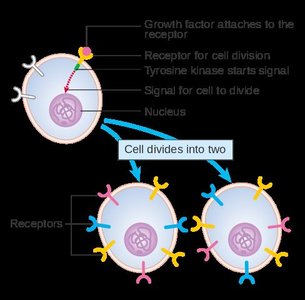
Growth factors are signaling molecules that bind to specific receptors on the cell surface, triggering a cascade of intracellular events that promote cell division. This process is essential for normal growth, development, and tissue repair.
Growth factor binds to its receptor on the cell membrane.
Receptor activation initiates a signaling pathway (often involving tyrosine kinases).
The signal is transmitted to the nucleus, leading to the activation of genes required for cell division.
Cancer Progression
From Normal Cell to Malignant Tumor
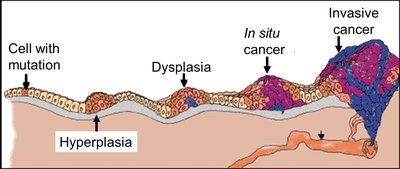
Cancer develops through a multistep process involving genetic mutations and changes in cell behavior. The progression from a normal cell to a malignant tumor involves several stages:
Transformation: A normal cell acquires mutations that confer properties of uncontrolled growth.
Benign tumor: A mass of transformed cells that remain localized and do not invade surrounding tissues.
Malignant tumor (cancer): Cells gain the ability to invade nearby tissues and spread (metastasize) to distant sites.
Metastasis
Metastasis is the process by which cancer cells spread from the original (primary) tumor to form new (secondary) tumors in other parts of the body. This is a defining feature of malignant tumors and is responsible for most cancer-related deaths.
Cancer Therapy
Localized and Metastatic Tumor Treatments
Cancer treatment strategies depend on the stage and location of the tumor:
Localized tumors: Can often be removed surgically or treated with concentrated beams of high-energy radiation to destroy cancer cells.
Metastatic tumors: Typically require systemic treatments such as chemotherapy, which targets rapidly dividing cells throughout the body.
Chemotherapy drugs often work by halting the cell cycle or disrupting the mitotic spindle, preventing cancer cells from dividing. However, these treatments also affect normal rapidly dividing cells, leading to side effects such as nausea, hair loss, and increased susceptibility to infection.
Cancer Immunotherapy
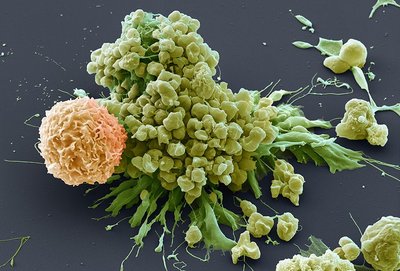
Cancer immunotherapy is an emerging treatment that harnesses the body's immune system to recognize and destroy cancer cells. This approach includes immune checkpoint inhibitors, CAR-T cell therapy, and cancer vaccines.
Summary Table: Cell Cycle Checkpoints and Cancer
Checkpoint | Main Function | Failure Consequence |
|---|---|---|
G1 | Ensures cell is ready for DNA synthesis; requires growth factor | Uncontrolled entry into S phase, potential for mutation propagation |
G2/M | Checks DNA replication and damage before mitosis | Division with damaged or incomplete DNA |
M (Metaphase) | Ensures chromosomes are properly attached to spindle | Aneuploidy, chromosomal instability |
