 Back
BackCell Division and Reproduction: Prokaryotic and Eukaryotic Cell Cycles
Study Guide - Smart Notes
 Tailored notes based on your materials, expanded with key definitions, examples, and context.
Cell Division and Reproduction
Overview of Cell Division
Cell division is a fundamental process in all living organisms, enabling growth, development, and reproduction. There are two primary modes of reproduction:
Asexual reproduction: Produces offspring genetically identical to the parent, involving inheritance of all genes from a single parent.
Sexual reproduction: Produces offspring with genetic variation, involving inheritance of unique gene sets from two parents.
Prokaryotic Cell Division: Binary Fission
Binary Fission in Prokaryotes
Prokaryotes, such as bacteria and archaea, reproduce by binary fission, a simple process of cell division that results in two genetically identical daughter cells.
Chromosome structure: Prokaryotic chromosomes are typically single, circular DNA molecules associated with proteins and are much smaller than eukaryotic chromosomes.
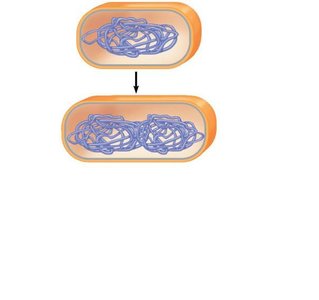
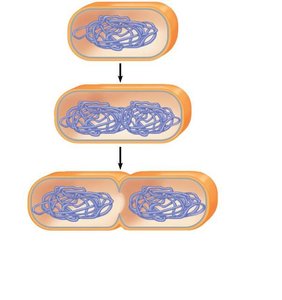
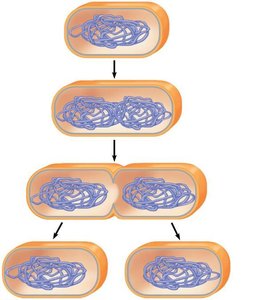
Process of binary fission: Involves chromosome duplication, elongation of the cell, and division into two cells.
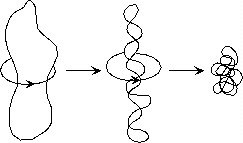
Example: Escherichia coli divides by binary fission approximately every 20 minutes under optimal conditions.
Steps of Binary Fission
Duplication of the chromosome and separation of the copies.
Continued elongation of the cell and movement of the chromosome copies.
Division into two daughter cells.
The Eukaryotic Cell Cycle and Mitosis
Chromosomes in Eukaryotes
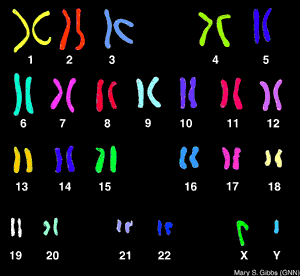
Eukaryotic cells are more complex than prokaryotic cells, containing multiple linear chromosomes within a nucleus. Each species has a characteristic number of chromosomes.
Human cells: 46 chromosomes (23 pairs)
Chromosome structure: DNA is packaged with proteins into chromatin, which condenses into visible chromosomes during cell division.
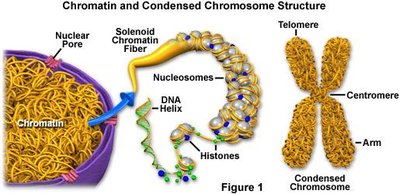
Example: The human genome contains approximately 20,000–23,000 protein-coding genes, with a total DNA length of about 3 meters per cell.
Karyotype
A karyotype is an organized profile of an organism's chromosomes, used to study chromosome number and structure.
The Cell Cycle
The cell cycle is an ordered sequence of events from the formation of a cell to its own division. It consists of two main stages:
Interphase: Period of cell growth and DNA replication, subdivided into:
G1 phase: Cell growth, organelle duplication, increase in cytoplasm
S phase: DNA synthesis (chromosome duplication), centrosome duplication
G2 phase: Further growth, preparation for division
Mitotic (M) phase: Division of the nucleus (mitosis) and cytoplasm (cytokinesis)
Equation for Surface Area-to-Volume Ratio:
This ratio is critical for cell function, as it affects the efficiency of nutrient uptake and waste removal.
Comparative Table: Surface Area, Volume, and Surface-to-Volume Ratio
The following table illustrates how surface area and volume change as cell size increases, highlighting the importance of small cell size for efficient exchange with the environment.
Small Cube | Large Cube | Many Small Cubes | |
|---|---|---|---|
Total surface area | 6 | 150 | 750 |
Total volume | 1 | 125 | 125 |
Surface-to-volume ratio | 6 | 1.2 | 6 |
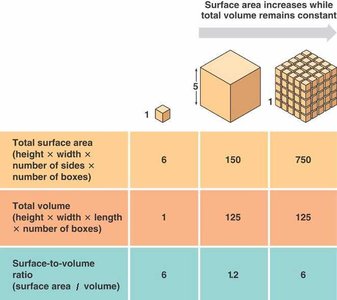
Key Point: As cells grow larger, their surface area-to-volume ratio decreases, limiting the rate of exchange with the environment and thus constraining cell size.
Summary
Cell division is essential for reproduction, growth, and repair in living organisms.
Prokaryotes divide by binary fission, while eukaryotes undergo a more complex cell cycle involving mitosis.
Chromosome structure and number are species-specific and critical for genetic inheritance.
The surface area-to-volume ratio is a key factor limiting cell size and influencing cell division.
