 Back
Chapters 8,9,10 (Slides)
Study Guide - Smart Notes
 Tailored notes based on your materials, expanded with key definitions, examples, and context.
Cell Division and Reproduction
Sexual vs. Asexual Reproduction
Reproduction is the biological process by which new individual organisms are produced. It can occur via two main mechanisms: asexual reproduction and sexual reproduction.
Asexual reproduction: Involves a single parent and produces genetically identical offspring. Common in unicellular organisms and many plants.
Sexual reproduction: Involves two parents and produces genetically diverse offspring through the combination of gametes (egg and sperm).
Examples of Asexual Reproduction
Binary fission in bacteria
Budding in yeast
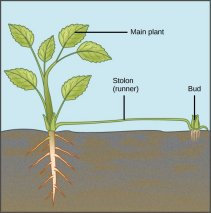
Vegetative propagation in plants (e.g., runners/stolons in strawberries)
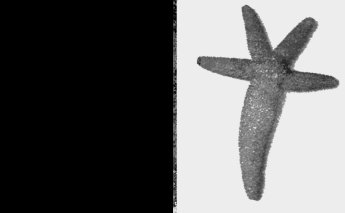
Regeneration in animals (e.g., starfish can regrow lost arms)
Advantages of Asexual Reproduction
Rapid population increase
No need for a mate
Offspring are well-adapted to stable environments
Types of Cell Division
Three Kinds of Cell Division
Binary Fission: Occurs in prokaryotes; DNA replicates and the cell splits into two identical cells.
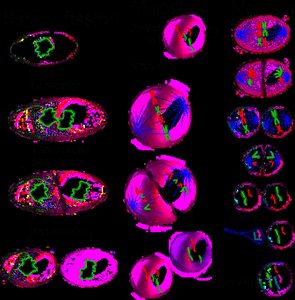
Mitosis: Eukaryotic process producing two genetically identical daughter cells; used for growth, development, and tissue repair.
Meiosis: Specialized eukaryotic division producing four genetically unique haploid gametes; essential for sexual reproduction.
The Eukaryotic Genome and Chromosomes
Chromosome Structure and Function
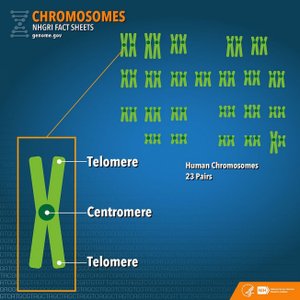
A chromosome is a single molecule of DNA associated with proteins, containing many genes. In humans, there are 46 chromosomes (23 pairs), with approximately 21,000 genes.
Chromatin: The complex of DNA and proteins that forms chromosomes.
During cell division, chromatin condenses to become visible as chromosomes.
Mitosis and the Cell Cycle
Mitosis: An Overview
Mitosis is the process by which a eukaryotic cell divides its nucleus and contents, resulting in two identical daughter cells. It is essential for growth, development, and tissue repair.
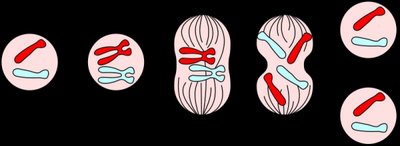
The Cell Cycle
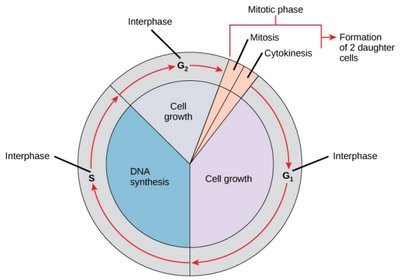
The cell cycle is the ordered sequence of events that a cell undergoes, including growth, DNA replication, and division.
Interphase: Includes G1 (cell growth), S (DNA synthesis), and G2 (preparation for mitosis).
Mitotic phase (M phase): Includes mitosis and cytokinesis (division of the cytoplasm).
Cell Cycle Control and Checkpoints
Cell cycle progression is regulated by checkpoints that ensure proper division:
G1 checkpoint: Checks for cell size, nutrients, and DNA damage.
G2/M checkpoint: Ensures DNA replication is complete and undamaged.
M (Metaphase) checkpoint: Ensures chromosomes are properly attached to the spindle before separation.
Cancer and Cell Division
Cancer Progression
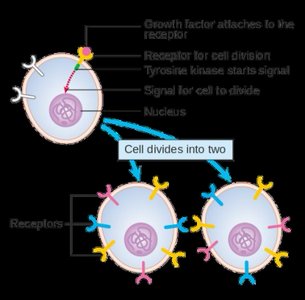
Cancer is characterized by uncontrolled cell division due to failures in cell cycle regulation. Tumors can be benign (non-invasive) or malignant (capable of metastasis).
Transformation: The process by which a normal cell becomes cancerous.
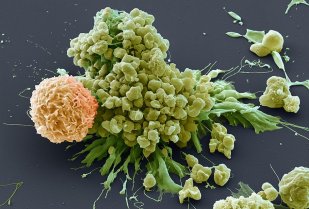
Metastasis: Spread of cancer cells to other parts of the body.
Cancer Therapy
Localized tumors: Treated with surgery or radiation.
Metastatic tumors: Treated with chemotherapy, which targets rapidly dividing cells.
Chromosome Number and Sex Determination
Diploid vs. Haploid
Diploid (2n): Cells with two sets of chromosomes (somatic cells).
Haploid (n): Cells with one set of chromosomes (gametes).
Homologous chromosomes: Chromosome pairs with the same genes but possibly different alleles.
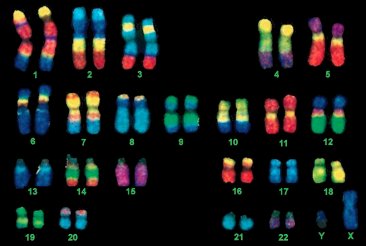
Sex Chromosomes
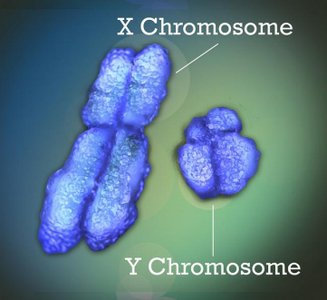
Humans have two sex chromosomes: X and Y.
Females: XX; Males: XY.
X and Y are not homologous.
The Sexual Life Cycle and Meiosis
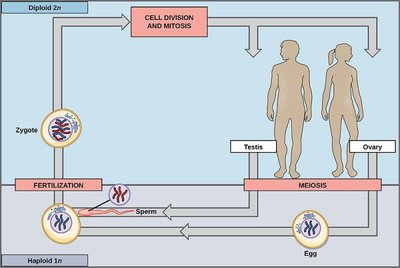
Overview of the Sexual Life Cycle
The sexual life cycle alternates between diploid and haploid stages. Meiosis produces haploid gametes, which fuse during fertilization to restore diploidy.
Meiosis and Genetic Diversity
Meiosis I: Homologous chromosomes separate.
Meiosis II: Sister chromatids separate.
Results in four genetically unique haploid cells.
Genetic diversity arises from independent assortment, crossing over, and random fertilization.
Number of possible gametes: (where n = haploid number of chromosomes)
For humans: possible gametes per individual.
Mendelian Genetics
Gregor Mendel and the Laws of Inheritance
Gregor Mendel established the basic laws of heredity through experiments with pea plants.
Law of Segregation: Each individual has two alleles for each gene, which segregate during gamete formation.
Law of Independent Assortment: Genes for different traits assort independently during gamete formation.
Genotype and Phenotype
Genotype: The genetic makeup (e.g., PP, Pp, pp).
Phenotype: The observable trait (e.g., purple or white flowers).
Punnett Squares and Probability
Punnett squares are used to predict the probability of offspring genotypes and phenotypes.
Product rule: Probability of independent events occurring together is the product of their probabilities.
Addition rule: Probability of mutually exclusive events is the sum of their probabilities.
Extensions and Modifications of Mendelian Genetics
Incomplete dominance: Heterozygote phenotype is intermediate between homozygotes.
Codominance: Both alleles are expressed (e.g., ABO blood groups).
Polygenic inheritance: Traits influenced by multiple genes (e.g., height, skin color).
Environmental effects: Phenotype can be influenced by environment as well as genotype.
Chromosomal Basis of Inheritance
Genes and Chromosomes
Genes are located on chromosomes at specific loci.
Linked genes are located close together on the same chromosome and tend to be inherited together.
Sex-Linked Inheritance
Genes located on sex chromosomes (especially X) show unique inheritance patterns (e.g., hemophilia).
DNA: The Genetic Material
Properties of DNA
Encodes genetic information for protein synthesis.
Replicates to pass information to the next generation.
Stable yet capable of mutation (basis for evolution).
The Central Dogma
Genetic information flows from DNA to RNA to protein.
Transcription: DNA is used as a template to synthesize RNA.
Translation: RNA is used to synthesize proteins at the ribosome.
Summary Table: Types of Cell Division
Type | What Happens? | Result | Purpose |
|---|---|---|---|
Binary Fission | DNA replicates; cell splits in two | Two identical cells | Asexual reproduction |
Mitosis | DNA replicates; chromosomes segregate; cell splits | Two identical cells | Growth, development, tissue repair |
Meiosis | DNA replicates; two rounds of division | Four unique haploid gametes | Sexual reproduction |
Additional info: This guide integrates foundational concepts from cell division, the cell cycle, Mendelian genetics, and the chromosomal basis of inheritance, providing a comprehensive overview for college-level biology students.
