 Back
BackLEC 15: Cell Division in Prokaryotes and Eukaryotes: Binary Fission, Mitosis, and Meiosis
Study Guide - Smart Notes
 Tailored notes based on your materials, expanded with key definitions, examples, and context.
Prokaryotic Cell Division: Binary Fission
Reproductive Signals and Growth Dynamics
Prokaryotic cells, such as bacteria, reproduce primarily through binary fission, a process tightly regulated by environmental conditions. The timing of division is influenced by nutrient availability and waste accumulation, with cells dividing rapidly when conditions are favorable and pausing when they are not.
Doubling Time/Generation Time: The time required for a prokaryotic cell population to double in number. This is determined by the organism type, nutrient levels, waste buildup, and temperature.
Exponential Growth: Under ideal conditions (unlimited nutrients, no waste), cell numbers increase exponentially, producing a straight line on a logarithmic plot of cell number versus time.
Closed System Growth: In laboratory cultures (e.g., E. coli in broth), growth follows a characteristic pattern with distinct phases due to nutrient depletion and waste accumulation.
Phases of Prokaryotic Growth in a Closed System
Lag Phase: Cells adapt to new conditions; little or no division occurs, but metabolic activity is high (e.g., enzyme synthesis, cell growth).
Log (Exponential) Phase: Rapid cell division; population doubles at a constant rate characteristic of the species. Nutrients are consumed, and waste accumulates.
Stationary Phase: Growth rate slows as nutrients become limited and waste products accumulate. Cell division rate equals cell death rate.
Death Phase: Cell death exceeds division, often due to lysis or toxicity from waste products.
Binary Fission: Molecular Mechanisms
Binary fission involves the replication and segregation of the prokaryotic chromosome, followed by cytokinesis.
Chromosome Structure: Most prokaryotes have a single, circular DNA molecule with two key regions:
ori (origin): Site where DNA replication begins.
ter (terminus): Site where replication ends.
DNA Replication: Occurs concurrently with other metabolic processes, unlike eukaryotes.
DNA Segregation: After replication, proteins (including FtsZ) help separate the two nucleoids.
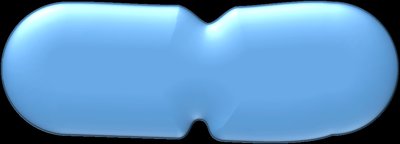
Cytokinesis: FtsZ proteins form a ring at the cell's midpoint, constricting the membrane and depositing new cell wall material (septum) to separate the daughter cells.

Eukaryotic Cell Division: Mitosis and Cytokinesis
Reproductive Signals and DNA Replication
Eukaryotic cell division is more complex than in prokaryotes, involving multiple chromosomes, a nuclear envelope, and tightly regulated cell cycle stages. Most eukaryotic cells do not divide continuously; division is controlled by signals related to the organism's needs.
DNA Replication: Occurs at a specific stage (S phase) of the cell cycle. Eukaryotic chromosomes have multiple origins of replication due to their length.
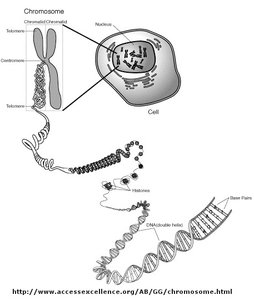
Chromatin: DNA is packaged with proteins (histones) into chromatin, which condenses into visible chromosomes during division.
Chromosome Structure and Segregation
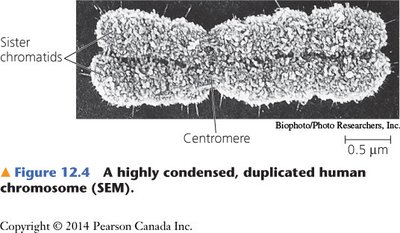
Sister Chromatids: After replication, each chromosome consists of two identical sister chromatids joined at a centromere.
Centromere: Specialized DNA region where sister chromatids are most closely attached; essential for proper segregation.
Chromatin Condensation: Chromatin condenses into discrete chromosomes before segregation.
Cell Cycle and Mitosis
The eukaryotic cell cycle consists of interphase (G1, S, G2) and the mitotic (M) phase. Mitosis is subdivided into prophase, prometaphase, metaphase, anaphase, and telophase, followed by cytokinesis.
G1 Phase: Cell growth and preparation for DNA replication.
S Phase: DNA synthesis; each chromosome is replicated.
G2 Phase: Preparation for mitosis; centrosomes duplicate.
M Phase: Mitosis (nuclear division) and cytokinesis (cytoplasmic division).
Key Structures in Mitosis
Centrosomes and Centrioles: Organize microtubules for chromosome segregation.
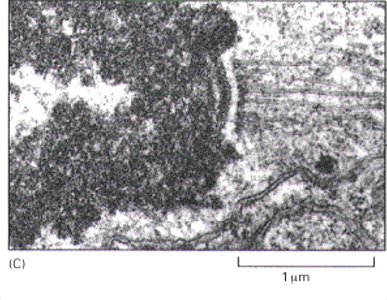
Kinetochore: Protein complex assembled on the centromere; captures spindle microtubules and is essential for chromatid separation.
Chromosome Number and Ploidy
Diploid and Haploid Cells
Eukaryotes typically have multiple chromosomes, with most somatic cells being diploid (two sets, one from each parent) and gametes being haploid (one set). The number of chromosomes varies by species.
Homologous Chromosomes: Chromosomes in a pair that are similar in size, shape, and genetic content but not identical.
Karyotype: The description of the number, size, and shape of chromosomes in an organism.
Organism | n (haploid) | 2n (diploid) |
|---|---|---|
Yeast | 16 | 32 |
Mosquito | 3 | 6 |
Human | 23 | 46 |
Dog | 39 | 78 |
Black bear | 37 | 74 |
Meiosis and Genetic Diversity
Meiosis is the process by which diploid cells produce haploid gametes, involving two rounds of division (Meiosis I and II) and resulting in genetic recombination and reduction of chromosome number by half.
Key Steps: Pairing of homologous chromosomes, recombination (crossing-over), segregation of homologues, and segregation of sister chromatids.
DNA Content Across Organisms
The amount of DNA per haploid genome varies widely among organisms, with eukaryotes generally having much more DNA than prokaryotes.
Organism | Approximate DNA Content (base pairs) |
|---|---|
E. coli (bacteria) | 4.6 million |
S. cerevisiae (yeast) | 12 million |
A. thaliana (plant) | 140 million |
D. melanogaster (fruit fly) | 170 million |
Chicken | 1.2 billion |
Human | 3.3 billion |
Lily | 90 billion |
Summary Table: Comparison of Prokaryotic and Eukaryotic Cell Division
Feature | Prokaryotes | Eukaryotes |
|---|---|---|
Chromosome Structure | Single, circular | Multiple, linear |
Division Process | Binary fission | Mitosis (and meiosis for gametes) |
DNA Replication | Concurrent with cell growth | Specific S phase |
Segregation Mechanism | FtsZ ring, simple partitioning | Mitotic spindle, complex |
Cell Cycle Regulation | Environmental signals | Developmental and organismal signals |
