 Back
BackMICROGIOLOGY WEEK 2: Cell Morphology and Microbe-Human Interactions: Structure, Function, and Impact of Microorganisms
Study Guide - Smart Notes
 Tailored notes based on your materials, expanded with key definitions, examples, and context.
Cell Morphology and Microbe-Human Interactions
Introduction to Microbiology and Microorganisms
Microbiology is the study of microorganisms, which include bacteria, archaea, viruses, fungi, and protists. These organisms are essential to life on Earth, influencing human health, agriculture, industry, and the environment. Understanding their structure and interactions with humans is foundational in biology.
Structure of the Prokaryotic Cell (Bacteria)
Basic Components of Bacterial Cells
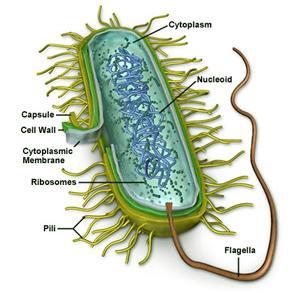
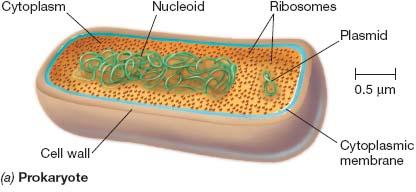
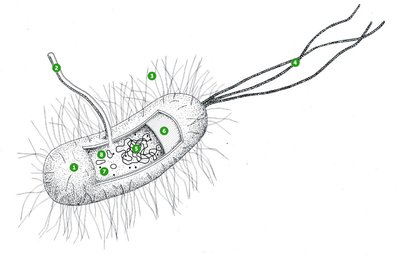
Bacterial cells are prokaryotic, meaning they lack a membrane-bound nucleus and organelles. Their structure is specialized for survival in diverse environments.
Cytoplasm: Gel-like substance inside the cell where metabolic reactions occur.
Nucleoid: Region containing the cell's DNA, not enclosed by a membrane.
Ribosomes: Sites of protein synthesis.
Cytoplasmic Membrane: Phospholipid bilayer that acts as a selective barrier.
Cell Wall: Provides structural support and shape; composed of peptidoglycan in bacteria.
Capsule: Outer layer that protects against desiccation and immune attack.
Pili/Fimbriae: Hair-like structures for attachment and genetic exchange.
Flagella: Tail-like structures for motility.
Cell Inclusions and Gas Vesicles: Storage and buoyancy structures.
Endospores: Highly resistant structures for survival in harsh conditions.
Prokaryotic vs. Eukaryotic Cells
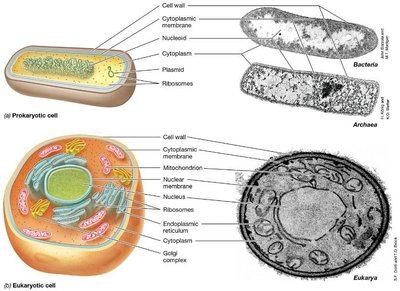
Prokaryotic cells (Bacteria and Archaea) differ from eukaryotic cells (plants, animals, fungi, protists) in several key ways:
Prokaryotes: No nucleus, usually single circular chromosome, no membrane-bound organelles.
Eukaryotes: True nucleus, multiple linear chromosomes, membrane-bound organelles (e.g., mitochondria, ER).
Cell Surface Structures and Inclusions
Cell Wall and Peptidoglycan
The bacterial cell wall is primarily composed of peptidoglycan, a polymer unique to bacteria. It provides rigidity and protection against osmotic pressure.
Peptidoglycan: Consists of repeating units of N-acetylglucosamine (NAG) and N-acetylmuramic acid (NAM) cross-linked by peptides.
Lysozyme: An enzyme that breaks down peptidoglycan, found in human tears and saliva.
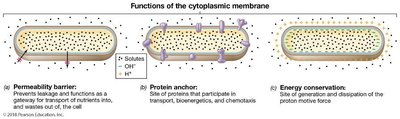
Cytoplasmic Membrane Functions
The cytoplasmic membrane is essential for:
Permeability Barrier: Controls entry and exit of substances.
Protein Anchor: Holds proteins involved in transport and metabolism.
Energy Conservation: Site of generation and dissipation of the proton motive force.
Transport Systems in Bacteria
Bacteria use several mechanisms to transport substances across their membranes:
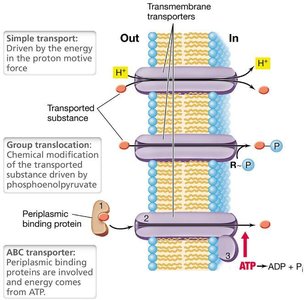
Simple Transport: Driven by the proton motive force.
Group Translocation: Chemical modification of the transported substance (e.g., phosphotransferase system).
ABC Transporters: Use ATP to transport substances via periplasmic binding proteins.
Phylogeny and Evolution of Microorganisms
Three Domains of Life
All life is classified into three domains based on ribosomal RNA gene sequences:
Bacteria
Archaea
Eukarya
The Last Universal Common Ancestor (LUCA) is the root of the tree of life.
Properties of Microbial Cells
Universal and Specialized Properties
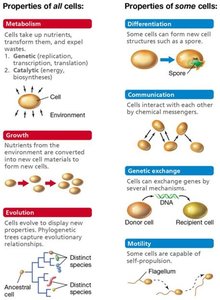
Microbial cells share several universal properties, with some specialized features in certain groups:
Property | Description |
|---|---|
Metabolism | Uptake and transformation of nutrients; includes genetic and catalytic functions. |
Growth | Conversion of nutrients into new cell material. |
Evolution | Genetic changes over generations, leading to adaptation. |
Differentiation | Formation of new cell structures (e.g., spores). |
Communication | Interaction via chemical messengers. |
Genetic Exchange | Transfer of genes between cells. |
Motility | Self-propulsion (e.g., flagella). |
Microbe-Human Interactions
Types of Symbiosis
Microorganisms interact with humans in various ways, classified as:
Mutualistic: Both host and microbe benefit.
Commensal: Microbe benefits; host is unaffected.
Parasitic: Microbe benefits at the host's expense.
Pathogenic: Microbe causes disease in the host.
The Human Microbiome
The human microbiome refers to the collection of microorganisms living on and in the human body. These microbes are crucial for health, aiding in digestion, protecting against pathogens, and modulating the immune system.
Major sites: Skin, mouth, respiratory tract, intestines, vagina.
Colonization begins at birth, with differences between vaginal and caesarian delivery.
By age 3, the gut microbiome resembles that of adults, dominated by obligate anaerobes.
Microorganisms and Human Health
Microorganisms can be both beneficial and harmful to human health:
Pathogens: Cause infectious diseases.
Normal Microbiota: Protect against pathogens, aid digestion, and contribute to immune function.
Microorganisms in Agriculture, Nutrition, and Industry
Microbes play vital roles beyond human health:
Agriculture: Nitrogen fixation in plants, cellulose fermentation in cattle, plant and animal diseases.
Nutrition: Fermentation processes (e.g., yogurt, cheese, bread, beer), food spoilage, and foodborne infections.
Industry: Production of enzymes, antibiotics, biofuels, and bioremediation of waste.
Summary Table: Microbial Interactions and Functions
Area | Role of Microorganisms |
|---|---|
Human Health | Pathogens, normal microbiota, immune modulation |
Agriculture | Nitrogen fixation, fermentation, disease |
Nutrition | Fermentation, spoilage, infection |
Industry | Biotechnology, antibiotics, bioremediation |
Conclusion
Understanding the structure and function of microbial cells, as well as their interactions with humans and the environment, is essential for biology students. Microorganisms are integral to health, industry, and ecological balance, making their study foundational in the life sciences.
