 Back
BackCell Structure and Function: Study Notes for College Biology
Study Guide - Smart Notes
 Tailored notes based on your materials, expanded with key definitions, examples, and context.
Cell Theory
Fundamental Principles of Cell Theory
Cell theory is a cornerstone of modern biology, describing the basic properties and functions of cells. - All organisms are composed of cells: Cells are the fundamental units of life. - Cells are the smallest living things: They carry out all essential life processes. - Cells arise only from pre-existing cells: This principle emphasizes continuity of life. - Cell size: Prokaryotic cells are typically 1–10 μm in diameter, while eukaryotic cells are 10–100 μm.
Cell Size Limitations
The size of cells is limited by their reliance on diffusion for the transport of substances. - Rate of diffusion is affected by: 1. Surface area available 2. Temperature 3. Concentration gradient 4. Distance Surface area-to-volume ratio is critical; as cells grow, their volume increases faster than their surface area, limiting efficient exchange. 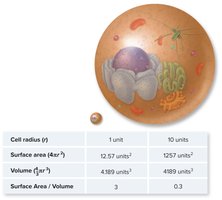 Example: Neurons overcome size limitations by being long and narrow.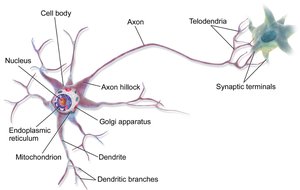
Types of Cells
Prokaryotic vs. Eukaryotic Cells
Living organisms possess two primary cell types: Prokaryotic Cells: - Found in Bacteria and Archaea - Simple structure - DNA located in nucleoid (not membrane-bound) - No membrane-bound organelles Eukaryotic Cells: - Found in all other organisms - Complex structure - DNA housed in a membrane-bound nucleus - Possess membrane-bound organelles
Basic Structural Similarities
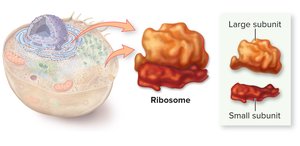
Both cell types share: - Nucleoid or nucleus: Location of DNA - Cytoplasm: Semifluid matrix containing organelles and cytosol - Ribosomes: Sites of protein synthesis - Plasma membrane: Phospholipid bilayer
Prokaryotic Cell Structure
Internal and External Features
Prokaryotic cells have distinct internal and external structures. - Internal: Cytoplasm, nucleoid region, ribosomes, microcompartments (e.g., magnetosomes) - External: Cell wall, glycocalyx, appendages (pili, flagella) 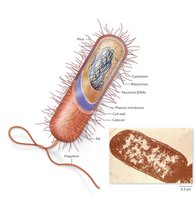 Example: Magnetosomes are iron oxide crystals used for navigation.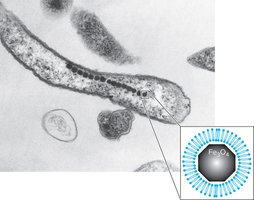
Eukaryotic Cell Structure
Animal and Plant Cells
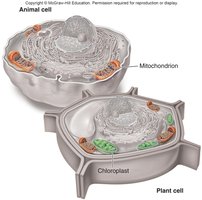
Eukaryotic cells are more complex and compartmentalized. - Animal cells: Contain plasma membrane and most organelles - Plant cells: Have additional components: cell wall, chloroplasts, specialized vacuoles 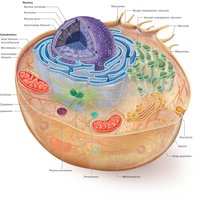
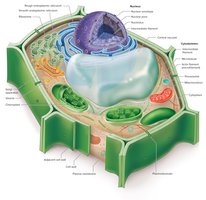
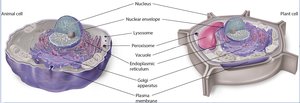
Comparison of Animal and Plant Cells
Internal Membranes and the Endomembrane System
Partitioning and Organization
Internal membranes divide the cell into compartments, usually consisting of a double layer of phospholipids.
Endomembrane System Components
The endomembrane system includes: - Nuclear envelope - Endoplasmic reticulum (ER) - Golgi apparatus - Lysosomes - Vacuoles
The Nucleus
Structure and Function
The nucleus is a membrane-bound organelle containing genetic material. - Chromosomes: DNA and proteins - Nucleolus: Site of ribosome assembly 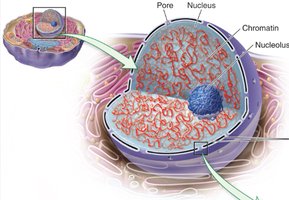
Nuclear Envelope
The nuclear envelope is a double-membrane structure enclosing the nucleus. - Outer membrane: Continuous with ER - Nuclear pores: Passageways for molecules 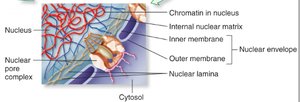
Endoplasmic Reticulum (ER)
Types and Functions
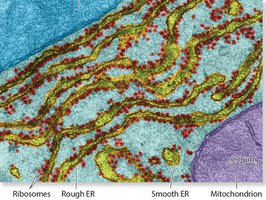
The ER is a network of tubules and sacs called cisternae. - Smooth ER: Lipid synthesis, carbohydrate metabolism, detoxification - Rough ER: Protein synthesis (glycoproteins), transport via vesicles 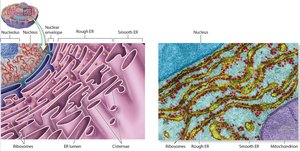
Golgi Apparatus
Structure and Function
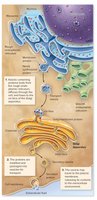
The Golgi apparatus modifies, sorts, and sends ER products. - Polar structure: Cis face (receiving), trans face (shipping) - Functions: Secretion, processing (proteolysis), protein sorting 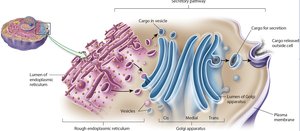
Lysosomes
Role in Cellular Digestion
Lysosomes are small organelles in animal cells that break down macromolecules using acid hydrolases. - Autophagy: Recycling worn-out organelles via endocytosis 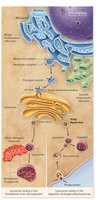
Vacuoles
Types and Functions
Vacuoles are organelles for storage and regulation. - Central vacuole: Stores water, enzymes, ions in plant cells - Contractile vacuole: Regulates water balance in protists - Food vacuole: Breaks down food in protists 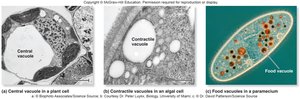
Plasma Membrane
Structure and Functions
The plasma membrane is a phospholipid bilayer that separates the cell from its environment. - Membrane transport: Movement of substances - Cell signaling: Communication via receptors - Cell adhesion: Binding of cells 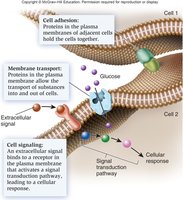
Semiautonomous Organelles: Mitochondria and Chloroplasts
Definition and Roles
Semiautonomous organelles act independently to some degree. - Mitochondria: Site of cellular respiration, ATP production - Chloroplasts: Site of photosynthesis, found in plant cells 
Mitochondria Structure
- Cristae: Folded inner membrane increases surface area - Intermembrane space and matrix: Compartments for metabolic reactions 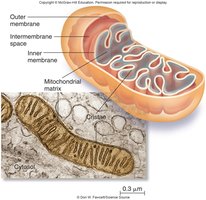
Chloroplast Structure
- Thylakoid membrane: Forms flattened tubules - Granum: Stack of thylakoids 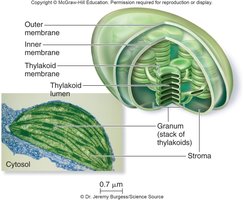
Cytoskeleton
Types and Functions
The cytoskeleton is a network of protein filaments. - Microtubules: Cell shape, organelle organization, cell division, movement - Intermediate filaments: Mechanical strength, anchorage - Actin filaments: Cell shape, muscle contraction, intracellular movement 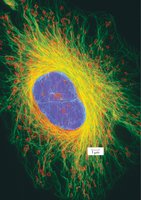
Extracellular Structures
Cell Wall in Plants
- Function: Protection, shape maintenance, water regulation - Composition: Cellulose embedded in polysaccharides and proteins
Extracellular Matrix in Animals
- Composition: Collagen, proteoglycans, glycoproteins - Fibronectin and integrins: Bind ECM to plasma membrane 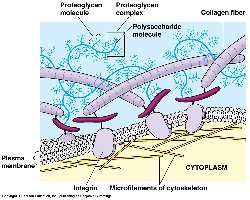
Summary Table: Prokaryotic vs. Eukaryotic Cells
Feature | Prokaryotic Cells | Eukaryotic Cells |
|---|---|---|
Size | 1–10 μm | 10–100 μm |
DNA Location | Nucleoid (no membrane) | Nucleus (membrane-bound) |
Organelles | None (except microcompartments) | Membrane-bound organelles |
Cell Wall | Present (varies) | Present in plants, absent in animals |
Examples | Bacteria, Archaea | Animals, plants, fungi, protists |
Surface Area-to-Volume Ratio Table
Cell radius (r) | Surface area (4πr2) | Volume (4/3πr3) | Surface Area / Volume |
|---|---|---|---|
1 unit | 12.57 units2 | 4.189 units3 | 3 |
10 units | 1257 units2 | 4189 units3 | 0.3 |
Additional info: The notes have been expanded with academic context and examples to ensure completeness and clarity for exam preparation.
