 Back
BackCell Structure, Prokaryotes, and Infectious Diseases: Study Notes for Biology Core Concepts
Study Guide - Smart Notes
 Tailored notes based on your materials, expanded with key definitions, examples, and context.
The Cell: The Fundamental Unit of Life
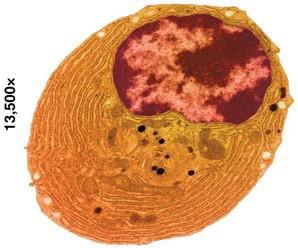
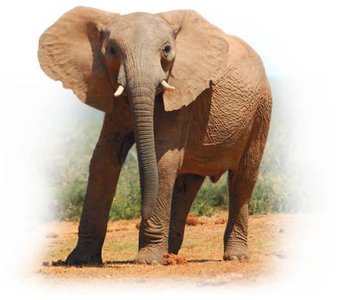
All Living Things Are Made of Cells
Cells are the basic structural and functional units of all living organisms. Every living organism, from the simplest bacterium to the largest animal, is composed of cells. Some organisms are unicellular, consisting of a single cell, while others are multicellular, made up of trillions of cells.
Cell Theory: All living things are made of cells; cells are the fundamental units of life.
Unicellular organisms: Examples include bacteria and many protists.
Multicellular organisms: Examples include plants, animals, and fungi.
Cells perform essential functions: metabolism, growth, response to stimuli, and reproduction.
Types of Cells: Prokaryotic vs. Eukaryotic
Cells are classified into two main categories: prokaryotic and eukaryotic. This distinction is based on structural differences, particularly the presence or absence of a nucleus and membrane-bound organelles.
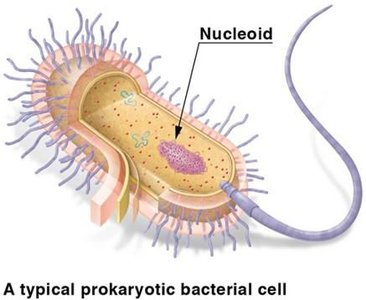
Prokaryotic cells: Simple cells without a nucleus or membrane-bound organelles. First appeared about 3.5 billion years ago. Found in domains Bacteria and Archaea.
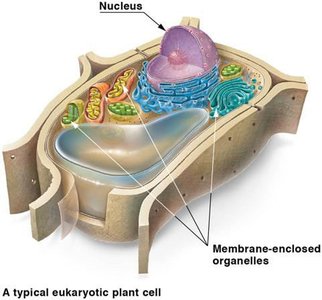
Eukaryotic cells: Complex cells with a nucleus and membrane-enclosed organelles. First appeared about 2.1 billion years ago. Found in plants, animals, fungi, and protists.
Cell Diversity Across Domains
Prokaryotic cells are found in two domains: Bacteria and Archaea. Eukaryotic cells are found in plants, animals, fungi, and protists. Each domain exhibits unique cellular structures and adaptations.
Bacteria: Found everywhere; some cause disease, but most are harmless or beneficial.
Archaea: Often live in extreme environments such as hot springs or salt lakes.
Eukaryotes: Include multicellular organisms and unicellular protists.
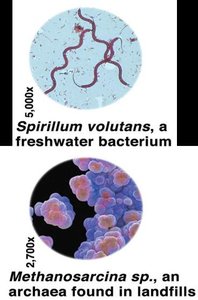
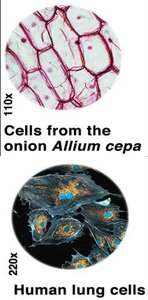
Biodiversity 1: Microscopic Organisms
Prokaryotes: Structure and Function
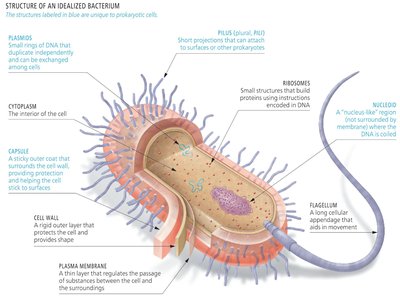
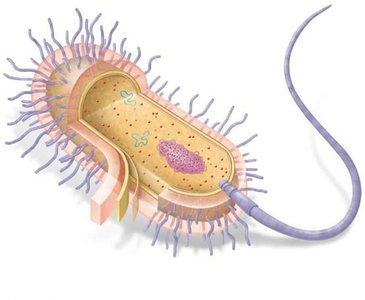
Prokaryotes are the earliest forms of life and are characterized by their small, simple cells. They are found everywhere life exists, including extreme environments.
Cell wall: Provides protection and structural support.
Capsule: Sticky outer layer for protection and attachment.
Flagella: Used for movement.
Pili: Short projections for attachment or DNA transfer.
Nucleoid: Region where DNA is located (not membrane-bound).
Plasmids: Small, circular DNA molecules that can be exchanged among cells.
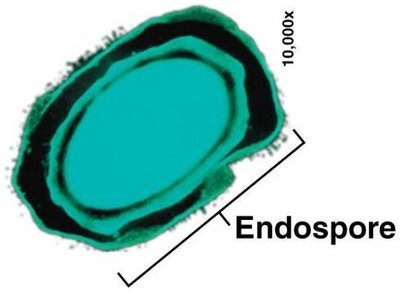
Endospore: Protective structure formed under harsh conditions.
Prokaryotic Diversity: Shapes and Structures
Prokaryotes exhibit a variety of shapes, which are used for classification and identification.
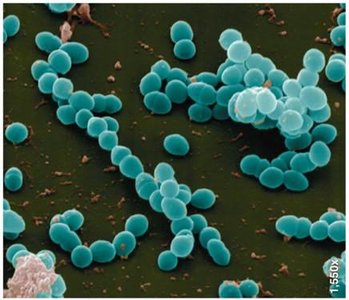
Cocci: Spherical cells, found alone, in chains, or clusters.
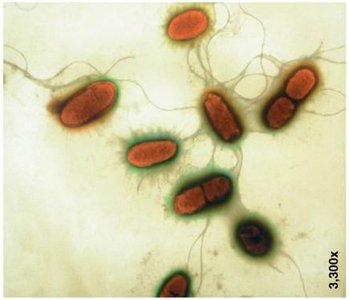
Bacilli: Rod-shaped cells, found singly or in chains.
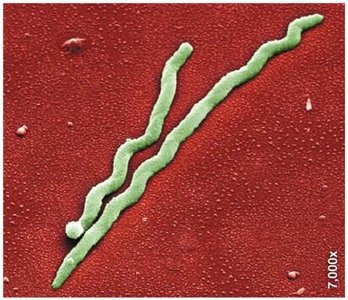
Spirilla: Spiral or curved cells, mostly occur singly.
Prokaryotic Nutrition and Habitats
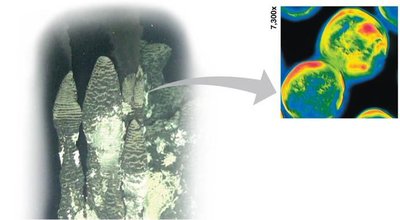
Prokaryotes have diverse nutritional strategies, including photosynthesis, consumption of other organisms, and chemosynthesis (making food from environmental chemicals).
Photosynthetic prokaryotes: Use sunlight to produce food.
Chemosynthetic prokaryotes: Obtain energy from chemicals, such as those found in hydrothermal vents.
Heterotrophic prokaryotes: Consume other organisms or organic matter.
Prokaryotic Reproduction and Genetic Exchange
Most prokaryotes reproduce asexually by binary fission, resulting in genetically identical cells. However, they can exchange genetic material through several mechanisms, increasing genetic diversity.
Binary fission: Asexual reproduction by splitting in half.
Transformation: Uptake of DNA from the environment.
Transduction: DNA transfer via bacteriophages (viruses).
Conjugation: DNA transfer through a mating bridge (sex pilus).
Plasmid transfer: Exchange of plasmids between cells.
Infectious Diseases and Pathogens
Viruses, Prions, and Viroids
Pathogens are agents that cause disease. These include bacteria, fungi, protists, viruses, prions, and viroids. Viruses are nonliving infectious particles, while prions and viroids are even simpler.
Virus: Infectious particle with a genome (DNA or RNA) encased in a protein coat.
Prion: Infectious protein, a misfolded version of a normal protein, capable of disrupting brain function.
Viroid: Small, circular RNA molecule that infects plants; does not encode proteins.
HIV and AIDS
HIV (Human Immunodeficiency Virus) is a retrovirus that targets the human immune system, causing AIDS (Acquired Immunodeficiency Syndrome). HIV uses the enzyme reverse transcriptase to convert its RNA genome into DNA, hijacking the host cell's machinery.
Transmission: Sexual contact, sharing blood products.
Life cycle: Involves integration of viral DNA into host genome.
Reverse transcriptase: Enzyme used to convert RNA to DNA.
Human Body Systems and Immunity
Homeostasis and Internal Environment
Homeostasis is the tendency of organisms to maintain a stable internal environment despite external changes. This is achieved through various feedback mechanisms.
Negative feedback: Most common mechanism; results of a process inhibit that process.
Example: Regulation of blood glucose levels.
Immune System: Defenses and Disorders
The immune system protects against pathogens using a variety of defenses, including external barriers, the inflammatory response, the lymphatic system, and white blood cells.
External barriers: Skin, mucus membranes, stomach acid, hairs.
Inflammatory response: White blood cells engulf and destroy bacteria.
Lymphatic system: Network filled with lymph fluid; lymph nodes attack microbes.
Specific immunity: Lymphocytes (B cells and T cells) recognize and destroy antigens.
Memory cells: Provide lifetime immunity after exposure.
Immune System Malfunctions
Problems can arise when the immune response is too strong (allergies, autoimmune diseases) or not strong enough (immunodeficiency diseases).
Autoimmune diseases: Immune system attacks body's own cells (e.g., rheumatoid arthritis, type 1 diabetes).
Immunodeficiency: Components of the immune system are missing or defective (e.g., AIDS, SCID).
Vaccination and Immunization
Vaccination involves exposing the immune system to an antigen, stimulating the production of memory cells and providing immunity.
Modern vaccines: Made from killed microbes or protein fragments.
Endocrine System and Hormonal Regulation
The endocrine system regulates the body via hormones, which are chemical signals produced by endocrine tissues and transported by the bloodstream.
Hypothalamus: Control center of the endocrine system.
Pituitary gland: Receives signals from hypothalamus.
Thyroid gland: Regulates metabolism and calcium levels.
Pancreas: Regulates blood glucose levels.
Adrenal glands: Regulate stress responses.
Testes/Ovaries: Regulate reproduction and sexual characteristics.
Glucose Regulation and Negative Feedback
Glucose regulation is an example of negative feedback maintaining homeostasis. In diabetes, this regulation breaks down, leading to health complications.
Type 1 diabetes: Body fails to produce enough insulin.
Type 2 diabetes: Cells do not respond normally to insulin.
Summary Table: Prokaryotic vs. Eukaryotic Cells
Feature | Prokaryotic Cells | Eukaryotic Cells |
|---|---|---|
Nucleus | No | Yes |
Membrane-bound organelles | No | Yes |
Domains | Bacteria, Archaea | Eukarya |
Size | Small | Larger |
Examples | Bacteria, Archaea | Plants, Animals, Fungi, Protists |
Summary Table: Types of Pathogens
Pathogen | Description | Example Disease |
|---|---|---|
Bacteria | Single-celled prokaryotes | Tuberculosis |
Virus | Nonliving infectious particle | Influenza, HIV/AIDS |
Prion | Infectious protein | Creutzfeldt-Jakob disease |
Viroid | Small, circular RNA | Potato spindle tuber viroid |
