Back
BackCell Theory and Organelles: Structure and Function
Study Guide - Smart Notes
 Tailored notes based on your materials, expanded with key definitions, examples, and context.
Cell Theory
Foundations of Cell Theory
The cell theory is a fundamental concept in biology that describes the properties of cells, the basic unit of life. It consists of three main principles:
All living things are made of cells. Organisms can be unicellular (one cell) or multicellular (many cells organized into tissues, organs, and organ systems).
Cells are the basic unit of life. The cell is the smallest structure capable of performing all life processes.
All cells come from pre-existing cells. Cells reproduce by division, ensuring continuity of life.

Unicellular vs. Multicellular Organisms
Unicellular organisms consist of a single cell that performs all life functions (e.g., Amoeba).
Multicellular organisms are composed of many cells that may differentiate and organize into tissues, organs, and organ systems (e.g., animals, plants).

Types of Cells
Prokaryotic vs. Eukaryotic Cells
Cells are classified into two main types based on their internal structure:
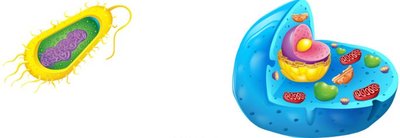
Prokaryotic cells lack a nucleus and membrane-bound organelles. Their DNA is found in the cytoplasm. Examples include bacteria.
Eukaryotic cells have a true nucleus and membrane-bound organelles. They can be unicellular or multicellular. Examples include animals, plants, fungi, and protists.
Feature | Prokaryotic | Eukaryotic |
|---|---|---|
Nucleus | No | Yes |
Membrane-bound organelles | No | Yes |
Division | Binary fission | Mitosis |
Cell wall | Yes (peptidoglycan) | Plants (cellulose), fungi (chitin), not in animals |
Examples | Bacteria | Animals, plants, fungi, protists |
Common Features of All Cells
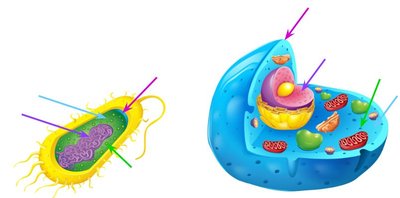
Genetic material (DNA or RNA)
Cytoplasm
Cell membrane
Ribosomes
Eukaryotic cells also contain specialized membrane-bound organelles.
Cell Organelles and Their Functions
Cell (Plasma) Membrane
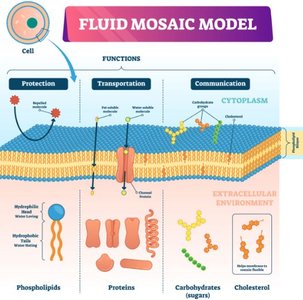
The cell membrane surrounds all cells and is composed of a phospholipid bilayer. It controls the movement of substances in and out of the cell and is essential for communication and homeostasis.
Structure: Two layers of phospholipids with embedded proteins and carbohydrates.
Function: Selective barrier, communication, and maintaining internal balance.
 y
y
Cell Wall
Found in plant, fungal, and bacterial cells, the cell wall provides structural support and protection.
Composition: Cellulose (plants), chitin (fungi), peptidoglycan (bacteria).
Function: Maintains cell shape and prevents excessive water uptake.
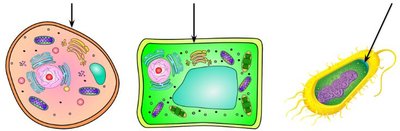
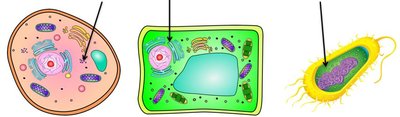
Nucleus
The nucleus is the control center of eukaryotic cells, containing genetic material (DNA).
Structure: Surrounded by a nuclear envelope with pores; contains chromatin and nucleolus.
Function: Protects DNA and regulates gene expression.
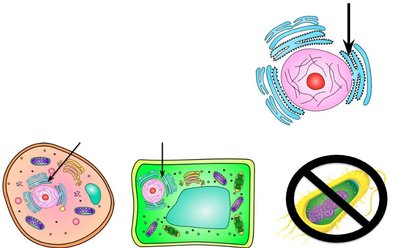
Ribosomes
Ribosomes are the sites of protein synthesis. They can be free in the cytoplasm or attached to the rough endoplasmic reticulum (ER).
Structure: Made of rRNA and proteins.
Function: Translate mRNA into proteins.
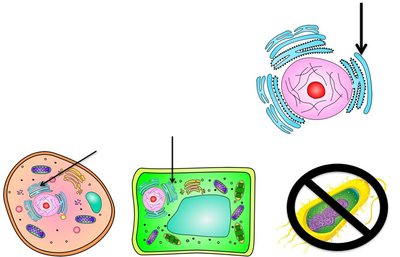
Endoplasmic Reticulum (ER)
Rough ER: Studded with ribosomes; synthesizes and packages proteins for export.
Smooth ER: Lacks ribosomes; synthesizes lipids and stores calcium ions.
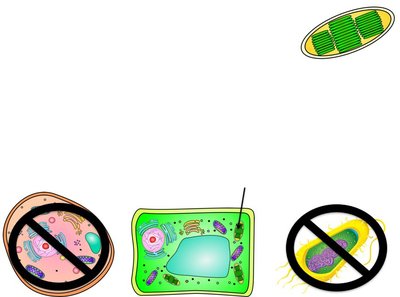
Chloroplasts
Chloroplasts are found only in plant cells and are the site of photosynthesis.
Structure: Contains grana (stacks) and stroma (fluid).
Function: Converts light energy into chemical energy (glucose).
Photosynthesis equation:
Golgi Apparatus
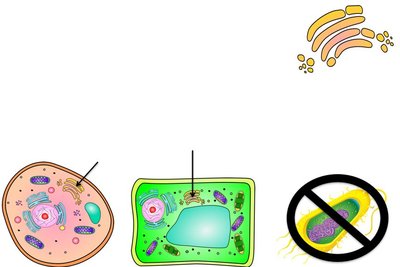
The Golgi apparatus modifies, sorts, and packages proteins and lipids for storage or transport out of the cell.
Structure: Stacks of flattened membranes.
Function: Processes and ships cellular products.
Lysosomes
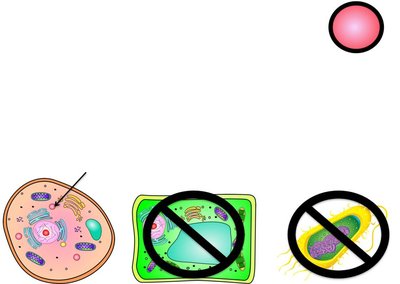
Lysosomes are membrane-bound organelles containing digestive enzymes, found mainly in animal cells.
Function: Breakdown of waste, cellular debris, and foreign invaders; involved in apoptosis (programmed cell death).
Vacuoles
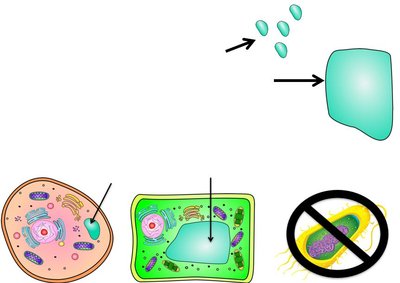
Vacuoles are storage organelles. Plant cells have a large central vacuole, while animal cells have smaller, numerous vacuoles.
Function: Store water, nutrients, and waste products.
Mitochondria
Mitochondria are the powerhouses of the cell, where cellular respiration occurs to produce ATP (energy).
Structure: Double membrane with inner folds (cristae).
Function: Converts glucose and oxygen into ATP.
Cellular respiration equation:
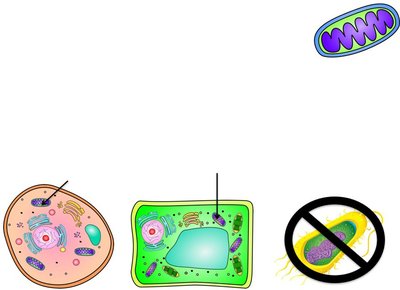
Cytoplasm
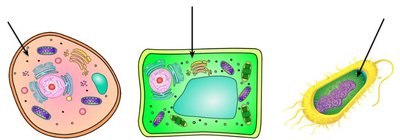
The cytoplasm is a jelly-like substance that fills the cell and holds organelles in place. It is the site for many metabolic reactions.
Composition: Mostly water, with dissolved molecules and ions.
Nucleolus
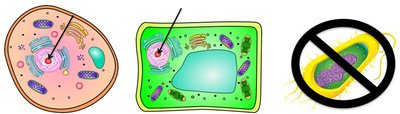
The nucleolus is found inside the nucleus and is responsible for making rRNA, which forms ribosomes.
Centrioles
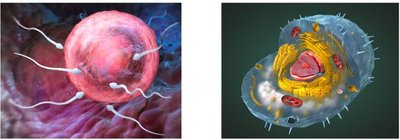
Centrioles are found in animal cells and play a role in cell division by organizing microtubules and pulling chromosomes apart.
Cytoskeleton
The cytoskeleton is a network of protein fibers that provides structural support, maintains cell shape, and assists in movement of organelles.
Cilia and Flagella
Cilia are short, numerous projections that move fluid across the cell surface, while flagella are longer and fewer, moving the entire cell.
Cilia: Found in some animal and protist cells.
Flagella: Found in some animal, protist, and prokaryotic cells (e.g., sperm cells).
Summary Table: Organelle Presence in Cell Types
Organelle | Animal Cell | Plant Cell | Prokaryote |
|---|---|---|---|
Cell Membrane | Yes | Yes | Yes |
Cell Wall | No | Yes | Yes |
Nucleus | Yes | Yes | No |
Ribosomes | Yes | Yes | Yes |
Chloroplast | No | Yes | No |
Mitochondria | Yes | Yes | No |
Vacuole | Small | Large | No |
Lysosome | Yes | No | No |
Centrioles | Yes | No | No |
Practice and Application
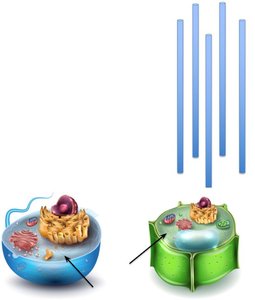
Identify organelles in diagrams of animal, plant, and prokaryotic cells.
Classify cells based on the presence or absence of specific organelles.